


The Ultimate Guide to Yamaha Bass Drum Pedals! (2026)
- Posted on
- By GRD
- 0
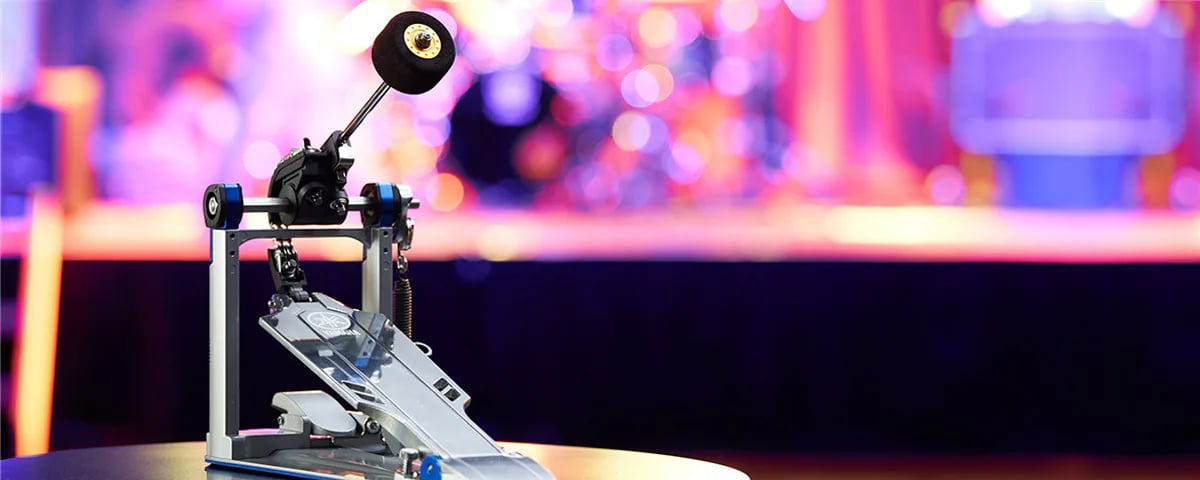
A Complete walkthrough of the entire Yamaha Bass Drum Pedal Range we stock at Graham Russell Drums!
Yamaha bass drum pedals are known for smooth action, dependable engineering and a consistent feel across the range. From the lightweight FP7210A to the adjustable professional FP9500 models and flagship FP9 series, Yamaha offers chain, belt and direct-drive options for a wide variety of players.
In this guide, we explain the Yamaha bass drum pedal range stocked at Graham Russell Drums, including single, double and left-footed configurations. We will look at what changes as you move through the range, how each drive system affects the feel underfoot and which model is likely to suit your playing style.
Written by Alex Neave
Originally published 15 February 2026 | Updated 25 July 2026
The Yamaha Bass Drum Pedal Range Explained
Yamaha FP7210A: Lightweight Single-Chain Pedal
The Yamaha FP7210A is the entry point to the range. It uses a single-chain drive and a lightweight frame without a solid floor plate, making it easy to carry and straightforward to set up.
Its simplicity makes it particularly suitable for students, function players, rehearsal rooms and drummers building a lightweight hardware setup. The FP7210A includes beater-angle adjustment, but it does not offer the independent footboard adjustment, locking spring system or carrying case found higher in the range.
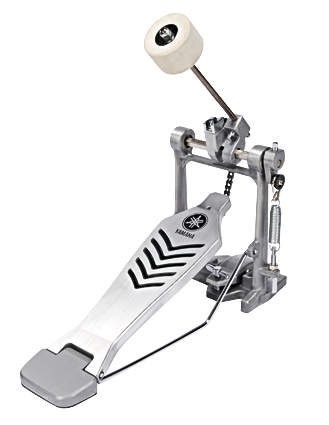
Choose it when portability, reliability and uncomplicated adjustment matter more than maximum stability or extensive fine-tuning. It remains perfectly capable for rehearsals and regular gigs when used within a sensible lightweight setup.
Yamaha FP8500 Series: Chain or Belt Drive
The FP8500 series is Yamaha’s versatile mid-range tier. Graham Russell Drums stocks the FP8500C chain-drive single pedal, the FP8500B belt-drive single pedal and the DFP8500C double pedal.
Both single pedals use Yamaha’s longer footboard, giving the player more room to alter foot position and making the series particularly appealing to drummers who use sliding or heel-toe techniques. They also include Yamaha’s rigid sub-frame structure, beater-angle adjustment, a self-locking spring-tension system and a spring roller with built-in bearings.
The main difference is the drive and frame layout. The FP8500C uses a durable double chain and solid base plate for a planted, controlled feel. The FP8500B replaces the chain with a woven belt and uses a lighter wire-frame design without a base plate, creating a smoother, quieter and slightly more flexible response.
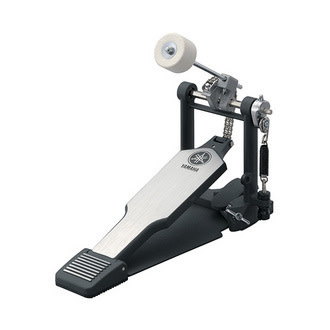
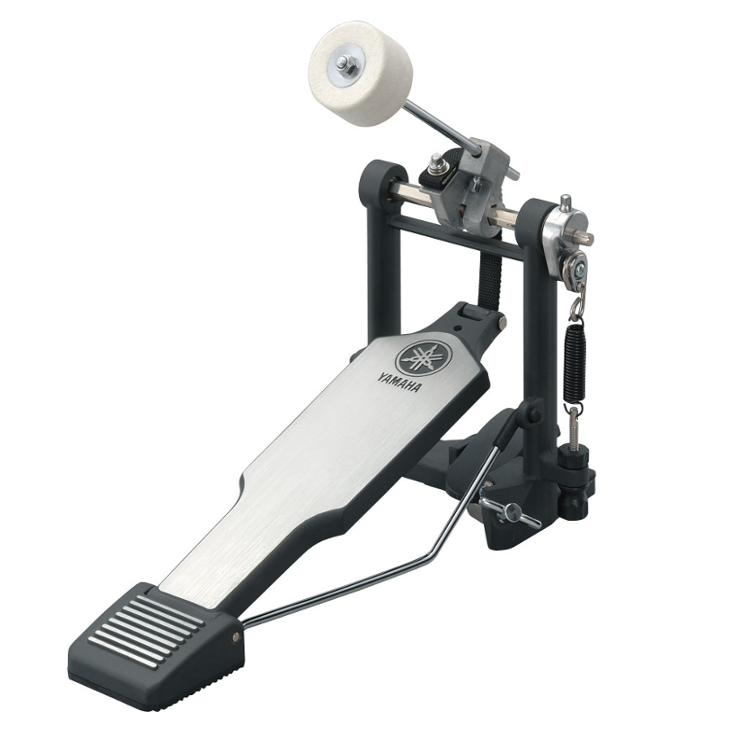
Choose the FP8500B for a lighter, smoother belt-drive feel and easier transport. Choose the FP8500C when you want the familiar response of a double chain and the extra stability of a solid base plate.
Yamaha FP9500 Series: Professional Versatility
The FP9500 series introduces the professional adjustment and accessories that many working drummers require. The range includes the FP9500C chain-drive single pedal, FP9500D direct-drive single pedal, DFP9500C chain-drive double pedal, DFP9500D direct-drive double pedal and the DFP9500CL left-footed model.
The FP9500C uses a double-chain drive but can also be converted to belt drive using the supplied strap. This gives players two distinct feels on the same pedal platform. The FP9500D uses a rigid direct-drive link for a faster and more immediate connection between footboard and beater.
Across the range, the footboard and beater angles can be adjusted independently. The FP9500 pedals also include a two-way felt and plastic beater, bearing-supported spring roller, stable base plate and semi-hard carrying case. Compared with the FP8500 series, the footboard is shorter, but the adjustment and included protection are more comprehensive.
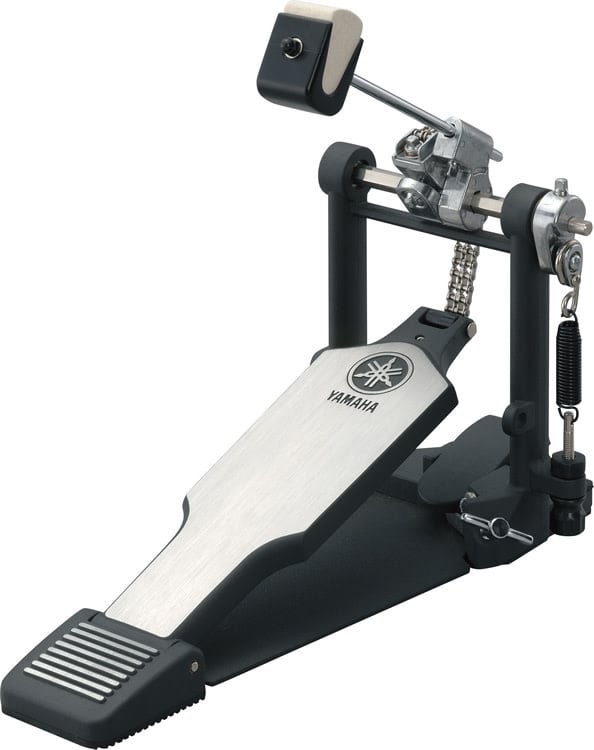
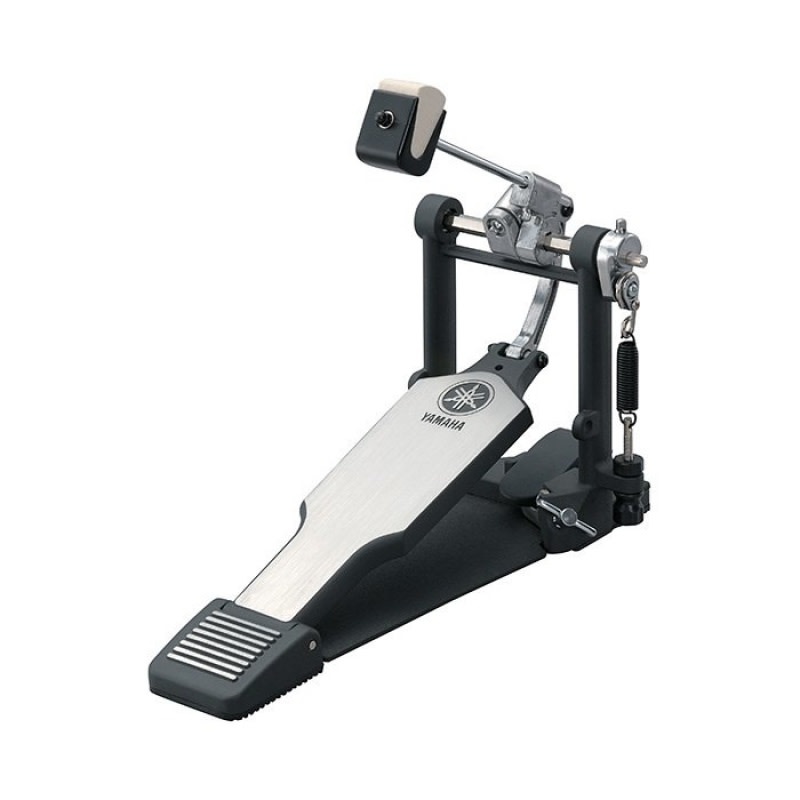
The FP8500 range offers long-footboard chain or belt options at a lower price. The FP9500 range adds independent footboard adjustment, a two-way beater, supplied carrying case and a direct-drive option, while the FP9500C can switch between chain and belt drive.
Yamaha FP9 Series: Flagship Adjustment
At the top of the range sits the FP9 series. The FP9C and DFP9C use double-chain drive and can be converted to belt drive with the included straps. The FP9D and DFP9D use direct drive, while the DFP9CL provides a left-footed chain-drive configuration.
The FP9C uses a three-position quick-adjusting cam, allowing the player to alter how resistance develops through the stroke. The FP9D uses a three-position adjustable direct link that changes the initial response and tension curve. This is a more sophisticated adjustment system than the fixed drive profiles found lower in the range.
Both models include independent beater and footboard-angle adjustment, weight-adjustable beaters, an axle-stabilising bearing chamber, ball-bearing drive connections, a low-profile hinge, easy-access spring adjustment, anti-skid heel spikes and a semi-hard case. FP9 double pedals also use an all-bearing universal joint to improve the response of the secondary pedal.
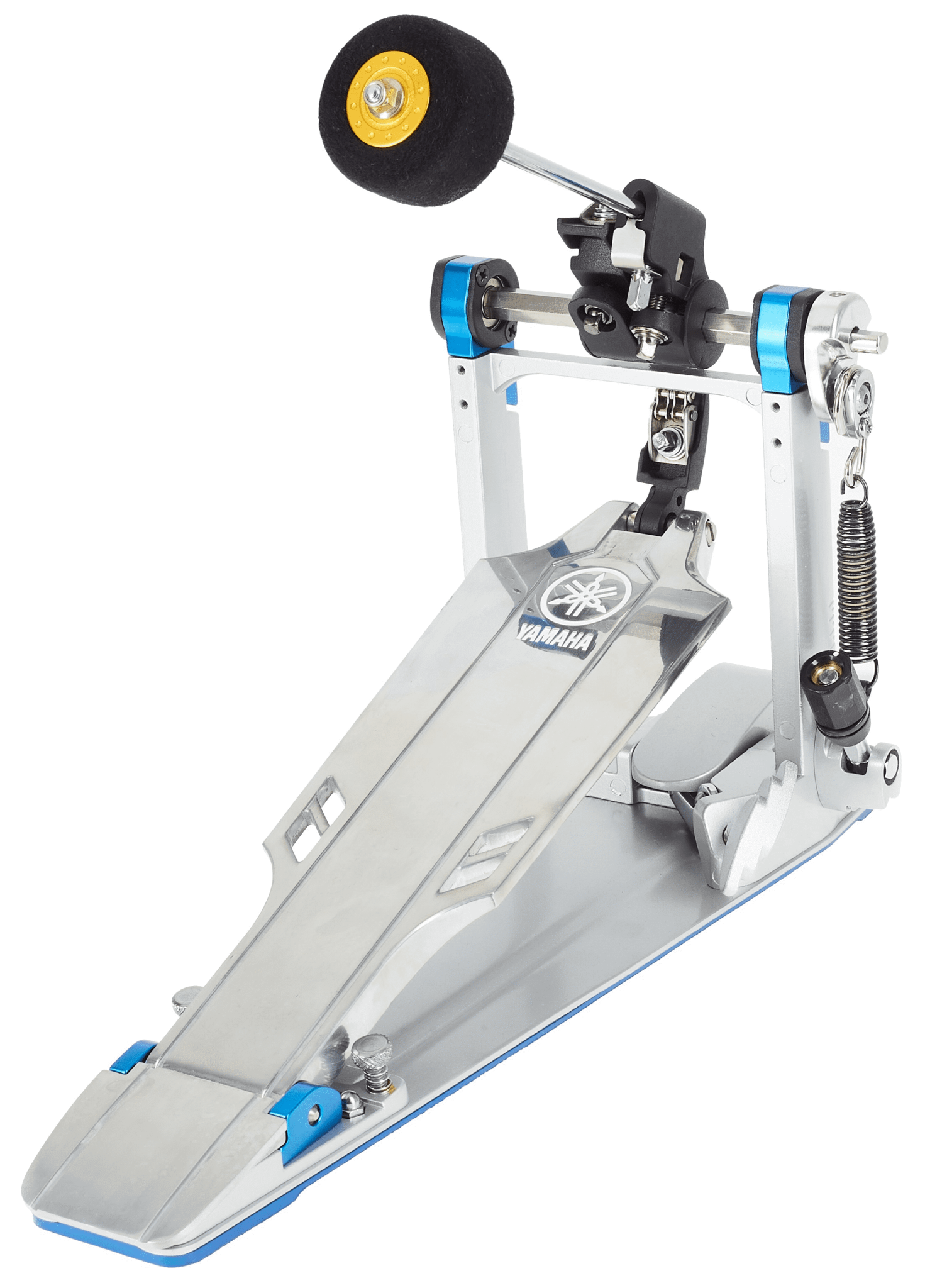
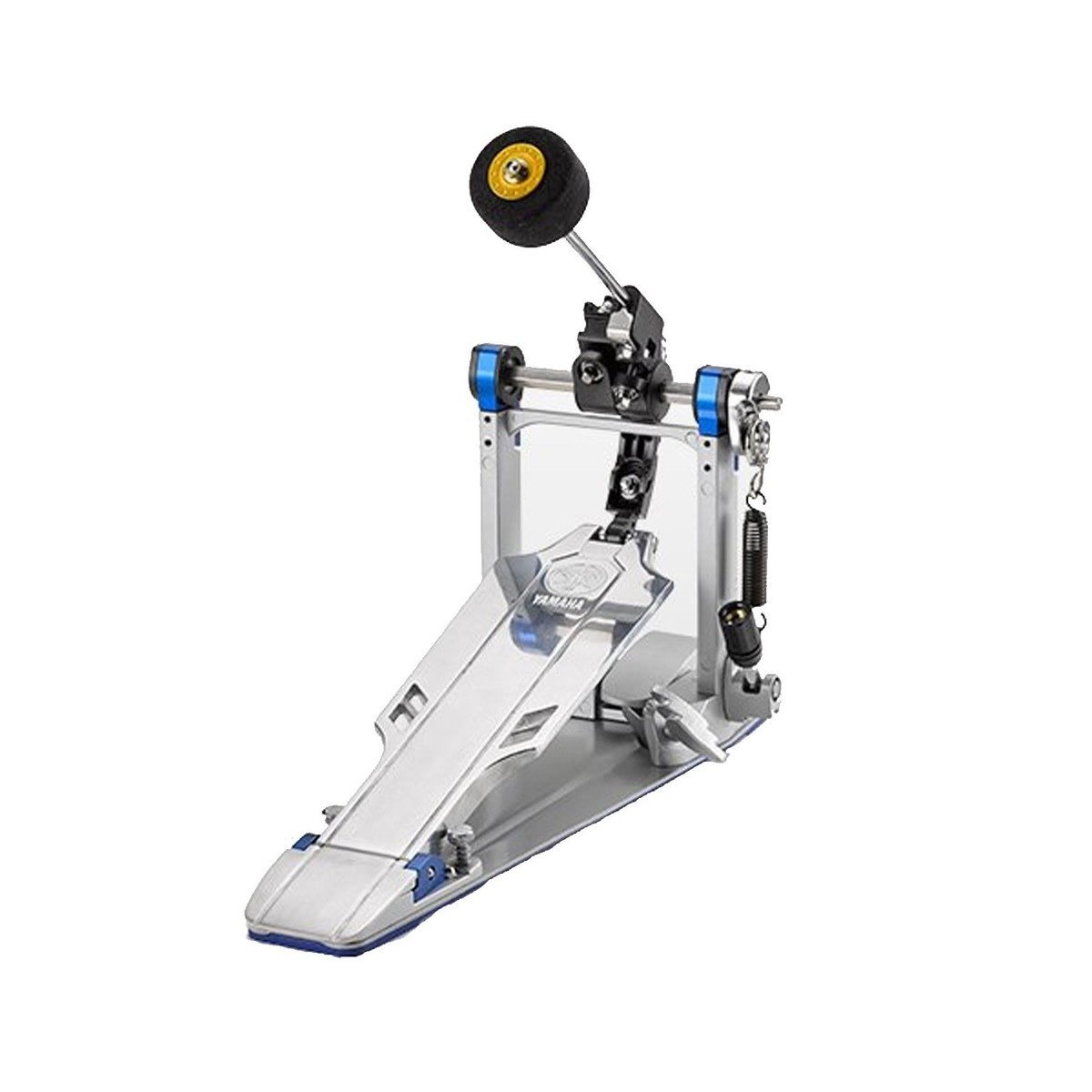
The FP9500 range already provides professional build quality and useful adjustment. The FP9 is most worthwhile for players who will use its three-position drive adjustment, beater weights, upgraded bearing system and premium double-pedal linkage. Not every drummer needs those additional controls.
Chain, Belt and Direct Drive Explained
Chain Drive
Chain drive is the most familiar option for many drummers. It provides a durable connection with a small degree of mechanical flexibility, creating a controlled and forgiving response. Yamaha uses single-chain drive on the FP7210A and double-chain drive on the FP8500C, FP9500C and FP9C ranges.
Belt Drive
Belt drive uses a woven strap in place of the chain. It generally feels smooth, quiet and fluid, with a little more flexibility in the connection. The FP8500B is a dedicated belt-drive pedal, while the FP9500C and FP9C can be converted using the belts supplied with those models.
Direct Drive
Direct drive uses a rigid mechanical link between the footboard and beater assembly. This produces a more immediate transfer of movement and can make the pedal feel precise and responsive. Yamaha offers direct-drive models within both the FP9500 and FP9 ranges.
No drive system is objectively best. Chain drive suits players wanting a familiar all-round response, belt drive appeals to those who prefer a smooth and fluid action, and direct drive suits drummers who enjoy an immediate connection. Trying the different systems remains the most reliable way to choose.
Single, Double and Left-Footed Yamaha Pedals
Single vs Double Pedals
A single pedal remains suitable for most rock, pop, funk, jazz, studio and function work. A double pedal allows both feet to operate one bass drum and is useful for sustained double-bass patterns, heavier styles and techniques that require rapid alternating strokes.
Yamaha offers double-pedal versions at FP8500, FP9500 and FP9 level. Moving higher in the range adds more adjustment and refinement, but the correct tier depends on how central double-pedal playing is to your technique.
Left-Footed Double Pedals
Left-footed players are supported by the Yamaha DFP9500CL and DFP9CL. In these configurations, the main pedal sits on the left and the secondary pedal is operated from the right, so left-footed players do not need to compromise with a reversed standard setup.
Which Yamaha Bass Drum Pedal Should You Choose?
The recommendations below provide a practical starting point. Pedal choice remains personal, so foot position, technique, spring tension and previous hardware can all affect which model feels most natural.
- Best lightweight and affordable option: Yamaha FP7210A
- Best mid-range belt-drive option: Yamaha FP8500B
- Best mid-range chain pedal with a long footboard: Yamaha FP8500C
- Best professional all-rounder: Yamaha FP9500C
- Best professional direct-drive option: Yamaha FP9500D
- Best flagship chain or belt option: Yamaha FP9C
- Best flagship direct-drive option: Yamaha FP9D
The GRD Take
The Yamaha range is particularly strong because the different tiers are not simply cheaper and more expensive versions of the same design. The FP7210A prioritises portability, the FP8500 series adds long-footboard chain and belt choices, the FP9500 range offers professional versatility, and the FP9 focuses on detailed adjustment.
For many players, the FP9500C is likely to be the most flexible all-round choice because it can be used with either chain or belt drive and includes the adjustment and carrying protection expected from a professional pedal. The FP9 becomes more valuable when you know you will use its three-position drive adjustment, beater weights and upgraded bearing system. Meanwhile, the FP8500B and FP8500C should not be overlooked by players who specifically want a longer footboard without moving to flagship pricing.
We stock Yamaha single, double, direct-drive, belt-drive and left-footed bass drum pedals alongside new and used alternatives from other leading brands. Visit our Fareham showroom to compare pedal feel in person, or contact the GRD team for practical advice.
Frequently Asked Questions
What is the difference between the Yamaha FP8500B and FP8500C?
The FP8500B uses a woven belt and lighter open-frame design for a smooth, fluid response. The FP8500C uses a double chain and solid base plate for a more planted and familiar feel. Both have Yamaha’s longer footboard.
What is the difference between the Yamaha FP8500 and FP9500 series?
The FP8500 series uses a longer footboard and offers dedicated chain or belt-drive models. The FP9500 series adds independent footboard-angle adjustment, a two-way beater, supplied semi-hard case and a choice between a chain pedal that converts to belt drive or a dedicated direct-drive model.
Can the Yamaha FP9500C be converted to belt drive?
Yes. The FP9500C is supplied with a belt that can replace the double chain, allowing the player to compare the familiar chain response with a lighter and more flexible belt-drive feel.
What is the difference between the Yamaha FP9500 and FP9 series?
The FP9500 series offers professional adjustment, chain-to-belt conversion on the FP9500C and dedicated direct drive on the FP9500D. The FP9 adds three-position cam or link adjustment, beater weights, upgraded bearing systems, anti-skid heel spikes and an all-bearing universal joint on the double pedals.
What is the difference between the Yamaha FP9C and FP9D?
The FP9C uses double-chain drive, includes a belt-conversion option and has a three-position adjustable cam. The FP9D uses a rigid direct-drive link with three adjustment positions. The FP9C feels more familiar and flexible, while the FP9D provides a more immediate mechanical connection.
Is the Yamaha FP7210A suitable for gigging?
Yes. The FP7210A is lightweight and simple but dependable, making it suitable for rehearsals, function gigs and portable setups. Players using heavier techniques may prefer the additional stability of the FP8500 or FP9500 series.
Do the Yamaha FP9500 and FP9 pedals come with cases?
Yes. Yamaha supplies the FP9500 and FP9 single and double pedals with purpose-designed semi-hard carrying cases for transport and storage.
Do Yamaha make left-footed double bass drum pedals?
Yes. The DFP9500CL and DFP9CL are dedicated left-footed double pedals, with the main pedal positioned on the left and the secondary pedal operated from the right.
Written by Alex Neave
I've been a part of the Graham Russell Drums team since October 2025, but my connection with the shop goes back much further as a customer since 2012. Over the years I've advised drummers of all ages and experience levels, refurbished countless second-hand kits and spent a lot of time helping customers navigate the often overwhelming world of drum gear. Alongside over 13 years of playing experience, that hands-on exposure to thousands of products allows me to write buying guides based on real-world knowledge and practical experience rather than simply repeating manufacturer specifications.












Comments
Be the first to comment...