

Beginner’s Guide to Choosing Drum Hardware
- Posted on
- 0
A simple beginner’s guide to choosing drum hardware, covering stand types, bracing, cymbal stands, hi-hat stands, tom mounting and hardware packs
BEGINNER'S GUIDE
Written by Alex Neave · Graham Russell Drums
If you are buying your first acoustic drum kit, choosing the right drum hardware can quickly become confusing. Terms such as single-braced, double-braced, boom stand, straight stand and snare basket appear throughout product descriptions, but they do not always mean much until you know what each piece of hardware actually does.
This beginner’s guide explains the main types of drum hardware, the differences that actually matter and what to look for when putting together your first setup.
GRD TIP
At Graham Russell Drums, we regularly help players choose complete hardware setups, whether they are buying their first acoustic kit, upgrading the stands supplied with a beginner kit or putting together a lighter setup for rehearsals and gigs. One of the most important things to remember is that heavier hardware is not automatically better hardware – the right choice depends on what you need to support and how you use your kit.
THE QUICK ANSWER
Quick Answer: What Drum Hardware Do I Need?
For a typical acoustic drum kit, you will usually need:
- Snare drum stand
- Hi-hat stand
- One or more cymbal stands
- Bass drum pedal
- Drum stool or throne
- Tom mounting hardware where required
Complete beginner drum kits may include some or all of this hardware, while shell packs generally include the drums and any essential mounting components supplied with them. Always check exactly what is included before buying.
We also cover the basic choices around bass drum pedals and drum stools later in this guide. Both subjects have dedicated GRD guides as well, so beginners can understand the essentials here and then follow the relevant link if they need more detail.
Single-Braced vs Double-Braced Drum Hardware
One of the first differences you will notice when comparing drum stands is whether they are described as single-braced or double-braced. This refers to the supports connecting each tripod leg to the centre of the stand.
Single-braced hardware uses one support on each leg, generally making the stand lighter and less bulky. Single-braced does not automatically mean cheap or unstable; good-quality lightweight hardware can be extremely durable and is deliberately chosen by many gigging drummers because it is easier to carry.
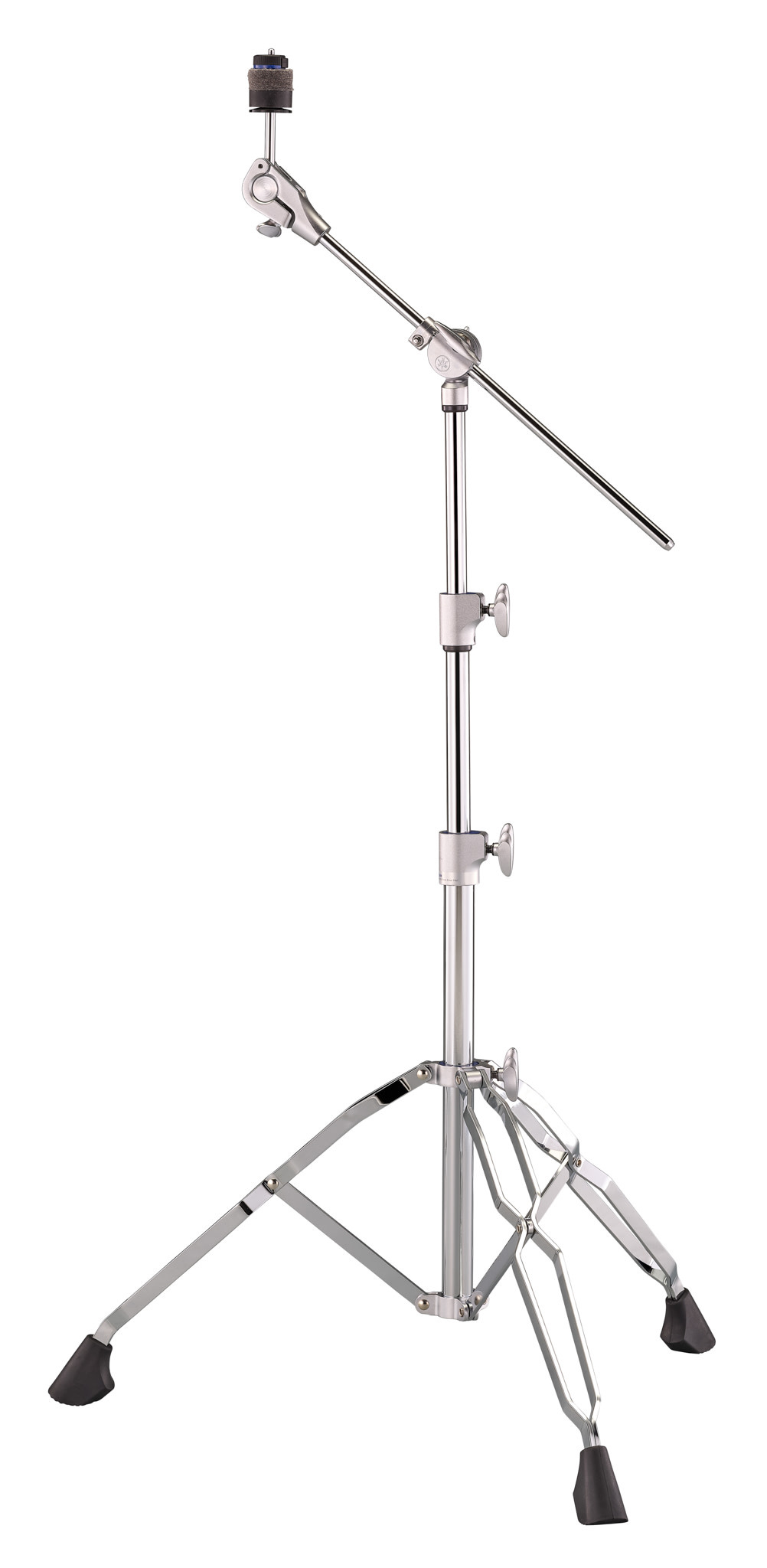
Double-braced hardware uses two supporting sections on each leg, creating a more rigid tripod. This can be useful with heavier cymbals, larger setups or stands carrying additional clamps and accessories, but the trade-off is extra weight and bulk.
For most beginners, either option can work perfectly well. If your kit mainly stays at home, the additional weight of double-braced hardware may not matter. If you regularly transport your kit, good-quality lightweight drum hardware can make carrying and setting up considerably easier.
The difference is easiest to see at the lower tripod section of the stand: a single-braced leg has one support running between the centre tube and the outer leg, while a double-braced leg uses two parallel supports.
If portability is a priority, our Lightweight Drum Hardware Guide compares compact options from TAMA, Yamaha and DW in more detail, including carrying weight, packed size and cymbal positioning.
Beginner tip: Choose hardware that comfortably supports your setup rather than automatically choosing the heaviest stand available.
Cymbal Stands: Straight vs Boom
The two main types of cymbal stand are straight stands and boom stands. Both support a cymbal in the same basic way, but the difference is how much freedom you have over its position.
A straight cymbal stand positions the cymbal directly above the main vertical tube. Straight stands are simple, stable and usually lighter, making them ideal when there is enough floor space to put the stand directly underneath the cymbal.
A boom cymbal stand adds an adjustable arm that lets the cymbal sit away from the main tube. This gives much greater positioning flexibility, particularly when placing cymbals above rack toms or other parts of the kit. The further a boom is extended, the more leverage the cymbal places on the stand, so with larger cymbals it is sensible to keep the tripod comfortably spread and position a leg beneath the direction of the boom where possible.
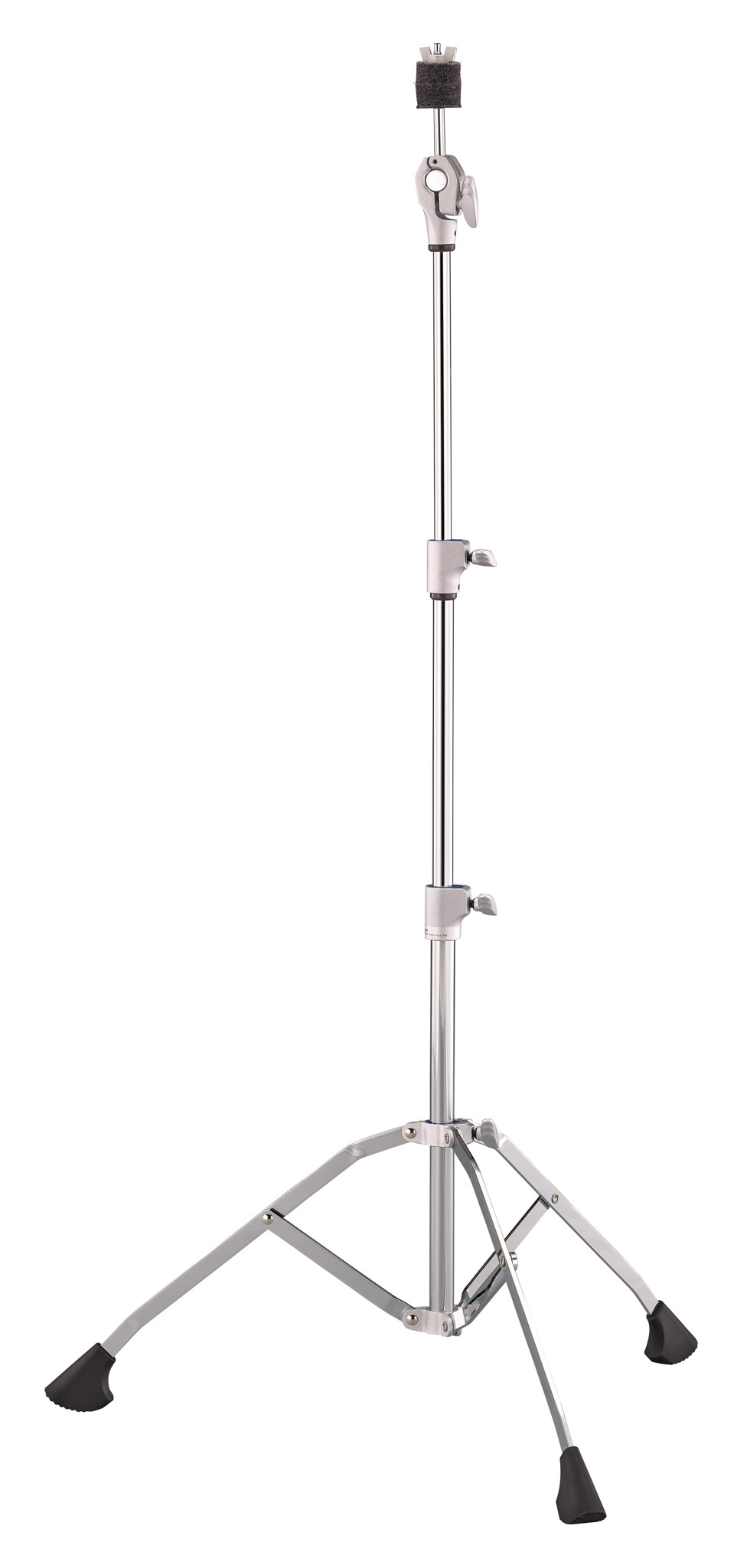
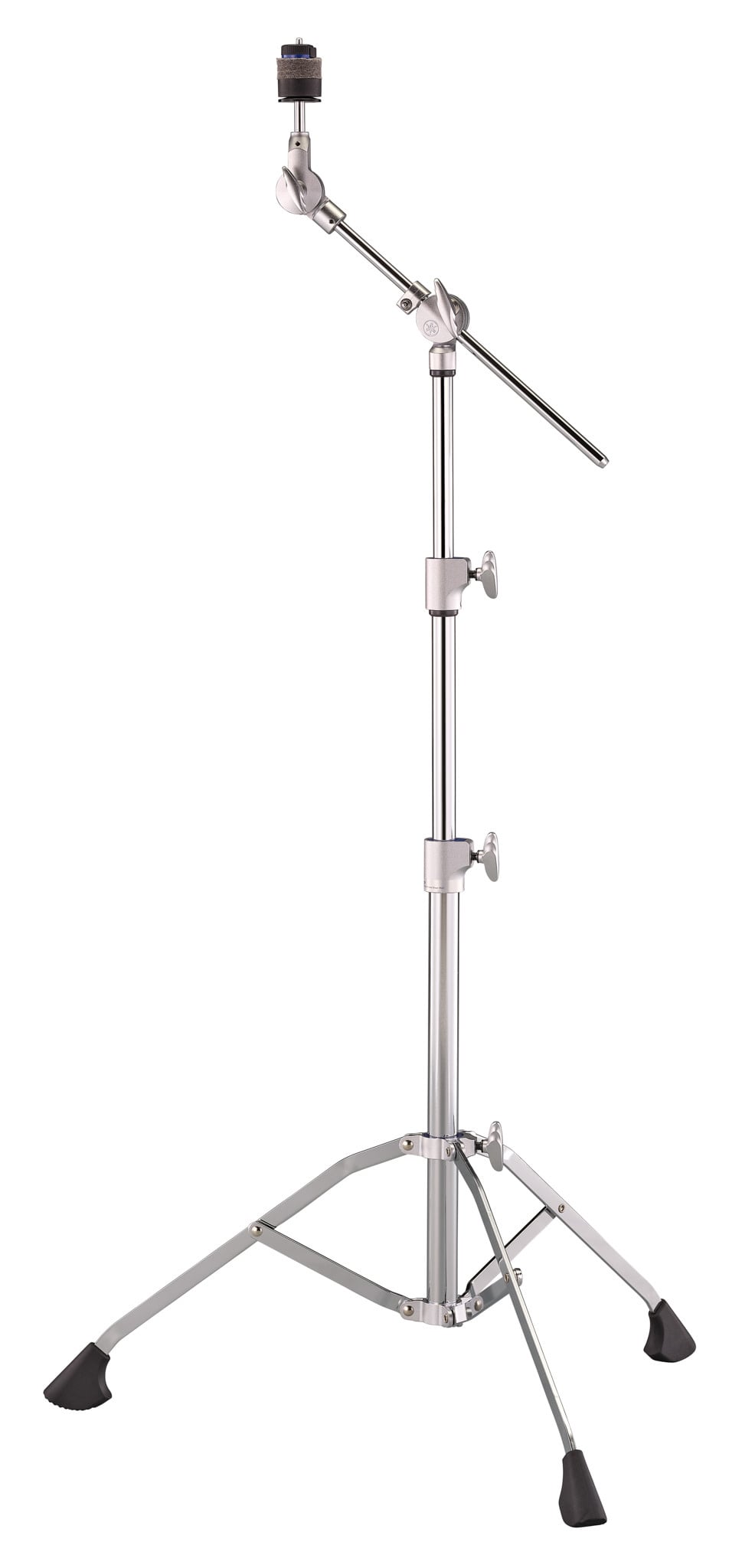
Some boom stands are convertible, meaning the boom arm can retract into the main tube so the same stand can also be used like a straight stand. For a beginner who is not yet sure how their setup will develop, this can be a particularly versatile option.
You may also see geared and gearless cymbal tilters. A geared tilter uses interlocking teeth, so the cymbal angle moves through a series of fixed positions. This makes the adjustment simple and secure, although the exact angle you want may sometimes fall between two of the available steps.
A gearless or step-free tilter removes those fixed increments and allows the cymbal to be set at virtually any angle before the mechanism is tightened. This can be useful when you want very precise positioning, particularly in a compact setup. It is a feature found on stands such as the Yamaha CS8W. Neither design is inherently better; the main difference is fixed-step adjustment versus continuously variable positioning.
Snare and Hi-Hat Stands Explained
Snare Drum Stands
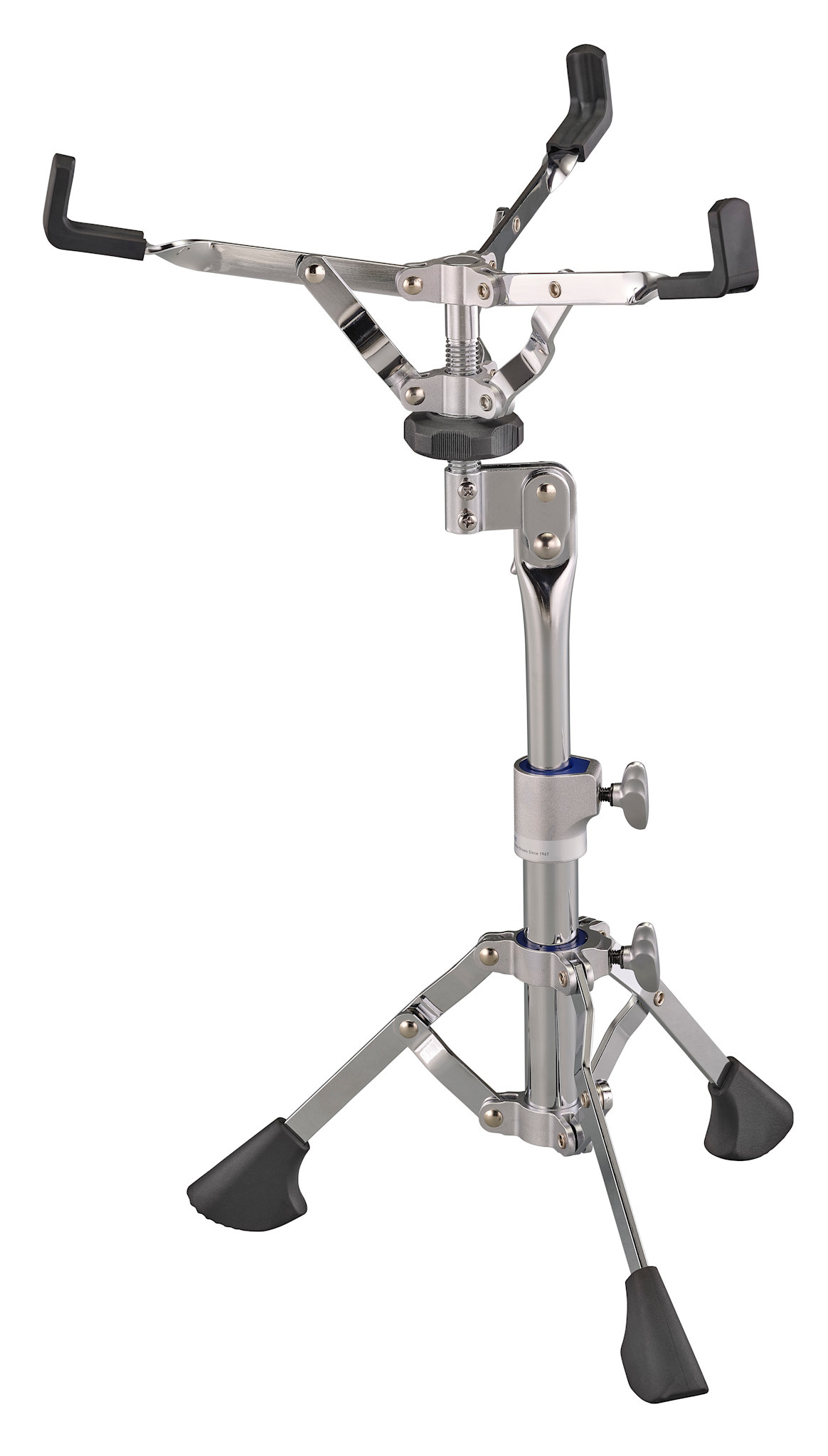
A snare stand supports the drum using an adjustable three-arm basket that opens and closes to suit different drum diameters. The basket only needs to hold the snare securely; there is no need to clamp it tightly against the shell.
Most stands allow both the height and basket angle to be adjusted. If you use a particularly deep snare or like the drum positioned very low, it is worth checking the stand’s minimum height. Rack toms can also be supported in a suitable snare stand, and some drummers deliberately prefer this arrangement.
Hi-Hat Stands
A hi-hat stand supports the pair of hi-hat cymbals and allows the top cymbal to be opened and closed with a foot pedal. The main choice beginners are likely to encounter is between three-leg and two-leg stands.
Three-leg stands use a conventional tripod and are a stable, straightforward choice for most setups. Two-leg stands leave more floor space beside the bass drum pedal, which can be particularly useful when using a double bass drum pedal. Some three-leg stands also have rotating legs, allowing the tripod to be moved out of the way of the second pedal without changing to a two-leg design.
Many hi-hat stands also offer adjustable spring tension. Increasing the tension generally produces a stronger return action, while reducing it creates a lighter pedal feel. There is no single correct setting – adjust it until the stand feels comfortable and responsive under your foot.
Bass Drum Pedals and Drum Stools
Bass Drum Pedals
The bass drum pedal connects your foot to the bass drum beater. A single pedal is the standard choice for most first kits, while a double pedal adds a second footboard and connecting shaft so both feet can play the same bass drum. Double pedals are useful for styles that require rapid two-foot bass drum patterns, but they are not something every beginner needs.
Pedals also differ in drive system, cam shape, footboard design and the amount of adjustment they offer. These differences affect feel more than the rest of the hardware covered here, so we explain them properly in our Beginner’s Guide to Choosing a Bass Drum Pedal.
Drum Stools and Thrones
A drum stool or throne is easy to overlook, but it supports your entire playing position. For a first setup, prioritise a stable base, secure height adjustment and a seat that feels comfortable enough for the length of time you normally play.
Common choices include round or saddle-shaped seats and different height-adjustment systems such as spindle or telescopic designs. Our Drum Stool Buyer’s Guide covers those differences in more detail.
How Are Rack Toms Mounted?
Rack toms can be supported in several different ways, but as a beginner you only really need to recognise the three most common arrangements:
- Bass drum-mounted: a tom holder is attached directly to the bass drum, commonly supporting one or two rack toms.
- Cymbal stand-mounted: the tom is attached to an existing cymbal stand using a suitable clamp and tom holder.
- Dedicated tom stand: one or more rack toms are supported independently using a tom stand.
You may also see a kit described as having a virgin bass drum. This simply means there is no tom mounting bracket fitted through the bass drum shell, so the rack toms need to be supported using a stand or clamp instead.
Compatibility matters: standalone cymbal, snare and hi-hat stands can usually be mixed between brands, but tom holders, mounting arms and clamps are not always universal. Check the mounting system and tube sizes before buying additional parts.
Hardware Packs, Individual Stands and Weight
If you are putting together your first complete setup, a drum hardware pack is often the simplest place to start. A typical pack combines matching stands from the same series and may include a snare stand, hi-hat stand and one or more cymbal stands. Some also include a bass drum pedal or drum stool, while others do not, so always check the exact contents.
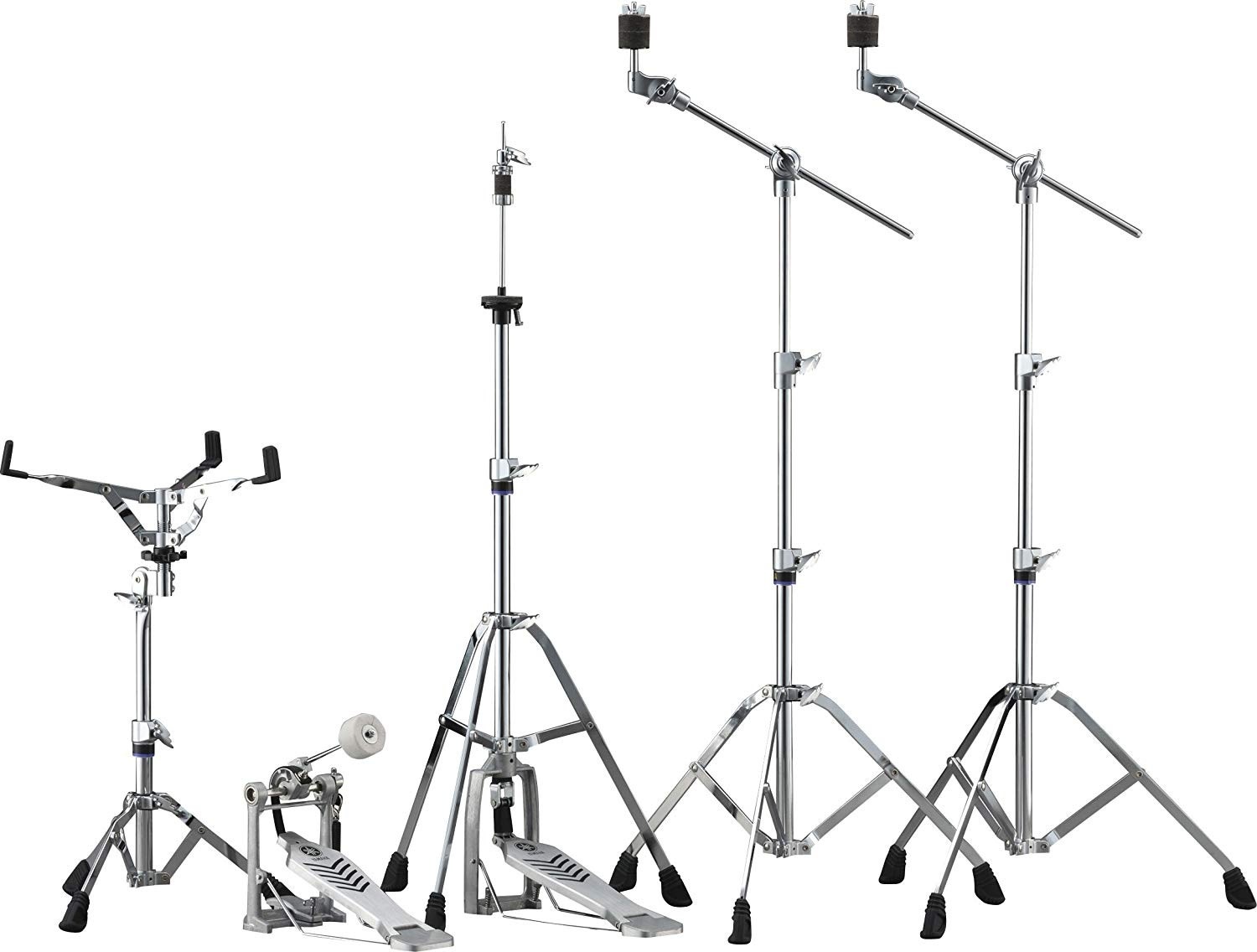
Yamaha pack note: the current HW680, HW680W, HW780 and HW880 packs still contain their established original stand models. Yamaha’s redesigned CS6, CS7, CS8, SS6, SS7, SS8 and SS9 stands are separate individual products and are not automatically substituted into those packs.
Buying stands individually makes more sense if you already own some hardware, need a particular stand type or want to mix lightweight and heavier-duty stands within the same setup. Standalone hardware also does not normally need to be from the same manufacturer.
The right hardware weight depends on how you use your kit. If it stays set up at home, transport weight may not matter very much. If you regularly gig, it becomes much more important. A stand that feels reassuringly heavy on its own feels very different when you are carrying five of them from the car after a gig.
More substantial stands are useful when supporting large cymbals, heavily extended boom arms or several items from the same stand. The aim is not to buy the heaviest hardware possible, but to buy hardware that comfortably supports the equipment you actually use.
If you want to see how these differences work within one manufacturer’s range, our Yamaha Drum Hardware Guide compares lightweight, single-braced and double-braced options in more detail.
Before You Buy: Beginner Hardware Checklist
Most beginner hardware mistakes can be avoided by checking a few simple things before ordering:
- Check what your drum kit already includes. Do not assume a shell pack includes stands, pedals or a stool.
- Do not assume double-braced is automatically better. Extra rigidity also means extra carrying weight.
- Think about cymbal positioning. A boom stand may be much easier to place where floor space is limited.
- Consider transport. The combined weight of several stands matters much more than the weight of one.
- Check mounting compatibility. Tom arms and clamps are not necessarily interchangeable between systems.
- Check the contents of hardware packs. Different packs include different combinations of stands, pedals and stools.
For most beginners, the best hardware setup is not necessarily the biggest, heaviest or most expensive. It is the setup that securely supports your drums and cymbals, gives you comfortable positioning and suits how often you need to move it.
FROM THE SHOP FLOOR
Our Approach at Graham Russell Drums
When we help someone choose hardware at Graham Russell Drums, we normally start with the kit itself. We look at how many cymbals need supporting, their size and weight, how the toms are mounted and whether the kit will mainly stay at home or regularly travel to rehearsals and gigs.
We do not automatically recommend the heaviest stand available. For someone building their first complete setup, a matching hardware pack can often provide a simple and cost-effective starting point. For a player upgrading an existing kit, choosing individual stands usually makes more sense because the hardware can be matched to what they already own and how they position their kit.
Frequently Asked Questions
Is single-braced or double-braced drum hardware better?
Neither is automatically better. Double-braced hardware generally provides additional rigidity, while single-braced hardware is lighter and easier to transport. The best option depends on the weight of your setup and how frequently you move it.
Should I buy straight or boom cymbal stands?
Straight stands are simple, stable and lightweight, while boom stands provide greater positioning flexibility. A convertible boom stand can be especially useful if you want the option of using either configuration.
Can I mix drum hardware from different brands?
Yes. Standalone cymbal stands, snare stands and hi-hat stands can generally be mixed between brands. Tom holders, mounting arms and clamps require more careful compatibility checks.
Can I use a snare stand for a rack tom?
Yes. Many rack toms can be comfortably supported using a snare stand, provided the basket is suitable for the size of the drum.
Do I need a two-leg hi-hat stand for a double pedal?
Not necessarily. A two-leg stand provides additional space, but many three-leg stands have rotating tripod bases that can also make room for the secondary pedal.
Does a shell pack include drum hardware?
Usually not. A shell pack generally includes the drums and any essential mounting components supplied with them, while stands, pedals, stools and cymbal hardware are normally sold separately. Always check the individual product specification.
Is a hardware pack a good choice for beginners?
Yes. If you are starting from scratch, a hardware pack can be one of the simplest ways to buy several matching stands together. Just check exactly which stands, pedals or stools are included before ordering.
KEEP READING
Related Drum Guides
If you are putting together or upgrading your first drum kit, these GRD guides continue into the areas we have deliberately kept brief here:
Beginner’s Guide to Choosing a Bass Drum Pedal
How to Choose a Drum Stool: Complete Buyer’s Guide
Ultimate Guide to Yamaha Drum Hardware
STILL NOT SURE?
Ask a drummer
Still not sure? Give us a call and speak to a member of our expert team.
Call 01329 834012











Comments
Be the first to comment...