


How to Choose Drums Heads: The Complete Guide!
- Posted on
- By GRD
- 0
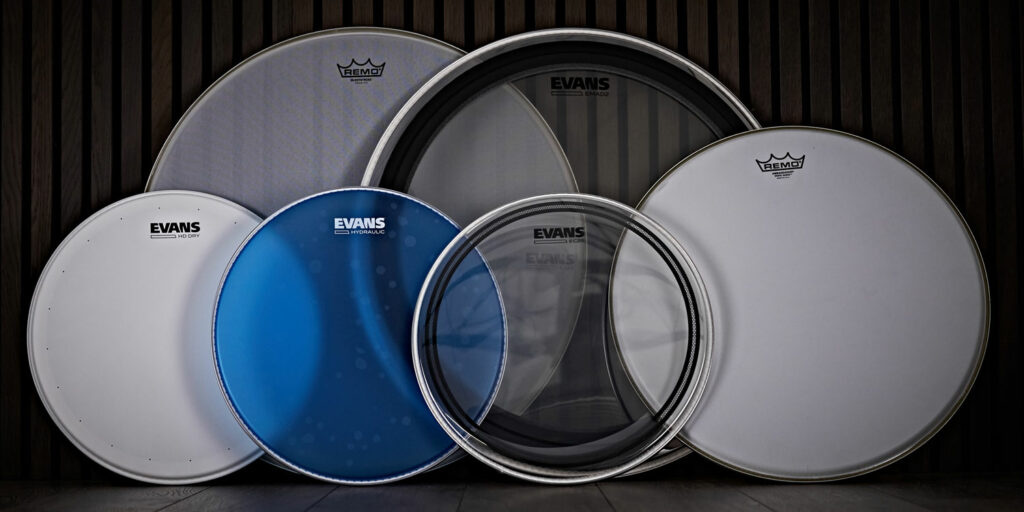
A complete guide to drum heads, covering single and double ply designs, coated vs clear finishes, and how to choose the best drum heads for your playing style. Learn the key differences between Evans and Remo, and find the right heads for your kit.
If your kit does not sound, feel or tune the way you want it to, the problem is often the drum heads. They are the point of contact between the player and the drum, so changing them can transform the attack, sustain, feel and overall character of a kit without replacing the drums themselves.
Drum heads can also be confusing. Single or double ply, coated or clear, open or pre-dampened, batter or resonant: two heads that look similar can behave very differently once fitted and tuned.
At Graham Russell Drums, helping players choose and fit heads is part of our everyday work. This guide explains the main constructions, what to use on each part of the kit and how to choose the right drum heads for the sound you are trying to achieve.
Quick Answer: Which Drum Heads Should You Choose?
- Versatile tom sound: Remo Emperor, Evans G2 or Aquarian Response II.
- Open and resonant toms: Remo Ambassador, Evans G1 or an Aquarian single-ply equivalent.
- Shorter, more controlled toms: Remo Pinstripe, Evans EC2 or another head with built-in edge control.
- Versatile snare: Remo Ambassador Coated, Evans G1 Coated or Aquarian Texture Coated.
- More controlled snare: Evans HD Dry, a reverse-dot head or another design with a control ring.
- Versatile bass drum: Remo Powerstroke 3 or Evans EQ3.
- More pre-muffled bass drum control: Evans EMAD, Remo SMT or an Aquarian Super-Kick.
How Drum-Head Construction Changes the Sound
The brand name matters less than the way a head is built. Ply count, film thickness, coating, reinforcement dots, control rings and other dampening features all affect how freely the surface vibrates.
A lighter, simpler construction normally allows more sustain, sensitivity and audible overtone. Adding film, dots or dampening generally increases durability and focus while shortening the note. Neither direction is automatically better: the correct choice depends on the drum, tuning, player and musical setting.
Single-Ply vs Double-Ply Drum Heads

Single-Ply Heads
Most standard single-ply batter heads use one layer of film at around 10mil, although thinner and thicker designs are available. With less material restricting movement, the head can vibrate freely and produce an open sound with strong sensitivity, longer sustain and more audible overtones.
They respond particularly well to lighter strokes and wider dynamic changes. That makes models such as the Remo Ambassador and Evans G1 common on snares and toms where responsiveness and natural shell character are priorities.
The trade-off is that an open head exposes more of everything. Poor tuning and unpleasant overtones are less easily hidden, and consistently heavy players may wear or dent a thin head sooner.
Double-Ply Heads
Double-ply heads commonly use two layers of approximately 7mil film. The additional mass usually produces a fuller, more focused note with fewer high overtones and greater durability under harder playing.
Remo Emperor, Evans G2 and Aquarian Response II are sensible all-round tom options. They retain enough tone for general use while making low and medium tunings easier to control in rehearsal, live and recording environments.
Double ply does not automatically mean dead or heavily dampened. An open two-ply head can still sustain considerably more than a single-ply head with a thick control ring. Construction must be considered as a complete package.
Coated, Clear and Alternative Finishes
Clear Heads
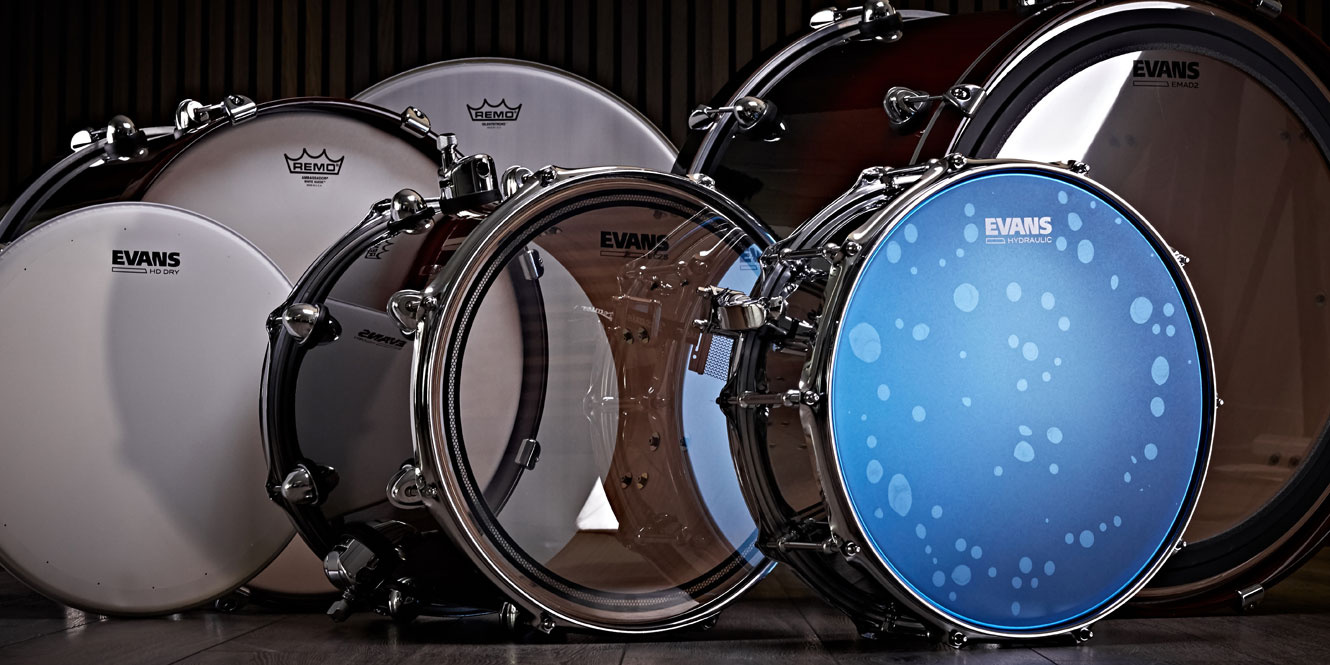
Clear heads often provide a direct attack and a clean, immediate feel. They are widely used on toms because the initial strike remains easy to hear within guitars, cymbals and other amplified instruments.
The finish alone does not determine the sound. A clear Pinstripe is substantially more controlled than a coated single-ply Ambassador, because the difference in ply and dampening outweighs the surface finish.
Coated Heads
A textured coating can soften the initial attack slightly and add a warmer, more tactile feel. Coated heads are the standard choice for snare drums and are especially useful for traditional brush sweeps, where the textured surface creates the continuous sound a smooth clear head cannot produce as effectively.
Coated tom heads can also reduce some high-frequency attack and give the kit a rounder presentation. They are not only for jazz: coated Emperors, G2s and similar heads work extremely well for rock, pop, recording and general-purpose playing.
Calf-Style, Fibre and Specialist Finishes
Heads such as Remo Fiberskyn, Evans Calftone and Aquarian Modern Vintage use textured or fibre-style surfaces to create a softer attack and a more traditional character. They can suit vintage kits, brushes, orchestral work or any setup where a round, warm response is more important than maximum cut.
Suede, coloured and opaque heads can also provide a different feel or appearance. Always check the underlying construction first; the colour or finish should not distract from whether the head is single ply, double ply, reinforced or dampened.
Dots, Control Rings, Vents and Built-In Dampening
Many heads sit between completely open and heavily muffled designs. Manufacturers use several methods to focus the sound without requiring separate gels, rings or internal pillows.
Reinforcement Dots
A centre or reverse dot adds material around the main striking area. This increases durability and gives central hits a firmer, more focused attack while allowing the uncovered outer area to retain sensitivity and tone.
Heads such as the Remo Controlled Sound and Evans Power Center Reverse Dot are useful when a standard single ply feels too open or fragile, but a heavily controlled head would remove too much character.
Control Rings
An inlay or edge ring reduces the movement that creates some unwanted high overtones. The Evans EC2 uses an underside Sound Shaping Technology ring near the perimeter, while the Remo Pinstripe controls the edge through its two-ply construction and dampened outer area.
These designs are popular when toms ring for too long or become difficult to manage through microphones. They shape the sound at source while still allowing the centre of the drum to produce a clear note.
Vents and Dry Heads
Small perimeter vents allow air to escape and reduce some sustain and overtone. The Evans HD Dry combines vents with an internal control ring to produce a focused snare sound without adding an external dampener.
Hydraulic and Oil-Filled Designs
Hydraulic heads place a thin layer of oil between two plies. They produce a deep, short and heavily controlled sound with very little overtone. This can be ideal for low, processed or vintage-style tom sounds, but players seeking maximum openness and dynamic detail may find them too restrained.
Pre-Muffled Bass-Drum Heads
Modern kick heads often include foam, rings or damping profiles. The Evans EMAD uses an external sleeve with interchangeable damping rings. Remo SMT uses an externally mounted damping profile with free-floating acoustic foam, while Aquarian Super-Kick heads use an integrated floating muffling system.
These heads make a punchy bass-drum sound easier to achieve without filling the shell with towels or pillows. They still require tuning, and an excessively dampened shell can remove useful body and low end.
For adjustable external control rather than a permanently dampened head, visit our complete guide to drum dampening.
Choosing Tom Drum Heads
Tom Batter Heads
The batter head controls most of the attack and feel. A single-ply head gives the shell room to speak and works well when you want an open, lively tom sound. A straightforward double-ply head is the safest general recommendation when you want more durability and a fuller, more manageable note.
If standard double-ply heads still sustain for too long, move towards EC2, Pinstripe, Aquarian Performance II or another controlled construction. If the toms already sound too short or dull, move in the opposite direction before adding more dampening.
For many drummers, clear double-ply batters with clear single-ply resonant heads provide the most versatile starting point. Coated batters can make the attack rounder without forcing the sound into one genre.
Tom Resonant Heads
Most toms use a clear single-ply resonant head. It allows the drum to sustain and develop a full note without adding excessive mass beneath the shell.
The resonant head should not be ignored simply because it is not struck. Old resos can stretch, lose consistency and make a drum frustrating to tune even when the batter is new. Replacing both sides can restore balance to a kit that has become flat or uneven.
A resonant head tuned slightly higher than the batter often creates a controlled note with a clean decay. Similar pitches usually produce a long, full sustain, while a lower resonant pitch can create a noticeable downward bend. These are starting points rather than fixed rules; the shell and room will affect the result.
Browse our full selection of tom drum heads and tom head packs.
Choosing Snare Drum Heads
Snare Batter Heads
A coated 10mil single-ply head is the standard place to begin. Remo Ambassador Coated, Evans G1 Coated and Aquarian Texture Coated allow the shell, hoops, tuning and natural overtone to remain audible while responding well across a broad range of dynamics.
Add a reverse dot when you want more durability and centre focus without losing the open character of the outer area. Choose a control ring or dry vents when the drum produces more ring than you want. Move to thicker two-ply designs when durability and a dense backbeat matter more than maximum sensitivity.
Our separate Favourite Snare Drum Heads guide compares the main products we use and recommend in much greater detail.
Snare-Side Heads
The lower snare head is not a normal clear tom head. It is an extremely thin specialist membrane designed to transfer movement to the snare wires. Standard all-purpose options such as the Evans Hazy 300 and Remo Ambassador Snare Side use approximately 3mil film and suit most conventional drum-kit snares.
A damaged, overstretched or dented snare-side head can reduce wire sensitivity, ghost-note response and crispness. Replace it with another proper snare-side model rather than fitting a tom resonant head underneath the drum.
Browse all snare drum heads.
Choosing Bass-Drum Heads
Bass-Drum Batter Heads
An open single-ply kick head produces a broad note and plenty of shell resonance, but it often requires more careful tuning and separate dampening. A head with a single control ring, such as a Powerstroke 3 or EQ3, provides a useful balance of body and focus for live, studio and general-purpose playing.
EMAD, SMT and Super-Kick designs provide more control immediately. They suit players who want a short, defined note and straightforward microphone placement, although the heaviest damping may be unnecessary on smaller bass drums or in rooms that already absorb low frequencies.
A beater patch can protect the striking area and slightly sharpen the attack. It is especially worthwhile for hard playing, plastic or wooden beaters and double-pedal use.
Ported vs Unported Front Heads
An unported resonant head normally creates a fuller, more resonant note and preserves more air movement inside the shell. It is a strong choice when maximum low-end body and a traditional bass-drum response are priorities.
A port allows microphone access, lets air escape more quickly and generally shortens the note. It can make the drum easier to manage on stage, but a very large or poorly positioned hole may remove more resonance than intended. A modest off-centre port is a common compromise.
Do not cut a port without supporting the film. A proper reinforcement ring helps prevent tearing and produces a cleaner edge.
Browse our complete selection of bass-drum heads.
Remo vs Evans vs Aquarian: Does the Brand Matter?
Remo, Evans and Aquarian all produce professional-quality drum heads. Construction should be compared before brand: an Evans G1 is more closely related to a Remo Ambassador than it is to a heavily controlled Evans Hydraulic.
| Brand | Useful starting points | Notable design approach |
|---|---|---|
| Remo | Ambassador, Emperor, Pinstripe, Powerstroke | A very broad catalogue covering open traditional constructions, controlled designs and specialist finishes. |
| Evans | G1, G2, EC2, UV, EMAD | Strong use of specialised control systems, durable UV coatings and bass-drum damping options. |
| Aquarian | Texture Coated, Response II, Performance II, Super-Kick | Distinctive collar, hoop and multi-ply manufacturing systems with several excellent open and controlled alternatives. |
Equivalent models are not identical, and differences in collar, hoop, coating and feel can matter once a player becomes familiar with them. However, broad claims such as “Remo is always open” or “Evans is always controlled” are misleading because every brand produces both kinds of head.
Mixing brands is completely normal. You might prefer one manufacturer’s snare batter, another company’s tom construction and a third bass-drum damping system. The drums do not need matching logos; they need heads that work together musically.
Explore the Aquarian range at GRD, or compare all available drum heads.
When Should You Replace Drum Heads?
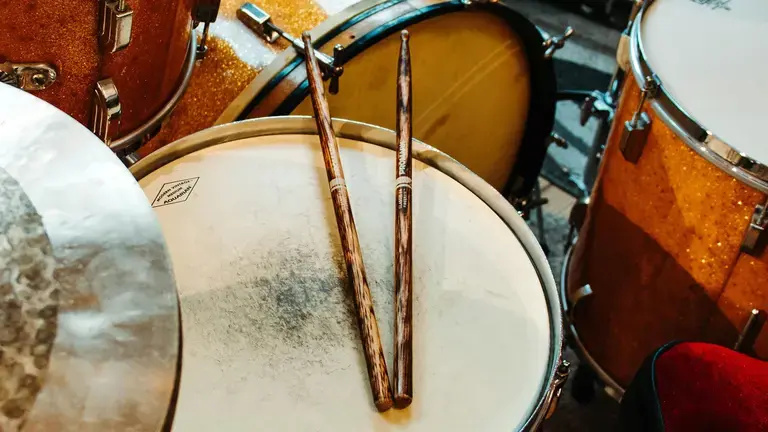
Drum heads rarely fail at one obvious moment. They gradually lose tone, elasticity and tuning consistency, so players often compensate with more tension or dampening without realising that the head itself has worn out.
Common signs include:
- Visible dents, stretching or damage
- A worn coating that no longer supports brush sweeps
- Loss of attack, body or sensitivity
- Difficulty matching the pitch at each tension rod
- A head that will not settle or hold tuning
- Inconsistent response across the playing surface
There is no universal replacement schedule. A touring drummer may change batter heads regularly, while a lighter home player can use the same set for much longer. Condition and performance matter more than a fixed number of weeks or months.
Resonant heads generally last longer because they are not struck, but they still stretch and age. Replacing them periodically can make a substantial difference to tuning and sustain, particularly when they have remained on a kit through several sets of batter heads.
Replacing all tom batters together with a correctly sized head pack is an easy way to restore consistency across the kit. Before ordering, measure or confirm the drum diameters rather than relying only on the kit’s model name.
Choose Drum Heads by the Sound You Want
Genres can be a useful clue, but most drummers play more than one style. It is often better to identify the problem you are trying to solve.
| Problem or goal | Direction to consider |
|---|---|
| Toms ring for too long | Double ply, built-in edge control or adjustable external dampening |
| Drums sound too dead | Open single ply, less internal muffling and fresh resonant heads |
| Heads dent or wear quickly | Double ply, reinforcement dot, beater patch or a more durable coating |
| Toms lack attack | Clear batter head, firmer tuning or a less heavily dampened construction |
| Kit sounds too bright | Coated, calf-style or warmer specialist finish |
| Snare rings excessively | Control ring, dry vents, reverse dot or removable dampener |
| Bass drum is too boomy | Pre-muffled batter, modest internal control or a ported front head |
| Drums will not tune consistently | Inspect both heads, seat them evenly and replace stretched or damaged heads |
Head choice and tuning work together. Even the correct model will sound poor if it is seated unevenly or badly matched to the resonant side. Our drum-tuning tools can help with repeatability, but careful listening around every tension rod remains the most important skill.
Frequently Asked Questions
What drum heads should a beginner choose?
A coated single-ply snare head, clear double-ply tom batters and clear single-ply tom resonant heads are a dependable starting point. For the bass drum, choose a lightly pre-muffled head such as a Powerstroke 3 or EQ3. This setup provides a useful balance of tone, durability and control without forcing the kit into an extremely open or heavily dampened sound.
Do resonant drum heads need replacing?
Yes. Resonant heads last longer than batter heads because they are not struck, but they still stretch and lose consistency. Replace them when the drums become difficult to tune, sustain unevenly or continue to sound tired after fitting fresh batter heads.
Can you mix Remo, Evans and Aquarian drum heads?
Yes. There is no technical reason every drum must use the same brand. Compare the construction and sound of each head, then choose the combination that gives the snare, toms and bass drum the response you need.
Should a bass-drum front head have a hole?
A port is useful for microphone access and normally creates a shorter, more controlled note. An unported head generally retains more resonance and low-end body. Neither is automatically better; choose according to the sound, stage setup and recording approach.
How do I know what size drum head I need?
Drum heads are ordered by the diameter of the shell, not the depth. A 10-inch tom needs a 10-inch head and a 22-inch bass drum needs a 22-inch head. Check the manufacturer’s specification or measure across the shell from bearing edge to bearing edge after removing the hoop.
Written by Alex Neave
I've been part of the Graham Russell Drums team since October 2025, but my connection with the shop goes back much further as a customer since 2012. I've advised drummers of all ages and experience levels, worked on a wide range of second-hand kits and spent a lot of time helping customers navigate the often overwhelming world of drum gear. Alongside over 13 years of playing experience, that hands-on exposure to a wide range of products allows me to write buying guides based on real-world knowledge and practical experience rather than simply repeating manufacturer specifications.












Comments
Be the first to comment...