


The Drummers Guide to Hearing Protection
- Posted on
- By Joel
- 0
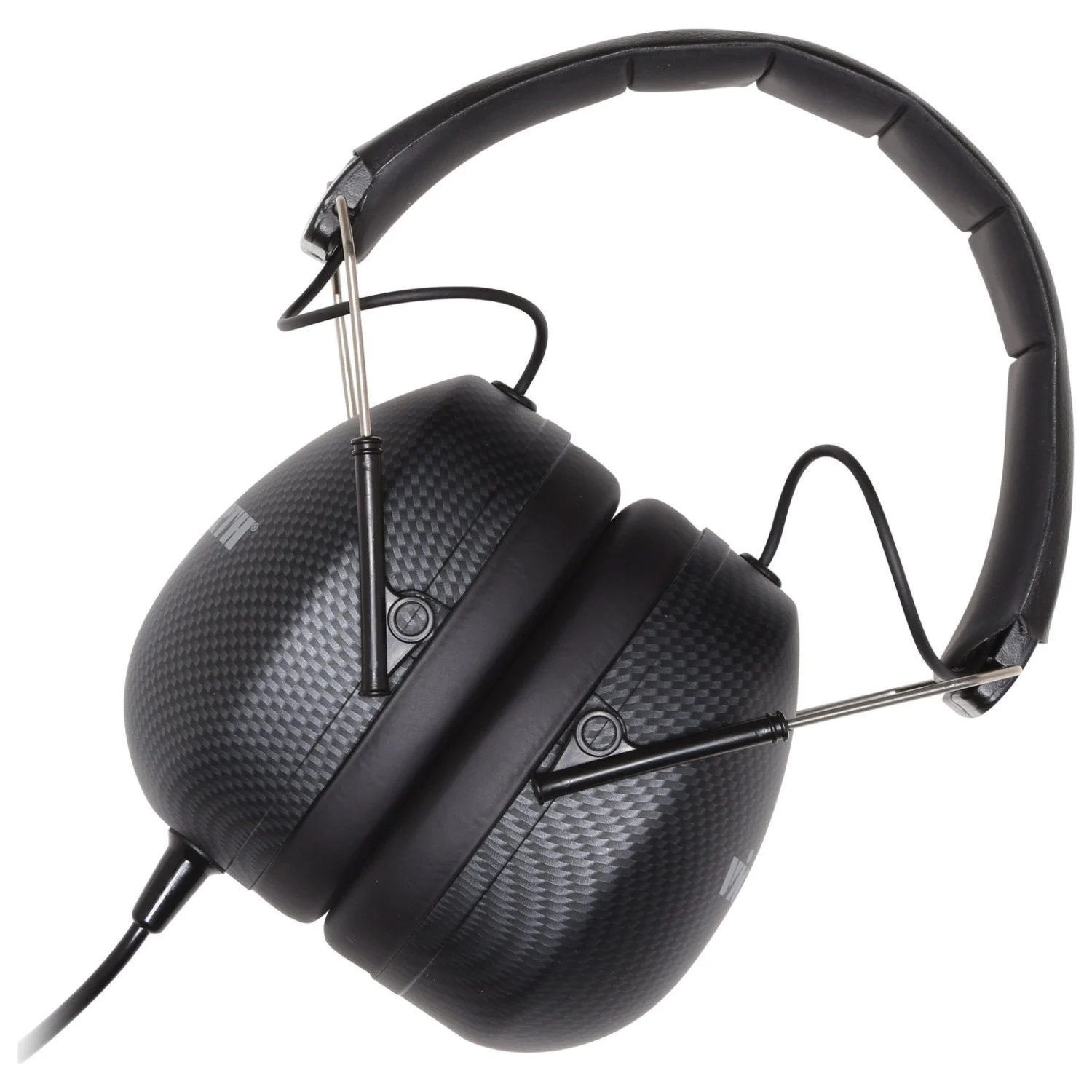
At Graham Russell Drums our team of professional drummers seriously understand the significance of protecting your ears when you play the drums. This guide covers all the options and what is available to purchase from Graham Russell Drums.
Hearing Protection for Drummers: Earplugs, Ear Defenders and Isolation Headphones
Hearing protection should be treated as an essential part of a drummer’s setup. Acoustic drums and cymbals produce powerful, impulsive sound close to the player’s ears, while rehearsals, gigs, teaching, concerts and headphone use can all add to the same cumulative sound exposure.
The right choice is not simply the product with the biggest decibel number. It needs to fit properly, provide enough reduction for the situation and still let you hear the music clearly enough to play naturally. This guide explains the main types of hearing protection for drummers, how sound exposure works and what to consider for younger players.
Quick Answer
For most adult drummers: D’Addario dBuds are the flexible in-ear choice because they switch between 12 and 24 dB, while the 12 dB Vic Firth filtered plugs offer a simpler option for musical clarity. For full-volume acoustic practice without audio, the passive Vic Firth DB23 is our standout over-ear choice. If you also need a click, track or electronic-kit feed, choose the wired SIH3 or the Bluetooth model according to the connection you need. Babies and children should use properly fitting, age-appropriate protection.
Why Hearing Protection Matters for Drummers
Sound does not become harmless because it is music. The Health and Safety Executive’s music-industry guidance explains that hearing risk depends on both level and duration. It also stresses that exposure is cumulative, including noise away from work. A rehearsal, a gig, loud headphones and a concert the following day all contribute to the overall dose received by your ears.
Noise-induced hearing loss is often gradual and may not become obvious until significant damage has occurred. Possible effects include permanent hearing loss, tinnitus, reduced ability to distinguish speech in busy rooms, hyperacusis and changes in how pitch is perceived. For a musician, that can affect both everyday life and the ability to work with sound.
UK workplace rules use daily or weekly exposure action values of 80 dB and 85 dB. These are legal workplace thresholds for employers, not a claim that every sound below 85 dB is safe in every circumstance. At higher levels, allowable exposure time falls quickly.
How Loud Is Too Loud?
The World Health Organization uses a weekly sound-dose approach for recreational listening. Its examples below show why “only a little louder” can make a large difference to safe listening time.
| Average sound level | WHO example of safe listening time per week |
|---|---|
| 80 dB | 40 hours |
| 85 dB | 12 hours 30 minutes |
| 90 dB | 4 hours |
| 95 dB | 1 hour 15 minutes |
| 100 dB | 20 minutes |
| 105 dB | 8 minutes |
| 110 dB | 2.5 minutes |
These figures are useful for understanding the relationship between loudness and time, but they cannot measure your exact risk at a drum kit. Acoustic spaces, playing style, cymbal choice, distance, fit and sharp peak sounds all make a difference. A phone sound-level app can be useful for awareness, but it is not a replacement for a professional noise assessment where one is required.
Which Type of Hearing Protection Is Best for Drumming?
Filtered Musician’s Earplugs
Designed to reduce level while keeping the frequency balance more natural than basic foam plugs. This makes it easier to hear cymbal detail, bandmates and speech.
Best for: rehearsals, gigs, teaching and concerts where musical clarity matters.
Foam Earplugs
Small, affordable and useful as spare protection. They often reduce high frequencies more than low frequencies, so music and speech can sound muffled. Correct insertion is essential.
Best for: emergency spares, audiences and situations where fidelity is less important.
Over-Ear Defenders
Simple to fit, easy to remove between takes and suitable for players who dislike in-ear products. Glasses, hair or hats can break the seal around the ear cup.
Best for: practice, lessons, children and straightforward passive protection.
Isolation Headphones
Combine passive external-noise reduction with headphones for a click, backing track or monitor feed. Isolation helps you hear the feed without fighting the acoustic kit, but the headphone signal must still be kept at a sensible level.
Best for: practice with tracks, recording, clicks and electronic drums.
Custom-Moulded Musician’s Plugs
Professionally fitted plugs can provide a consistent seal and use interchangeable, relatively flat-response filters. They cost more and require an appointment with a qualified hearing professional, but can be worthwhile for frequent players.
Best for: regular performers, teachers and other musicians with high or repeated exposure.
What About In-Ear Monitors?
In-ear monitors can help reduce stage volume and provide a controlled personal mix, particularly when they fit well and are used with an appropriate limiter. However, an IEM or ordinary earbud is not automatically a hearing protector. A poor seal may encourage the player to turn the monitor mix up to overcome the acoustic drums, while an excessive signal can itself cause damage. Never assume that a product is protective simply because it sits inside the ear.
Is More Attenuation Always Better?
No. The HSE warns against over-protection as well as under-protection. If too much useful sound is removed, a musician may loosen or remove the protection, turn the monitor feed up, or play harder to compensate. A choice of filters can be valuable because the correct setting for a quiet rehearsal may be different from the setting needed beside a loud acoustic kit or on a powerful stage.
Our Main Ear-Protection Picks
Three particularly useful choices in the GRD range are D’Addario dBuds, Vic Firth’s filtered in-ear plugs and the Vic Firth DB23 passive over-ear defenders. They approach the same problem differently: dBuds give you two selectable levels, the Vic Firth plugs prioritise a simple and natural musical balance, and the DB23 places substantial passive reduction and straightforward fitting first.
D’Addario dBud: The Most Flexible In-Ear Option
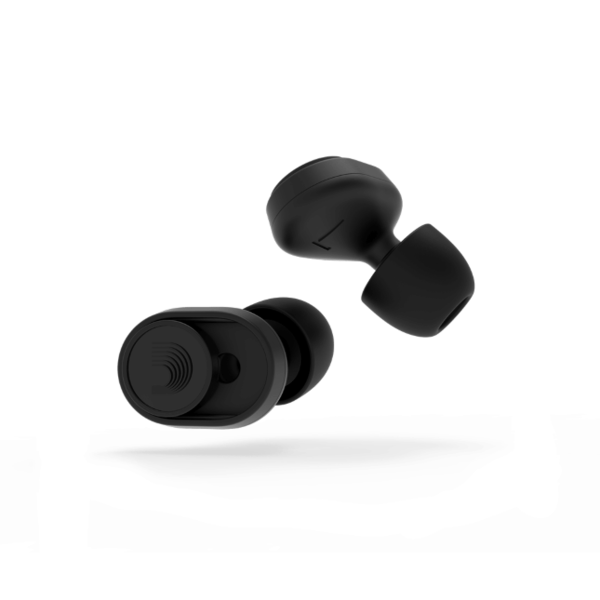
The D’Addario dBud Premium Hearing Protection uses a small slider on each plug to switch between 12 dB and 24 dB of stated attenuation. That is particularly useful for drummers who move between different environments: the lower setting can preserve more room and band sound, while the higher setting is available when the exposure becomes more demanding.
- Two selectable settings: 12 dB and 24 dB.
- Five pairs of silicone tips help you find a secure seal.
- Acoustic filtering is designed to retain a clearer, more balanced musical sound than a basic solid plug.
- Detachable leash and carrying case are included.
Choose dBuds if: you want one reusable pair that can move quickly between moderate and stronger reduction without carrying separate filters.
Vic Firth High Fidelity Earplugs: Simple, Natural-Sounding Protection
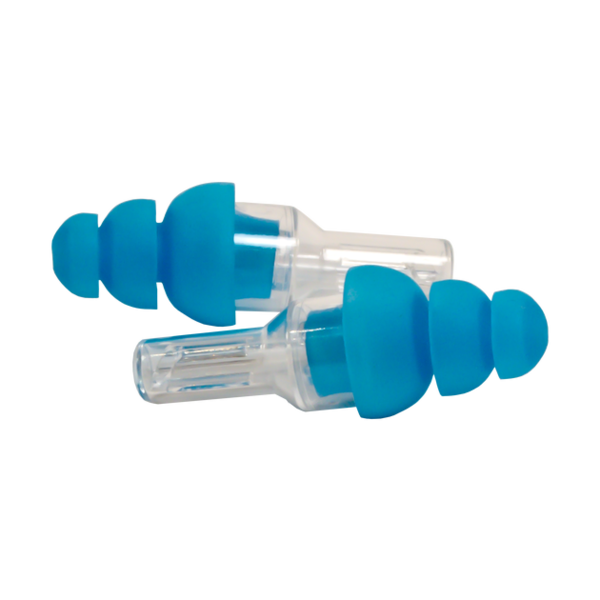
Vic Firth now calls these simply Vic Ear Plugs, while the GRD listing uses the familiar Vic Firth High Fidelity Earplugs name. Developed with Etymotic, their filtered design is shaped to preserve speech and musical clarity while reducing the overall level by a stated 12 dB across frequencies when used as directed.
- 12 dB stated sound reduction across frequencies.
- Filtered response intended to sound more natural than ordinary foam plugs.
- Regular and large fittings are available.
- Heavy-duty neck cord and carrying case are included.
Choose the Vic Firth plugs if: you want affordable, reusable filtered protection and musical clarity matters more than having the strongest reduction. These are hearing-protection plugs, not audio-playing in-ear monitors.
Vic Firth DB23: Maximum Simplicity for Acoustic Practice
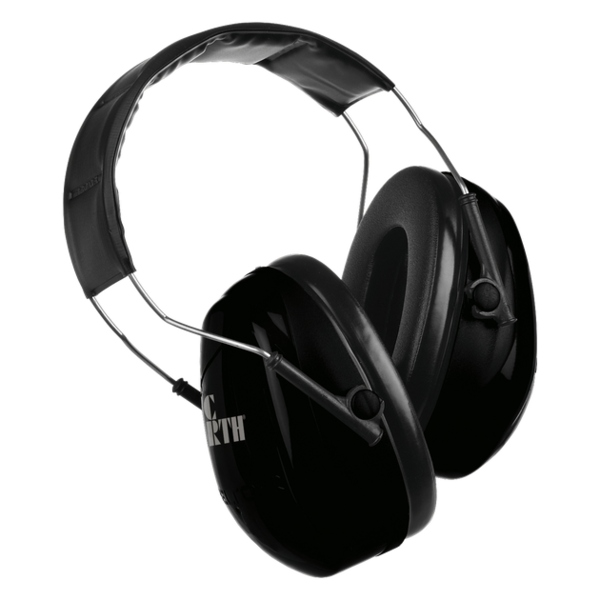
The Vic Firth DB23 Earmuffs are passive adult-sized hearing protectors with a stated 25 dB reduction. There are no speakers, batteries or audio cables: the padded cups simply form a seal around the ears. That makes them a strong, uncomplicated choice for acoustic practice, drum lessons and other situations where you do not need a click or backing track.
- 25 dB stated external-noise reduction.
- Passive protection only: they do not play audio.
- Adult fit with padded headband and ear cushions.
- Lightweight design with a drawstring carrying bag.
Vic Firth Over-Ear Models Explained
Vic Firth’s three over-ear products look related, but they do different jobs. The DB23 is a passive earmuff with no audio. The current SIH3 adds wired stereo monitoring while retaining a stated 25 dB of external-noise reduction. The Bluetooth model offers wireless playback and optional wired use, but its stated external reduction is lower at 20 dB.
Vic Firth SIH3 Stereo Isolation Headphones
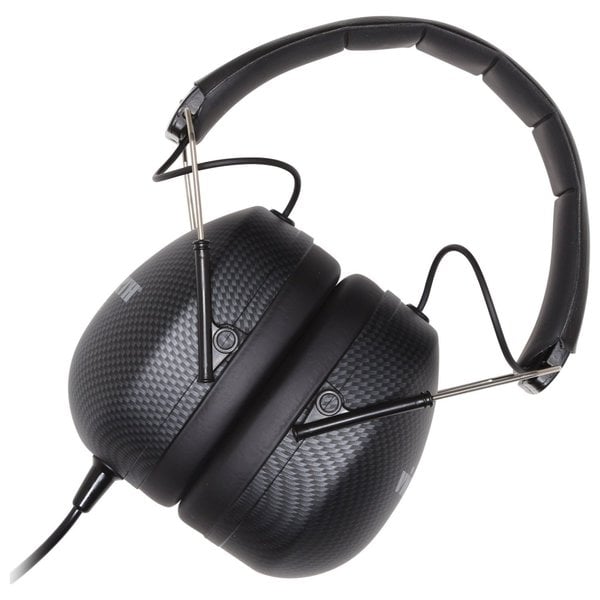
The current SIH3 is the wired choice for a click, backing track, electronic kit or monitor feed. Vic Firth specifies 25 dB of external-noise reduction, 50 mm dynamic Mylarcon drivers and a 20 Hz–20 kHz frequency response.
It has a 3.5 mm stereo plug, includes a 6.3 mm/quarter-inch adaptor and comes with a drawstring bag. The direct wired connection makes it the more dependable Vic Firth option for timing-critical monitoring.
Vic Firth Bluetooth Isolation Headphones
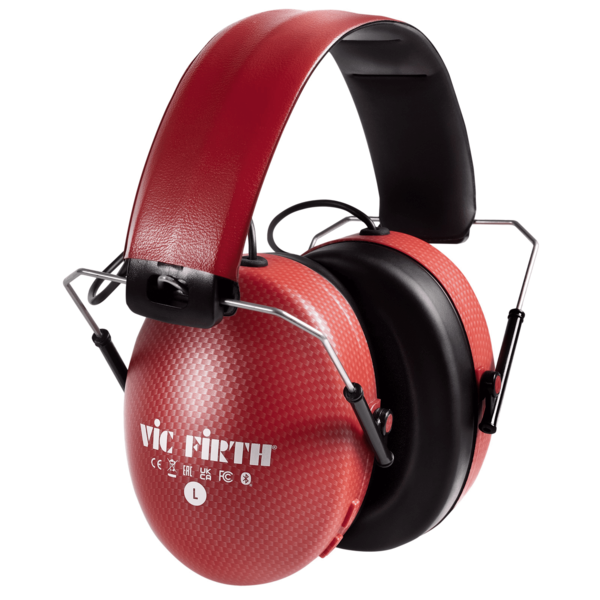
The Bluetooth model, product code VXHP0012, reduces external noise by a stated 20 dB. It uses 50 mm dynamic Mylarcon drivers, has a quoted 20 Hz–20 kHz response and provides approximately 20 hours of use from its rechargeable battery.
A detachable 3.5 mm cable and quarter-inch adaptor are included. Vic Firth’s specification sheet lists Bluetooth 5.0 and 250 ms latency, so use the cable when playing to a precise click, recording or doing timing-sensitive practice.
| Vic Firth model | Stated external reduction | Audio | Best choice when… |
|---|---|---|---|
| DB23 Earmuffs | 25 dB | None | You want simple passive protection for acoustic practice or lessons. |
| SIH3 Stereo Isolation | 25 dB | Wired stereo | You need reliable, low-latency monitoring for a click, track or electronic kit. |
| Bluetooth Isolation | 20 dB | Bluetooth or supplied cable | Wireless convenience matters, with the cable available for precise timing. |
Other Useful GRD Options
- Alpine MusicSafe Pro: interchangeable 16, 19 and 22 dB filters for players who want several attenuation choices.
- Alpine Defender: adult passive defenders with up to 26 dB stated reduction.
- Alpine Muffy Baby and Muffy Kids: age-specific passive protection for babies and children.
You can also browse the complete GRD ear-protection range and our separate headphones range. Product availability can be at the Fareham shop or warehouse, so check the location shown on the product page before making a special journey.
Hearing Protection for Children and Young Drummers
Good hearing habits should begin with the first drum lesson, not after ringing or muffled hearing has already appeared. The WHO-ITU safe-listening standard uses a more cautious reference allowance for children of 75 dB for 40 hours per week, compared with 80 dB for adults. The Musicians’ Union also advises teachers of loud groups, including drumming groups, to consider filtered plugs or over-ear protectors for students.
A 2022 systematic review and meta-analysis in BMJ Global Health, drawing on 33 studies and 19,046 people aged 12 to 34, concluded that unsafe listening practices are common and estimated that between 0.67 and 1.35 billion young people globally could be at risk of hearing loss. This does not mean that every young musician will develop hearing loss, but it does support building safer listening habits early.
Alpine Muffy Baby
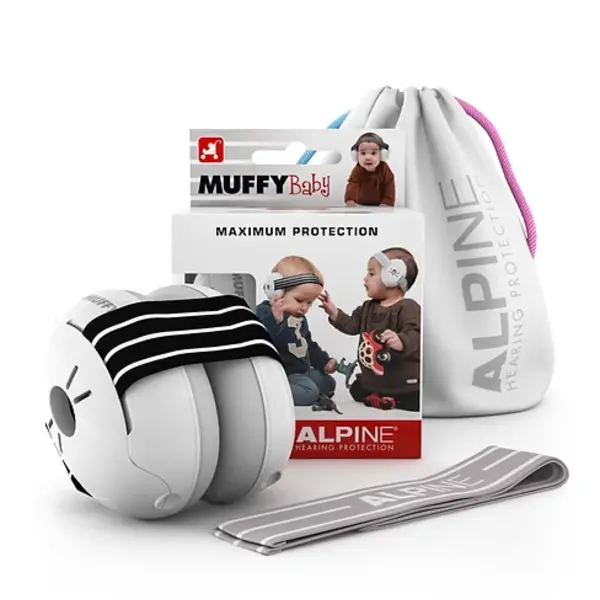
Purpose-designed baby protection uses a soft headband rather than a conventional adult-style overhead band. Follow the current fitting and age guidance supplied with the product.
Alpine Muffy Kids

Child-sized cups and headband help create the seal that may be missing when a smaller player wears an adult model. Check the fit every time the protectors are used.
- Use a model designed for the child’s age and head size. Adult earmuffs may not seal correctly on a smaller head.
- Make sure the whole ear is enclosed and that hair, glasses or clothing do not break the seal.
- For babies, use purpose-designed baby defenders with a suitable soft headband rather than improvised adult protection.
- Teach the child to put protection on before the loud playing begins and keep it on throughout.
- Replace damaged cups, cushions or plugs, and keep reusable products clean according to the manufacturer’s instructions.
Protection Is Only Part of the Answer
The Musicians’ Union and HSE both place hearing protection after sensible steps to reduce exposure at source. You may not be able to turn an acoustic drum kit down with a volume control, but you can still reduce the dose:
- Take regular quiet breaks and avoid placing the loudest rehearsals or lessons back-to-back.
- Keep monitor, click and backing-track levels as low as practical.
- Increase distance from loudspeakers and avoid standing directly in front of them.
- Improve the room with appropriate acoustic absorption. Hard reflective rooms can make a kit feel much more aggressive.
- Use drum silencer pads, mesh drum heads or a practice pad when full acoustic volume is unnecessary.
- Where practical, split technique work from full-kit playing so every hour of practice is not an hour at full volume.
An electronic kit reduces acoustic drum and cymbal noise, but it does not remove listening risk. The headphone or IEM level still matters, especially during long practice sessions.
Warning Signs and When to Get Help
Ringing or buzzing after playing, temporarily muffled hearing, sensitivity to everyday sounds, difficulty following speech in a noisy room or needing more volume than before should not be treated as a normal part of drumming. Stop the exposure, review your protection and arrange a professional hearing check if symptoms persist or recur.
The NHS advises seeking urgent help for sudden hearing loss in one or both ears, hearing that worsens over days or weeks, or hearing loss accompanied by symptoms such as earache or discharge. This guide is general information and does not replace advice from a GP, audiologist or occupational hearing specialist.
Frequently Asked Questions
What is the best hearing protection for drummers?
For many drummers, reusable filtered earplugs provide the most natural balance between protection and musical clarity. Over-ear defenders are simpler and often provide stronger passive reduction. Isolation headphones are better when you also need a click, track or monitor feed. The correct choice depends on sound level, exposure time, fit and what you need to hear.
What is the difference between the Vic Firth DB23 and SIH3?
Both have a stated 25 dB external-noise reduction, but the DB23 is a passive earmuff with no speakers. The SIH3 is a wired stereo isolation headphone, so it can play a click, backing track, electronic kit or monitor feed. Choose the DB23 when protection alone is the job and the SIH3 when you also need audio.
Should I choose dBuds or Vic Firth filtered earplugs?
Choose dBuds if you value the ability to switch between 12 and 24 dB and want five tip sizes to help with fit. Choose the Vic Firth plugs if you want a simpler, lower-cost filtered option with a stated 12 dB reduction and a choice of regular or large fitting. Whichever you choose, the seal and consistent use matter as much as the headline figure.
Are normal noise-cancelling headphones enough for acoustic drums?
Do not assume so. Consumer noise cancellation is mainly designed to reduce steady background sound and is not the same as certified hearing protection or a stated passive isolation rating. Use a product specifically suitable for the level and type of sound involved.
Do in-ear monitors protect a drummer’s hearing?
They can be part of a safer, lower-volume stage setup when they seal properly, are correctly limited and are used at a sensible level. However, IEMs and earbuds are not automatically hearing protectors. Poor isolation or an excessive monitor level can increase risk.
Should I use the strongest ear protection available?
Not automatically. You need enough reduction for the exposure without removing so much useful sound that you play harder, turn monitoring up or stop wearing the protection. Products with selectable or interchangeable filters can help across different environments.
Does a child need ear protection for drum lessons?
A child playing or sitting close to an acoustic kit should have suitable protection. Choose a child-sized model that seals correctly and make wearing it part of the lesson routine from the beginning. The teacher should also consider room acoustics, lesson length and quiet breaks.
Do electronic drums remove the risk?
They greatly reduce acoustic drum and cymbal volume, but the sound delivered through headphones or IEMs can still be too loud. Keep the module and device volumes controlled, take breaks and avoid raising the level simply because the pads themselves are quieter.
What should I do if my ears ring after drumming?
Treat it as a warning sign, move to a quiet environment and review the protection and levels used. If ringing persists, returns regularly or is accompanied by a change in hearing, speak to a GP or qualified hearing professional. Sudden hearing loss needs urgent medical advice.
Sources and Further Reading
- Musicians’ Union: Hearing Health for Music Teachers and Students
- Musicians’ Union: Hearing Protection for Musicians
- Health and Safety Executive: Sound Advice, Control of Noise at Work in Music and Entertainment
- World Health Organization: Deafness and Hearing Loss, Safe Listening
- WHO and ITU: Safe Listening Devices and Systems Standard
- Dillard et al. (2022): Prevalence and Global Estimates of Unsafe Listening Practices in Adolescents and Young Adults
- NHS: Hearing Loss
- Vic Firth: Vic Ear Plugs
- Vic Firth: DB23 Ear Protection Earmuffs
- Vic Firth: SIH3 Stereo Isolation Headphones
- Vic Firth: Bluetooth Isolation Headphones
- D’Addario: dBud Earplugs
Written by Joel Smith
Joel started drumming at the age of ten and has worked at Graham Russell Drums since first joining the shop for work experience at fifteen. His background includes Grade 8 drumming, music performance and teaching qualifications, years of live playing, and extensive hands-on experience helping players and families choose, set up and understand drum equipment.












Comments
Be the first to comment...