

Yamaha Drum Kits
Professional Drum Kits
Yamaha Professional Drum Kits: Every Series, Explained
Every Yamaha professional drum kit we stock sits on this page, and the series below are genuinely different instruments rather than a row of price points. Yamaha do not build a good, better, best ladder at this level: PHX, Absolute Maple Hybrid, Recording Custom and Live Custom Hybrid Oak each have their own shell recipe and their own voice, and the vintage 9000 sits alongside them as the kit they all descend from. The one you should buy depends on the sound in your head and the rooms you play, not on which one costs the most.
Jump Straight To A Series
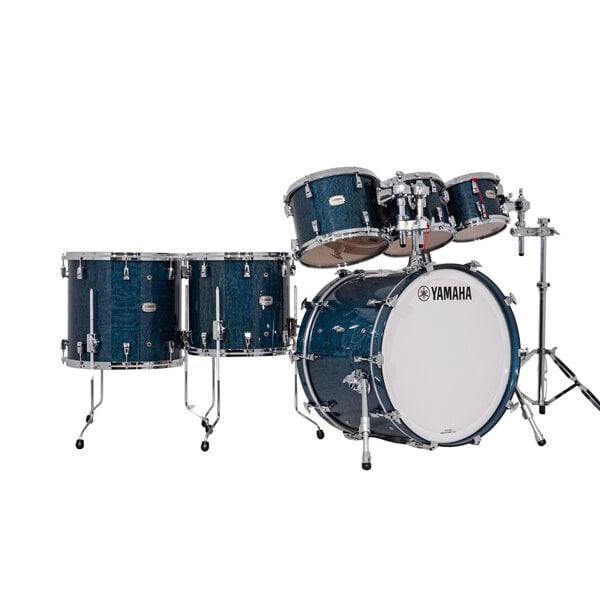
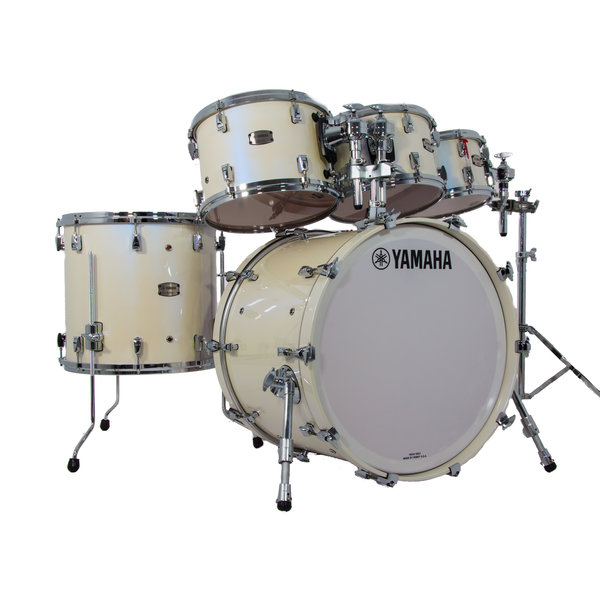

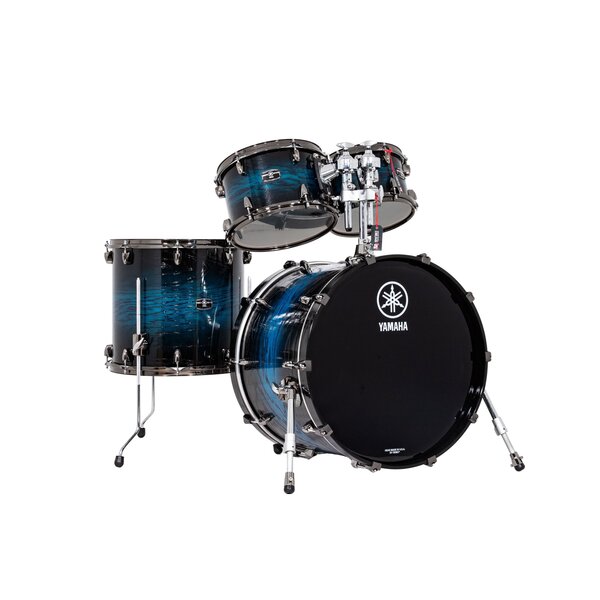
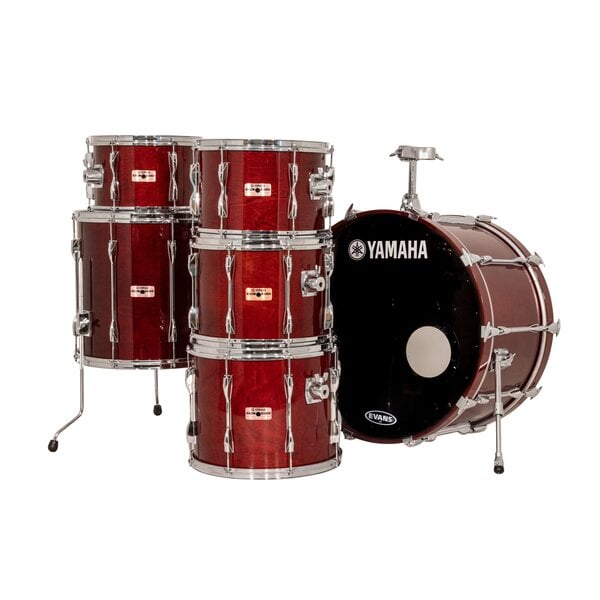
This is the directory page. Browse everything here, or click into a series below for the full detail on shells, sizes, finishes, hardware and the players who use them. If you are weighing up a Yamaha pro kit, a birch drum kit, a maple drum kit, an oak drum kit or a hybrid shell kit, start with the cards below and work down.
The Yamaha professional series
Specifications first, opinions second. Here is what actually separates them.
The Flagship, Since 2008
Yamaha PHX
Shell
Maple, kapur, jatoba, kapur, maple. 11 ply, 10.3 mm
Hoops
3.0 mm die-cast aluminium, wood on the bass drum
Edges
30 degrees, with the radius varied by drum
Character
The widest tonal range Yamaha build. A hard, dense core wrapped in softer woods, so it stays composed when you hit it and still sings quietly.
The Warm One, Since 2014
Yamaha Absolute Maple Hybrid
Shell
Maple, wenge, maple. 6.2 mm toms, 8.0 mm bass drums
Hoops
3.0 mm aluminium, wood on the bass drum
Build
Hook lugs, and the hybrid shell idea inherited from the PHX
Character
Maple warmth with a wenge core keeping it focused. Rounder and more open than birch, loud enough to hold a stage without turning to mush.
The Studio Standard
Yamaha Recording Custom
Shell
All North American birch. 6 ply, 6 mm
Hoops
1.6 mm triple-flanged steel, wood on the bass drum
Edges
30 degrees, 1.5 mm radius, specified by Steve Gadd
Character
Attack, focus and a controlled decay. Arrives at the microphone already sounding like a record, which is why it has been the studio default for decades.
Built For The Stage
Yamaha Live Custom Hybrid Oak
Shell
Oak with a phenolic sheet core. 7 ply, 7.3 mm toms, 8.8 mm bass drums
Hoops
2.3 mm Dyna Hoops in dark silver, wood on the bass drum
Edges
45 degrees, 1.5 mm radius, with YESS III mounting
Character
The loudest and most cutting of the four. Oak is dense and projects hard, and the phenolic core tightens the bottom end, so it is built for a stage rather than a control room.
And then there is the one that started it, which we list separately because buying it is a different exercise altogether.
Vintage And Pre-Owned
Yamaha 9000
Shell
100% birch, one-piece lugs, sprayed finishes
Built
Japan, from the 1970s through to the 1990s
Eras
Pre-YESS and YESS era models, each with their own following
The original, and the direct ancestor of today’s Recording Custom. These are bought for what they are rather than as a cheaper way into the name, and each one has to be judged on its own condition and history. Worth saying plainly: if a particular era is the sound you are chasing, a good 9000 will get you closer to it than anything currently in production.
How to choose between them
We have this conversation most weeks on the shop floor. It usually goes in this order.
-
Start with the wood, not the badge. Birch gives you attack and control, maple gives you warmth and a longer note, oak gives you volume and projection, and a hybrid shell lets Yamaha dial in more than one of those at once. That single decision narrows the list to two before anyone mentions money.
-
Think about the room, not the record. A kit that sounds enormous in a showroom can be unmanageable in a small studio, and a kit voiced for microphones can feel polite on a loud stage. Tell us where these drums are going to live and the shortlist usually writes itself.
-
Decide whether you want new or the original. If what you are really chasing is a sound from a particular era, a well-chosen 9000 may get you closer than anything currently in production. If you want warranty, matched sizes and a finish of your choosing, buy new.
-
Then come and hit them. Specifications tell you what a kit is made of, not what it sounds like under your own hands. Everything on this page is set up and playable in our 5,000 square foot Fareham showroom, which is the only part of this process that actually settles it.
Looking at the wider Yamaha range
This page covers the professional tier only. Yamaha’s range runs a long way below it, and plenty of players are better served further down: the Stage Custom Birch, the Tour Custom and the Rydeen all do jobs these do not, usually for a great deal less money.
Browse wider
See everything Yamaha we stock on the Yamaha brand page, or compare Yamaha against every other brand at this level in Professional Drum Kits.
Want to know more before choosing?
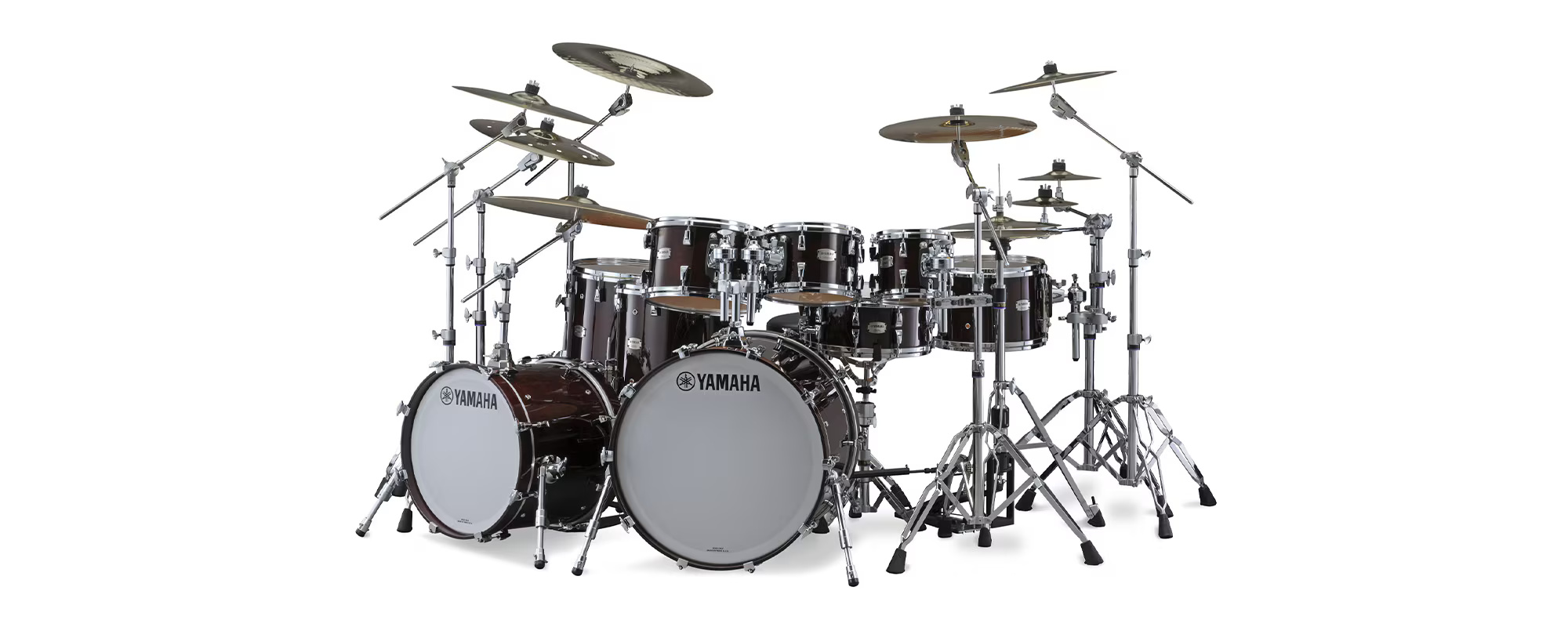

Yamaha professional drum kit FAQs
Which is Yamaha’s top drum kit?
The PHX is the flagship. It arrived in 2008 and it is the most involved shell Yamaha build, an 11 ply, 10.3 mm hybrid running maple, kapur, jatoba, kapur and maple, finished with 3 mm die-cast aluminium hoops. Yamaha describe the Absolute Maple Hybrid as inheriting that hybrid shell technology from the PHX. That said, flagship does not mean right for you: plenty of professionals choose a Recording Custom over a PHX because the sound suits the work, not because of the cost.
What is the difference between birch, maple, oak and a hybrid shell?
Birch is stiffer and denser, so it trims a little low midrange and pushes the attack forward. That is the Recording Custom, and it is why engineers have reached for it for decades. Maple is softer and more open, giving a longer, rounder, warmer note that fills a room. Oak is denser still and projects hard, which is why the Live Custom Hybrid Oak is the one we point loud bands at. A hybrid shell layers different materials together on purpose: the PHX wraps a hard jatoba core in softer kapur and maple, the Absolute Maple Hybrid puts a wenge core between maple plies, and the Live Custom Hybrid Oak sandwiches a phenolic sheet between oak plies to tighten the low end.
Is a vintage 9000 a cheaper way into a Recording Custom?
That is the wrong way to think about it. The 9000 is the kit the Recording Custom grew out of, Japanese built and long out of production, and good ones are bought deliberately for their own character rather than as a budget route to the name. Buy a 9000 because you want a 9000. Related: our Yamaha 9000 Recording Custom guide covers the eras, the players and what to look for.
Can I try these before I buy?
Yes, and you should. Our Fareham showroom runs to 5,000 square feet of kits set up and ready to play, which means you can hear a PHX, an Absolute Maple Hybrid and a Recording Custom back to back in the same room on the same day, with the same sticks and the same ears. No appointment needed. Call us on 01329 834012 if you want a particular kit ready when you arrive.
Talk To Someone Who Plays Them
Not sure which Yamaha is yours?
Tell us what you play, where you play it and what you are chasing, and we will narrow it down with you properly. We build, tune and set up these kits every week, so the advice comes from the shop floor rather than a brochure.