


When to Replace Drum Heads & How to Change Them
- Posted on
- 0
Learn how to tell when your drum heads need replacing and how to change tom, snare and bass drum heads correctly.
Drum heads do not need replacing simply because they have a few stick marks, but they also do not last forever. As heads stretch, wear and lose their original response, a drum can become harder to tune and may begin to sound flatter or less consistent.
This guide explains how to tell when a drum head actually needs replacing and how to fit a new head correctly on toms, snare drums and bass drums without repeating the full tuning process.
At Graham Russell Drums, changing and fitting heads is part of our regular work on new, used and customer-owned kits. If you are still deciding which replacement heads to buy, start with our Complete Drum Head Buyer's Guide.
Quick Answer
When Should You Replace Drum Heads?
A drum head may be ready for replacement if it:
- Has deep dents, pitting, splits or other visible damage
- Has become difficult to tune evenly
- Sounds noticeably dull or lifeless compared with before
- Has stretched or distorted so that it no longer sits evenly
- Has coating worn smooth or completely through in the main playing area
- Is an old resonant head that is making a freshly reheaded drum difficult to tune or control
How Long Do Drum Heads Last?
There is no exact lifespan for a drum head because playing frequency, technique, tuning, head construction and musical setting all make a difference.
A drummer rehearsing several times a week and playing regular gigs will normally wear through batter heads much faster than somebody playing at home for an hour or two each week.
As a rough guide, active drummers may replace heavily used batter heads every 6–8 weeks or around every two months, while recreational players can often use the same heads for six months or considerably longer.
Bass drum batter heads commonly last longer than tom or snare batters, with 6–12 months being a useful general guide for regular playing.
- Frequently used tom and snare batter heads: often around 6–8 weeks to 2 months for active players
- Recreational batter heads: often around 6 months or longer if they still tune and respond well
- Bass drum batter heads: commonly around 6–12 months for regular players, often longer with lighter use
- Resonant heads: usually last longer than batter heads and may remain usable well beyond 6 months
These figures are only guidelines, not replacement deadlines. A professional or recording drummer may change heads earlier for maximum consistency, while a lightly used home kit may sound perfectly good with the same heads for much longer.
GRD Tip
Use time as a reminder to check your heads rather than as a strict replacement schedule. Condition, sound, feel and tuning stability are better indicators than age alone.Replacing Heads Very Frequently?
If you are denting or wearing through batter heads much faster than the rough times above, first check that your sticks are not chipped and that your setup or technique is not repeatedly damaging the same area.
If the issue is simply regular hard playing, moving from a standard single-ply batter to a two-ply head can be a sensible choice because the extra layer generally improves durability while producing a fuller, more controlled response.
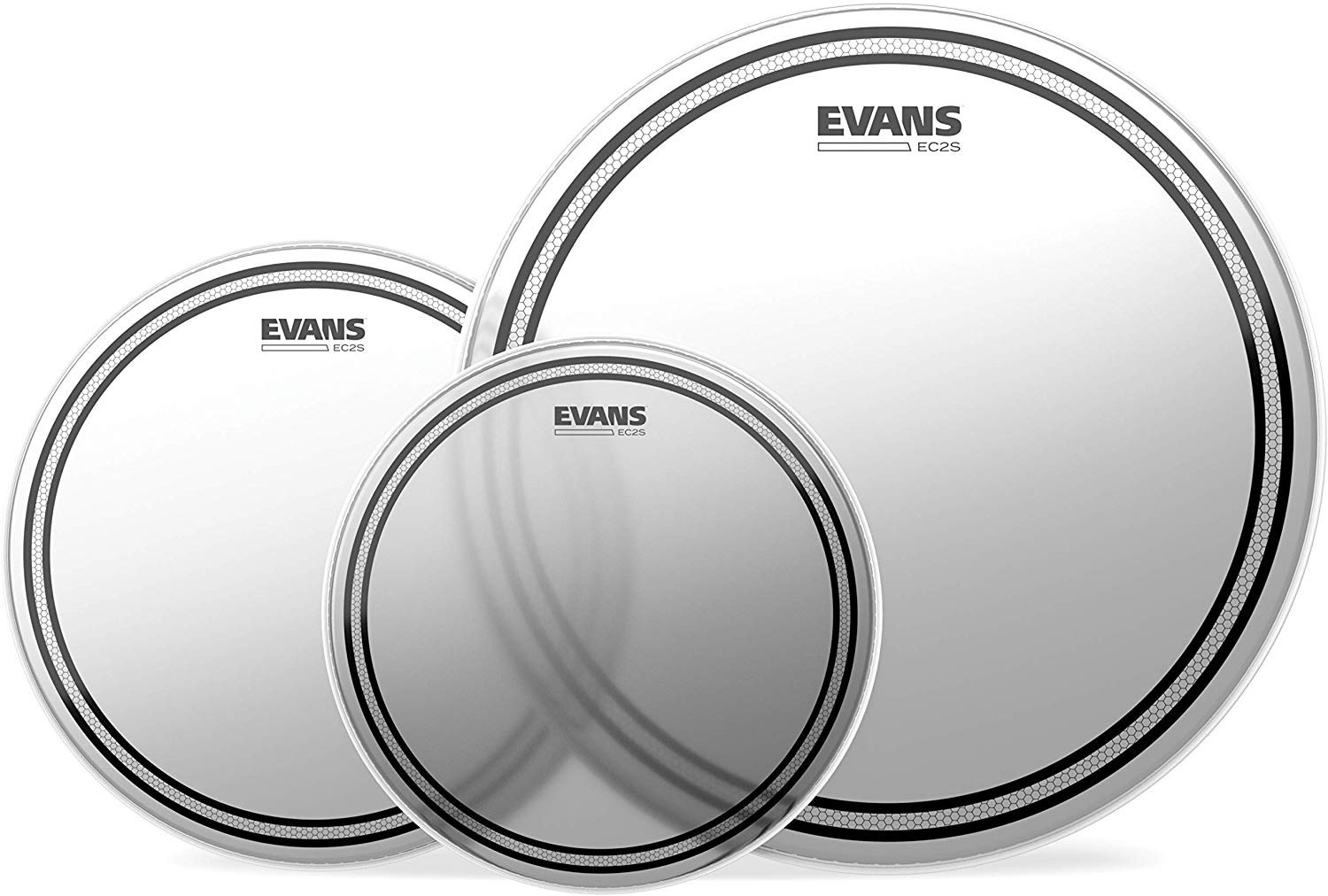
For toms, an Evans G2 or Remo Emperor is a straightforward two-ply starting point. If you also want more built-in overtone control, the Evans EC2 is another durable two-ply option.
For the full differences between single-ply, double-ply, coated, clear and controlled heads, see our How to Choose Drum Heads: Complete Buyer's Guide.
This durability advice applies to batter heads. Do not fit a thick two-ply tom head in place of a dedicated snare-side head, and remember that resonant heads have a different job from the surfaces you strike.
How Do You Know When Drum Heads Need Replacing?
There is no fixed replacement schedule that suits every drummer. How quickly a head wears depends on how often you play, how hard you hit, the head construction, tuning tension and whether the drum is used for practice, gigs or recording.
Visible Dents or Damage
Deep dents, pits, splits or a visibly distorted playing surface are strong signs that a batter head is past its best. Once the film has been permanently deformed, it can become difficult to tension evenly and may respond differently across the head.
The Head Will Not Tune Evenly
If one area repeatedly refuses to match the rest of the head despite the hoop and tension rods sitting correctly, the head may have stretched unevenly. Before replacing it, check that the bearing edge is clean and the hoop is seated properly.
The Drum Sounds Flat or Lifeless
A worn head can lose some of the attack, sustain and sensitivity it had when newer. Retuning should always be the first thing to try, but if the drum still sounds unusually dead or papery after careful tuning, a fresh head may make a significant difference.
The Coating Has Worn Away
Coating wear is normal, particularly on snare and tom batter heads. A smooth or thinning patch does not automatically mean the head needs replacing, but heavy wear can change the feel and sound, especially if you use brushes or rely on the textured coating.
GRD Tip
Stick marks alone are not a reason to replace a drum head. If the head still tunes evenly, feels good and gives you the sound you want, it can usually stay on the drum.Do Resonant Heads Need Replacing?
Yes, although they normally wear more slowly because they are not struck directly. Resonant heads still stretch and age, and an old resonant head can make a drum harder to tune or reduce its sustain and responsiveness even when the batter head is new.
Before You Change a Drum Head
Choose the Correct Replacement Head
Make sure the replacement head is the correct diameter and the right type for the drum. Drum head sizes are based on the diameter of the shell, measured from bearing edge to bearing edge rather than across the outside of the hoop.
If you are unsure whether you need a single-ply, double-ply, coated, clear, batter or resonant head, our Complete Drum Head Buyer's Guide explains the main options in detail. You can also browse our full drum head range.
Tools for the Job
- Correct replacement drum head
- Drum key
- Clean, soft cloth
- A clear, stable work surface
A standard drum key is all you need for most head changes. The Tama TDK10 Drum Key is a simple everyday option for removing and reinstalling tension rods.
If you are changing a complete set of heads, the Evans Pull Cord Drum Key can speed up the repetitive loosening and initial tightening of tension rods while still giving you a fixed key head for finer adjustment.
You can also browse our drum tuning tools, although none of these specialist tools are essential for a normal head change.
How to Change a Tom Drum Head
Loosen the Old Head Evenly
Place the drum on a stable surface and use a drum key to loosen the tension rods gradually. Work around the head in small stages rather than fully removing one rod while the others remain tight.
Remove the Hoop and Old Head
Once the tension has been released, remove the tension rods and lift off the hoop. Keep the rods and washers together so nothing is lost, then remove the old head from the shell.
Check and Clean the Bearing Edge
Use a clean, soft cloth to remove dust or debris from the bearing edge and the inside of the hoop. This is also a useful opportunity to check for obvious damage before fitting the new head.
GRD Tip
Avoid sanding, filing or altering a bearing edge unless you know exactly what you are doing. For a normal head change, a gentle clean is enough.Fit and Centre the New Head
Place the new head over the shell and make sure it sits cleanly around the bearing edge. Refit the hoop, line up the tension rods and thread each rod into its lug by hand.
Bring Every Rod to Finger-Tight
Turn each tension rod with your fingers until it reaches light resistance. At this point, the head should be centred and the hoop should sit evenly around the drum. The drum is now ready to tune.
If you are replacing several tom heads at once, a correctly sized drum head pack can make it easier to keep the same construction across the kit. You can also browse individual tom drum heads.
How to Change a Snare Drum Head
Changing the Batter Head
The snare batter head is changed in much the same way as a tom head: loosen the rods evenly, remove the hoop and old head, clean the bearing edge, fit the new head and bring the rods to finger-tight.
If you are still deciding what to fit on top, our Favourite Snare Drum Heads: Evans and Remo Compared guide covers the main batter-head options we use and recommend.
Changing the Snare-Side Head
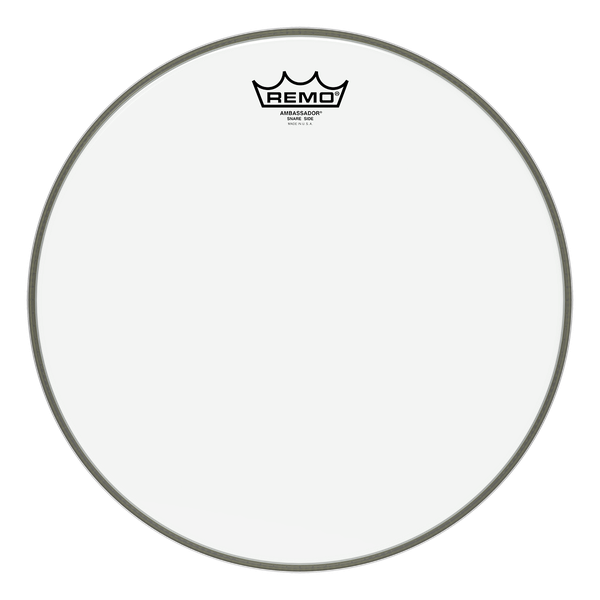
The snare-side or resonant head needs a little more care because it is much thinner than a normal tom or batter head and the snare wires run directly across it.
Before removing the bottom hoop, the wires need to be released so they are not trapped underneath the hoop or damaged during the head change.
Disengage the Snare Wires
Turn the snare strainer or throw-off to the off position so the wires are no longer pulled tightly against the head.
It is also useful to set the strainer tension adjustment somewhere around the middle of its range, giving you room to make final adjustments when the wires are refitted.
Detach and Move the Wires Out of the Way
Loosen the clamp at either the strainer or butt-plate end and remove the strap or cord from one side of the snare-wire unit. You can remove the wires completely if you prefer, but detaching one end is often enough to fold them carefully away from the bottom head.
If you leave one side attached, take care not to bend, twist or kink the wires while you work. Keep the strap or cord with the wire unit so it is ready to reinstall later.
Remove the Bottom Hoop and Old Head
Loosen the tension rods gradually and remove the bottom hoop. Note the orientation of the hoop before lifting it away: the snare-side hoop normally has slots or gates that line up with the strainer and butt plate so the snare straps or cords can pass through correctly.
Fit the New Snare-Side Head
Clean the bearing edge gently, place the new head onto the shell and refit the bottom hoop in the same orientation. Thread the tension rods by hand and bring them to an even finger-tight position before tuning.
Snare-side heads are extremely thin, so avoid pressing heavily into the centre of the film. Once the head is fitted, tune it before fully refitting the snare wires.
Refit and Centre the Snare Wires
With the strainer still in the off position, lay the snare wires flat across the centre of the bottom head. The wire set should run straight from the butt plate to the strainer without being pulled to one side.
Pay particular attention to the metal end plates at each end of the snare wires. These should sit on the head and must not ride up onto or over the bearing edge of the shell.
The wires should pass naturally through the snare beds and sit evenly across the centre of the head.
If the wires were removed completely, attach the butt-plate end first and centre the wire unit before tightening that clamp.
Then feed the strap or cord at the strainer end through its clamp with the throw-off still disengaged. Pull it just tight enough to remove obvious slack and secure the clamp.
Engage the Strainer and Adjust the Wire Tension
Turn the throw-off on and use the tension adjustment to fine-tune the snare response. The wires should sit firmly enough to respond cleanly but should not be pulled excessively tight, which can choke the drum and reduce sensitivity.
GRD Tip
Before turning the snare wires back on, look along the bottom of the drum and check that the wire unit is centred, the straps or cords are running straight and neither metal end plate is touching the bearing edge.You do not automatically need new snare wires just because you have changed the bottom head. If the existing wires are straight, undamaged and responding evenly, they can normally be refitted.
For more on batter heads, snare-side heads, wires, strainers and how the parts of the drum work together, see our Ultimate Beginners Snare Drum Guide.
Replacement batter and resonant options are available in our snare drum head range.
How to Change a Bass Drum Head
Changing the Batter Head
If you are changing the batter head, remove the bass drum pedal first so the hoop is completely free. Loosen the T-rods or tension rods gradually, then remove the claws and hoop before lifting off the old head.
Wipe the bearing edge and hoop clean, place the new head onto the shell and refit the hoop. Position the claws evenly around the hoop and thread each tension rod by hand until it reaches light resistance.
Changing the Resonant Head
If you are changing a front resonant head, decide where you want any logo or microphone port to sit before you begin tightening.
Once tension is applied, it is much easier to get the orientation right from the beginning than to rotate the head later.

If you still need the replacement itself, browse our bass drum heads for batter and resonant options.
What Should You Do After Fitting a New Drum Head?
Tune the New Head
Once the new head is centred and every tension rod is at finger-tight, the fitting stage is complete. From here, the drum needs to be brought up to tension and tuned evenly.
Rather than repeat the full tuning process here, follow our How to Tune a Drum Kit: Step-by-Step Guide, which covers toms, snare and bass drum in detail.
Add Dampening Only If Needed
Once the drum is tuned cleanly, you can decide whether it needs any additional control.
If you deliberately want to shorten the sustain or reduce an overtone, our Complete Guide to Drum Dampening covers gels, rings, Snareweights and bass drum muffling without using dampening to hide a worn or badly tuned head.
-
Choose the correct replacement head
-
Release the old head evenly
-
Clean and inspect the bearing edge
-
Centre the new head and hoop
-
Bring every tension rod to finger-tight
-
Tune the new head evenly
Common Drum Head Changing Mistakes
Buying the Wrong Size
Check the actual shell size before ordering. Do not measure across the outside of the hoop.
Tightening One Side Too Far Ahead of the Others
Bring the head up evenly so the hoop and collar remain centred rather than pulling one side down first.
Forgetting to Clean the Bearing Edge
A head change is the easiest time to remove dust and debris from an area that is normally hidden beneath the head.
Assuming Every Mark Means the Head Is Worn Out
Cosmetic wear is normal. Replace a head because its condition is affecting feel, tuning or sound, not simply because it no longer looks new.
Keep Reading
Related GRD Guides
This guide is designed to sit between choosing a replacement head and tuning it once fitted. These GRD guides cover the closely related parts of the process in more detail:
How to Choose Drum Heads: The Complete Buyer's Guide – single vs double ply, coated vs clear, batter vs resonant and choosing heads for the sound you want.
Favourite Snare Drum Heads: Evans and Remo Compared – our main snare batter and snare-side recommendations.
How to Tune a Drum Kit: Toms, Snare & Bass Drum Explained – the next step once the replacement head is fitted.
Drum Dampening: The Complete GRD Breakdown – controlling sustain and overtones after the drum is tuned.
Ultimate Beginners Snare Drum Guide – snare heads, wires, throw-offs and the other parts that affect snare response.
Ultimate Beginner Acoustic Drum Kit Buyer's Guide – including when a two-ply head upgrade can make sense on a first acoustic kit.
How to Set Up a Drum Kit: Beginner's Step-by-Step Guide – the next beginner step once the heads are fitted, tuned and the drums are ready to position.
Final Thoughts
Changing drum heads is a straightforward job once you understand the order: release the old head evenly, clean the drum, centre the replacement and bring the rods to finger-tight before tuning.
The bigger decision is knowing when replacement is actually necessary. If a head still tunes properly and gives you the sound and feel you want, there is no need to change it simply because it looks used.
Frequently Asked Questions
How often should drum heads be replaced?
There is no fixed schedule. Active drummers may change heavily used batter heads every 6–8 weeks or around every two months, while recreational players may get six months or much longer from them. Use these figures as a guide and replace heads when wear starts to affect tuning, sound or feel.
Do stick marks mean a drum head needs replacing?
No. Stick marks are normal. If the head remains flat, tunes evenly and still sounds good, cosmetic marks alone are not a reason to replace it.
Should I replace all my tom heads at the same time?
Not necessarily, but replacing a worn set together can give the toms a more consistent feel and response. Drum head packs can also make this convenient when your kit uses common sizes.
Do resonant drum heads need replacing?
Yes. They normally last longer than batter heads because they are not struck directly, but they still stretch and age and can eventually make a drum harder to tune.
Can I change a drum head myself?
Yes. For most tom, snare and bass drum heads, you only need the correct replacement head, a drum key and a little care when removing and refitting the hoop.
What should I do after fitting a new drum head?
Bring each tension rod to finger-tight, then tune the head evenly. Our step-by-step drum tuning guide covers the full process for toms, snare and bass drum.
Should I use a two-ply head if I keep wearing drum heads out?
It can be a good option for batter heads, particularly on toms. If your sticks and technique are not causing unusual damage, a two-ply head such as an Evans G2 or Remo Emperor generally offers greater durability than a standard single-ply head, with a fuller and more controlled sound. This does not apply to specialist snare-side heads.
Do I need new snare wires when changing the snare-side head?
No. If the existing snare wires are straight, undamaged and responding evenly, they can normally be refitted to the new head. Replace them when they are stretched, bent, damaged or no longer giving an even response across the drum.
Need Some Help?
Still Not Sure?
Give us a call and speak to a member of our expert team.
Call 01329 834012











Comments
Be the first to comment...