


How to Choose a Drum Stool: The Complete Drum Throne Buyer’s Guide
- Posted on
- By Alex
- 0
Learn how to choose the right drum stool, from round and saddle seats to spindle, hydraulic and backrest designs, with practical advice on comfort, stability, adjustment and build quality.
Last updated: 21 August 2026
A good drum stool is one of the most important pieces of hardware on your kit. Often referred to as a drum throne, it supports you for the entire time you are playing and provides the stable base from which both your hands and feet operate. If it feels unstable, sits at the wrong height or becomes uncomfortable over longer sessions, it can quickly become distracting, while the right setup should allow you to settle into a consistent playing position and concentrate on the kit.
Choosing a drum stool is not simply a case of spending more. Seat shape, padding, height adjustment, base construction, portability and optional features such as backrests can all make a significant difference, and personal preference plays a major role. In this guide, we will break down the main designs, explain what changes between them and help you work out which features are actually worth looking for.
Quick Answer: Which Drum Stool Should You Choose?
For most drummers, start with a stable, height-adjustable stool in the seat shape you find most comfortable. Choose a round seat for freedom of movement, a saddle seat for a wider contoured surface, a spindle stool for fine repeatable adjustment, or a pneumatic design if you regularly change height. Our all-round GRD recommendation is the Gibraltar 9608 Pro Round, while specialist designs are worth considering if you specifically want a backrest, split seat or lever-operated adjustment.
Why Does Your Drum Stool Matter?
Your throne is the foundation of your playing position. Unlike a normal chair, a drummer's seat needs to provide a stable centre while leaving both legs free to operate the bass drum pedal, hi-hat and, for some players, a double pedal. Excessive movement beneath you can make it harder to maintain a consistent position, particularly when both feet are active.
Height is equally important. There is no universal measurement that every drummer should use, as leg length, pedal position and playing style all vary. A useful starting point is to sit high enough that your legs can move freely and your feet can operate the pedals without you needing to lean heavily to one side or constantly readjust your balance.
Comfort becomes increasingly important the longer you play. A short practice session may not expose the limitations of a basic model, but rehearsals, lessons, recording sessions and gigs can involve sitting behind the kit for hours at a time. That is where seat shape, padding quality and the stability of the base begin to make a much more noticeable difference.
Round, Saddle and Specialist Drum Stools
Round Drum Stools
The round throne is the traditional design and remains one of the most popular choices. Because the seat has no pronounced front or side contours, it generally allows the drummer to reposition themselves easily and does not dictate a particular leg position. Round seats are available at almost every price level, so the shape alone does not tell you whether a model is entry-level or professional.
What changes between different round models is the diameter and thickness of the seat, the density of the foam, the covering material and, importantly, the construction underneath it. A large padded seat on an unstable base is still an unstable throne, so the seat and base need to be considered together.
Saddle and Motorcycle-Style Drum Stools
Saddle or motorcycle-style stools use a wider, shaped seat with cutaways around the front of the thighs. Some drummers prefer the additional surface area and more defined sitting position, particularly during longer playing sessions, while others prefer the freedom of a traditional round seat.
The shape is not automatically an upgrade from a round seat; it is largely a matter of preference. One current example is the TAMA 1st Chair Wide Rider, which uses a saddle-style moulded urethane seat with front cutaways designed to leave the thighs free to move.
If you are unsure which shape you prefer, this is one of the strongest reasons to physically try a few different designs before deciding. Two well-made seats can feel completely different even when their specifications appear similar on paper.
Specialist and Split-Seat Designs
Some drum thrones move away from the conventional single-piece round or saddle seat. Split-seat designs divide the sitting surface into separate sections, changing where pressure is applied and allowing the two sides of the seat to respond differently as the drummer moves around the kit.
The AHEAD Spinal-G range is a good example. Its distinctive split-seat construction creates a central channel between the two sides of the seat. AHEAD describes the design as allowing the pelvis to move more naturally while letting the tailbone hang between the two seat sections rather than being compressed against a conventional one-piece surface. This makes the Spinal-G a genuinely different option for drummers who want to compare an alternative seat design with a traditional throne.
The range is available in different configurations, including the AHEAD Spinal-G Hydraulic Stool, which combines the split-seat concept with memory-foam cushioning and lever-operated height adjustment.
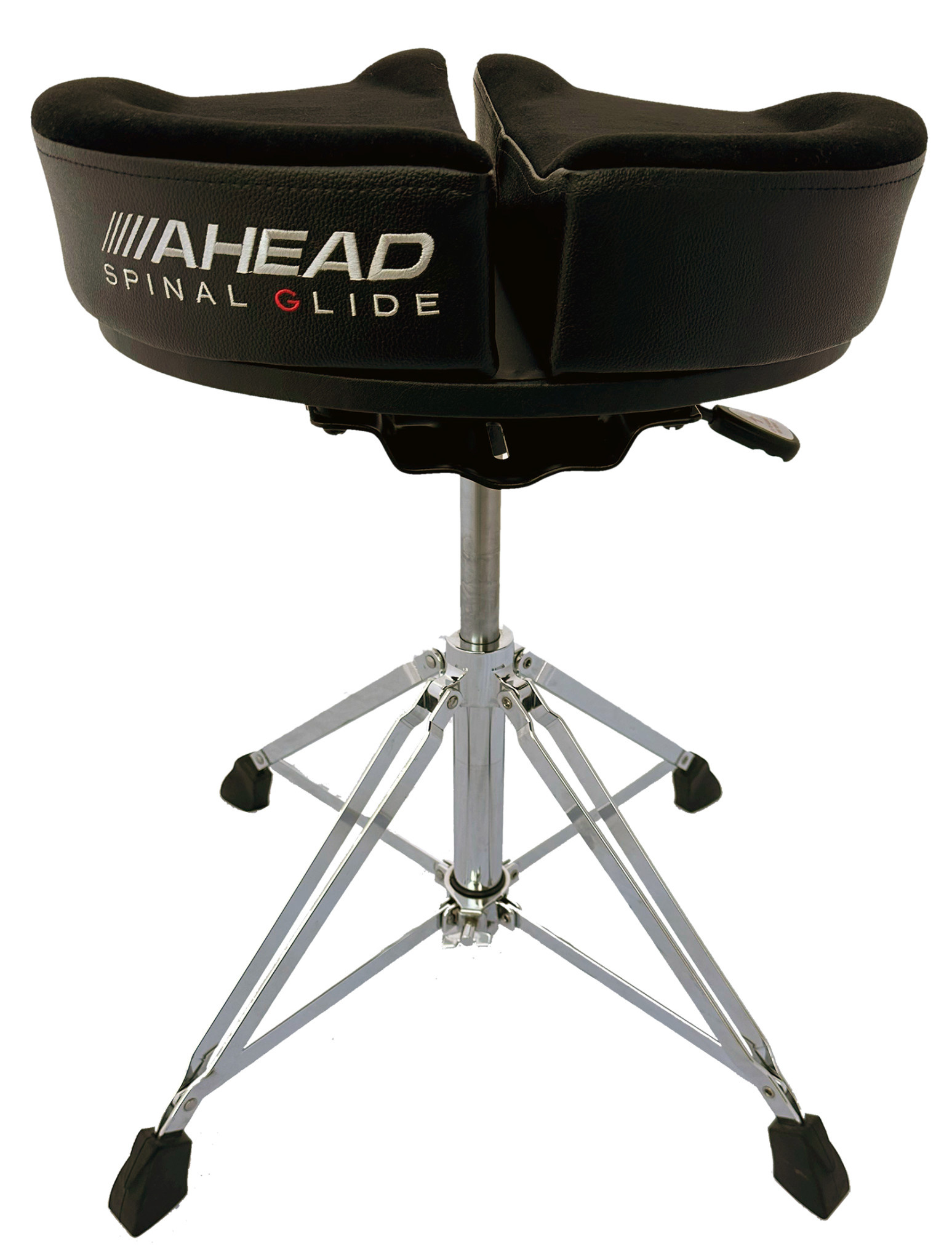
As with saddle and round seats, the benefit will depend heavily on the individual player. The Spinal-G offers a genuinely different approach to how a drummer is supported, but seat shape and comfort are personal enough that trying one alongside a conventional throne is still the best way to decide whether the design works for you.
Drum Stool Height Adjustment Explained
The height-adjustment mechanism is one of the biggest practical differences between drum thrones. It affects how quickly the height can be changed, how precisely a preferred position can be repeated and, in some designs, the overall weight and feel of the base.
Tube and Clamp Adjustment
Simpler designs often use a telescoping centre tube that is raised or lowered before being secured with a clamp, bolt or memory lock. This keeps the mechanism straightforward and can help reduce weight and cost. The trade-off is that fine height changes may not be as easy as they are with a threaded system.
Threaded and Spindle Adjustment
A threaded or spindle-style throne uses a threaded centre post that allows the seat height to be adjusted in small increments. Once the approximate height has been set, the mechanism makes it easier to fine-tune the position and return to a consistent height.
This type of system is common on more substantial drum thrones because it combines precise adjustment with a mechanically secure centre post. Some manufacturers also combine a threaded post with a quick-adjustment clamp, giving players the speed of a telescoping design and the fine adjustment of a spindle.
Hydraulic and Pneumatic Drum Stools
Hydraulic and pneumatic drum stools use a lift mechanism that allows the seat height to be changed using a lever rather than manually repositioning or rotating the centre post. Their main advantage is convenience, particularly in teaching rooms, studios, rehearsal spaces or anywhere several drummers regularly use the same kit.
The DW 9000 AirLift Round Throne is a good example of this approach. It combines a traditional round seat with pneumatic AirLift height adjustment and a sturdy four-leg folding base, allowing the playing height to be changed quickly without giving up the substantial construction associated with the DW 9000 Series.
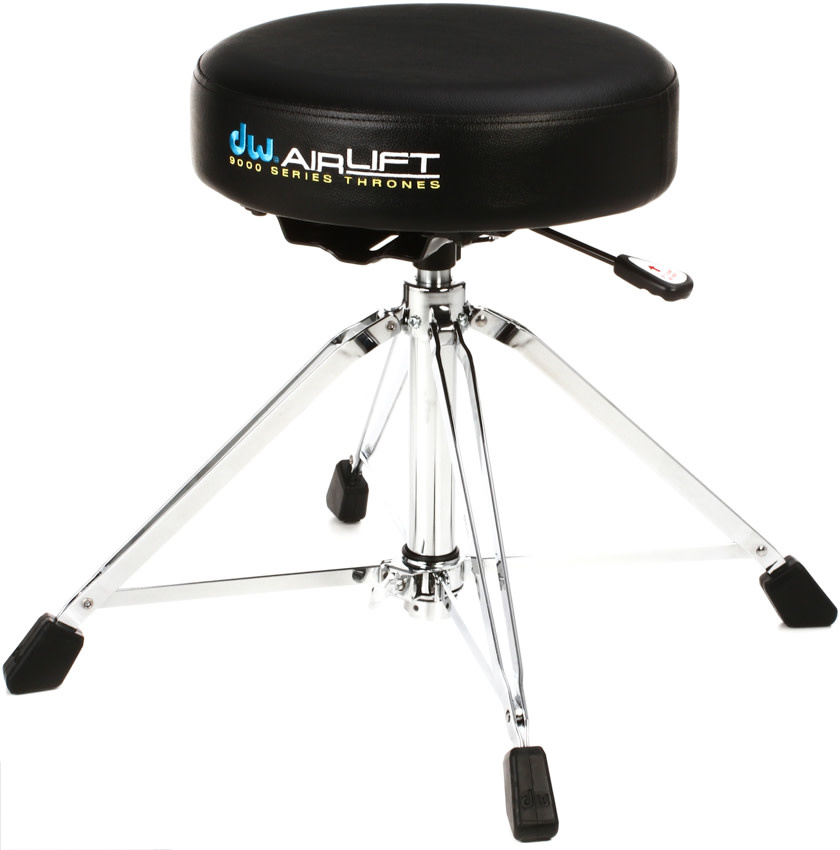
Lever-operated adjustment can be extremely useful, but it should still be considered alongside seat shape, base stability, weight and how often you actually need to change your playing height.
How to Set Your Drum Stool Height
There is no single correct drum stool height because body proportions, pedal technique and kit layout vary from player to player. The aim is to find a position where you feel balanced on the seat and can move both feet comfortably without having to support your body through the pedals or constantly shift your weight.
Start by setting the throne at a comfortable middle height, place your feet naturally on the pedals and check whether your legs can move without feeling cramped or overstretched. From there, make small changes and pay attention to how easily you can operate the bass drum and hi-hat while remaining centred on the seat.
Once you find a position that works, a memory lock, threaded spindle or another repeatable adjustment system can make it much easier to return to the same setup after transporting the hardware or sharing the kit.
Stability, Bases and Build Quality
A comfortable seat is only useful if the base underneath it stays stable. The spread of the legs, bracing, centre-post construction, rubber feet and connection between the seat and base all affect how planted the setup feels when you start moving around the kit.
Double-braced tripod bases are common on heavier-duty models, while some use four legs to create a different footprint. Neither layout is automatically better in every situation; what matters is how securely the throne sits at your preferred height and how practical the base is to transport and position around the rest of your hardware.
There is therefore a balance between maximum stability and transport weight. A very substantial throne can be ideal on stage, in a studio or at home, but the heaviest model is not automatically the best choice for every working drummer. What matters is that the base feels secure enough for the way you play and does not introduce unwanted movement beneath you.
Player Weight and Drum Stool Load Capacity
Player weight is an important consideration when choosing a drum stool and, in some cases, can make a significant difference to which design is most suitable. The throne has to support the player's weight while remaining stable as they move around the kit, so the strength of the base, centre post, seat mounting and height-adjustment mechanism all matter.
This becomes particularly worth considering for heavier players. A more substantial base and secure adjustment system can provide greater confidence and stability, while lighter-duty models may feel less planted or place greater demands on their adjustment mechanisms. Where a manufacturer provides a maximum load or recommended weight capacity, this should always be checked before buying.
The type of height adjustment is worth considering as well. Pneumatic and hydraulic designs offer convenient lever-operated adjustment, but they rely on a lift mechanism to support the player at the chosen height. A heavy-duty threaded or spindle design can be an attractive alternative for players who prioritise a mechanically simple and solid setup.
One useful example of particularly substantial stool construction is the Yamaha DS950 Drum Stool. Yamaha describes it as a heavyweight design with a wide bench-style seat, four double-braced wide-stance legs and screw-type height adjustment from 460 to 650mm (approximately 18.1 to 25.6 inches).
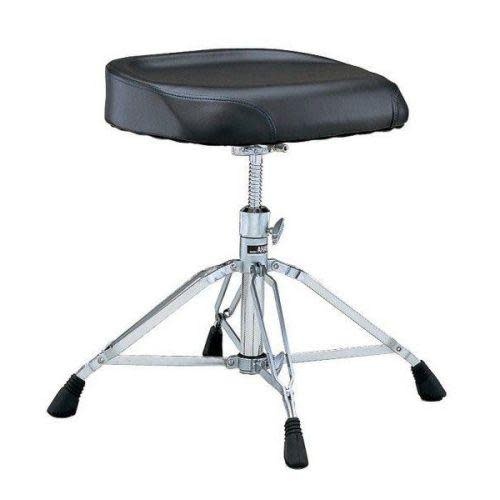
The four-leg footprint, double-braced construction and screw-adjustable centre post make the DS950 a particularly substantial design. However, Yamaha's current specification does not publish a maximum user-weight rating, so we are not presenting it here as a weight-rated recommendation. Anyone who requires a confirmed load capacity should check with us before ordering.
Ultimately, player weight should be considered alongside comfort, height range and playing style rather than treated as an afterthought. Whatever you choose, it should comfortably support you, remain stable while you play and be appropriately rated for the demands placed on it.
Seat Size, Padding and Backrests
Seat thickness is easy to compare, but more padding does not automatically mean more comfort. Foam density, firmness, seat width, shape and covering material all affect how the seat feels, and different players will prefer different levels of support. A softer cushion can feel immediately comfortable, while another drummer may prefer a firmer surface during longer sessions.
Backrests are another option rather than a necessity. They provide an additional contact point behind the player and can be useful for drummers who prefer that extra support, particularly during longer sessions. The position and adjustability of the backrest matter just as much as simply having one fitted.
Roc-N-Soc is a particularly flexible example because the setup can be built from separate components. At Graham Russell Drums, players can choose a Roc-N-Soc Cycle Top, pair it with a compatible base such as the Gibraltar B9608 Stool Base, and add a Roc-N-Soc Backrest if required. This lets players build the combination around the seat shape, height range and level of support they prefer rather than being limited to one fixed configuration.
My Own Experience
I've used a Roc-N-Soc Cycle Top with a Gibraltar base for around 10 years, and it has remained comfortable and dependable throughout that time without needing to be replaced. For me, that longevity is a good example of why the quality of both the seat and base is worth considering alongside features and initial price, particularly if you spend a lot of time behind the kit.
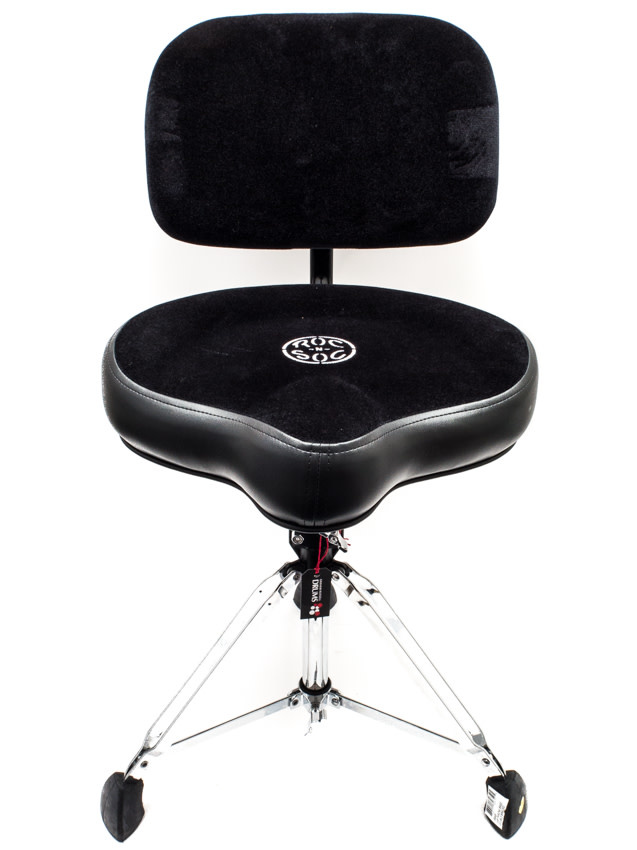
The modular approach is also useful if your preferences change over time. A compatible backrest can be added later, while different seat and base options make it possible to alter the setup without necessarily replacing every component.
What Changes as You Spend More on a Drum Stool?
As you move through different price points, the main differences tend to be in seat construction, base stability, adjustment mechanisms, build quality and durability. More expensive models may use larger or more complex seats, heavier-duty bases, finer adjustment systems or features such as pneumatic or hydraulic height control and backrests.
That does not mean every drummer needs a premium throne. A well-built, straightforward round seat may provide everything a player needs, while somebody spending several hours behind the kit each day may place much greater value on a particular saddle shape, specialist design or backrest.
It is also worth looking beyond the seat itself. A throne with a solid base and reliable adjustment mechanism can remain useful for years, whereas a design that develops movement at the centre post or seat connection can quickly become frustrating. The best value is therefore not always the lowest-priced option, but the one that gives you the level of stability, comfort and adjustment you actually need.
GRD Recommendation: Gibraltar 9608 Pro Round Drum Stool
Of all the drum stools we sell, the Gibraltar 9608 Pro Round is the model we most regularly recommend at Graham Russell Drums. It keeps the formula straightforward: a 13-inch round memory-foam seat, a heavy-duty double-braced tripod and a sturdy B9608 base that feels considerably more substantial than many alternatives around its price point.
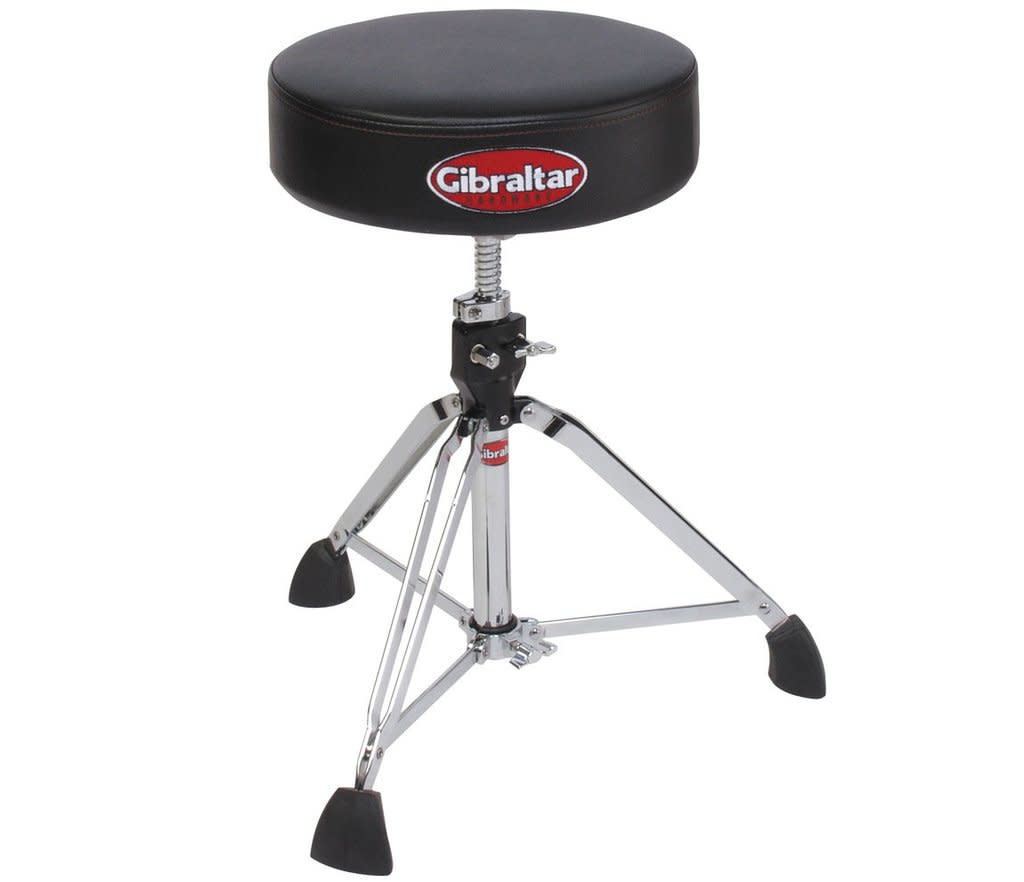
The Gibraltar 9608 Pro Round Drum Stool adjusts from approximately 20 to 26 inches and uses Gibraltar's B9608 heavy-duty base. For players who simply want a dependable, stable round throne without paying for features they do not need, we think it is extremely difficult to fault.
One of the reasons we rate the 9608 so highly is the base underneath it. The same Gibraltar B9608 base is also used with many of the Roc-N-Soc configurations we sell at GRD. Those setups combine the Gibraltar base with Roc-N-Soc seat tops and optional backrests, but the shared foundation helps illustrate just how substantial the complete 9608 is for its price.
It will not be the perfect choice for everybody; players who specifically want a saddle seat, lever-operated height adjustment, split-seat construction or a backrest have other options. But as an all-round recommendation for someone asking us for a sturdy, comfortable and straightforward throne, the 9608 is usually where we start.
Try a Drum Stool Before You Buy
Drum stools are particularly difficult to judge from specifications alone. We can compare seat dimensions, height ranges, adjustment systems and base construction, but comfort is subjective. Two drummers of a similar height can sit on the same model and have completely different preferences regarding firmness, seat shape and playing position.
Where possible, trying different styles is one of the best ways to narrow down the choice. At Graham Russell Drums, we stock a broad selection of round, saddle, lever-adjustable, backrest and specialist designs, so players can compare them and work out what feels right before committing to one. Availability can vary between the shop and warehouse, so it is worth checking the individual product page before travelling to try a specific model.
Shop Drum Stools at Graham Russell Drums
Whether you are buying your first drum stool, replacing an unstable seat or looking for more comfort and adjustability from your setup, we stock a wide selection of drum thrones and related components from leading hardware manufacturers.
Browse Drum Stools at Graham Russell Drums
Frequently Asked Questions
What height should a drum stool be?
There is no single correct height for every drummer. Your leg length, pedal setup and playing style all influence the position that will feel most natural. Start at a height that allows both legs to move freely and lets you operate the pedals without leaning heavily to either side, then make small adjustments until the position feels balanced and repeatable.
Is a round or saddle drum stool better?
Neither is universally better. Round stools provide a traditional seat shape and make it easy to reposition yourself, while saddle designs offer a wider, more contoured sitting surface around the thighs. The better option comes down largely to personal preference.
What is a spindle drum stool?
A spindle or threaded drum stool uses a threaded centre post to adjust the seat height. This allows small, precise changes and makes it easier to return to a consistent playing height. Some stools combine a threaded mechanism with a clamp so larger adjustments can still be made quickly.
Are hydraulic or pneumatic drum stools worth it?
Lever-operated adjustment is particularly useful if you change your stool height regularly or several drummers use the same kit. It allows quick height changes without manually moving or rotating the centre post. For a drummer who rarely changes height, a good threaded or conventional stool may be all that is required.
Do I need a drum stool with a backrest?
A backrest is optional. Some players value the additional support during long practice sessions, rehearsals and performances, while others prefer an unrestricted stool without one. A well-positioned backrest can be useful, but it is not a requirement for a good drum throne.
Does player weight matter when choosing a drum stool?
Yes. Player weight can affect how stable a stool feels and how much demand is placed on its base, centre post and adjustment mechanism. This is particularly important for heavier players, who may benefit from a more substantial base and heavy-duty construction. Where available, always check the manufacturer's maximum load or recommended weight capacity. Pneumatic and hydraulic stools are not automatically unsuitable for heavier players, but the specification of the individual model should be checked carefully, while a heavy-duty threaded or spindle stool may provide a simpler alternative for those prioritising maximum solidity.
Is an expensive drum stool worth it?
It can be, but price alone does not determine whether a stool is right for you. More expensive models often offer heavier-duty bases, different seat constructions, finer adjustment systems, lever-operated mechanisms or backrest options. A simpler stool with a strong base and comfortable seat may still be the better choice if it meets your needs.
Written by Alex Neave
I've been part of the Graham Russell Drums team since October 2025, but my connection with the shop goes back much further as a customer since 2012. I've advised drummers of all ages and experience levels, worked on a wide range of second-hand kits and spent a lot of time helping customers navigate the often overwhelming world of drum gear. Alongside over 13 years of playing experience, that hands-on exposure to a wide range of products allows me to write buying guides based on real-world knowledge and practical experience rather than simply repeating manufacturer specifications.












Comments
Be the first to comment...