


The Ultimate Guide to Tama Bass Drum Pedals!
- Posted on
- By GRD
- 0
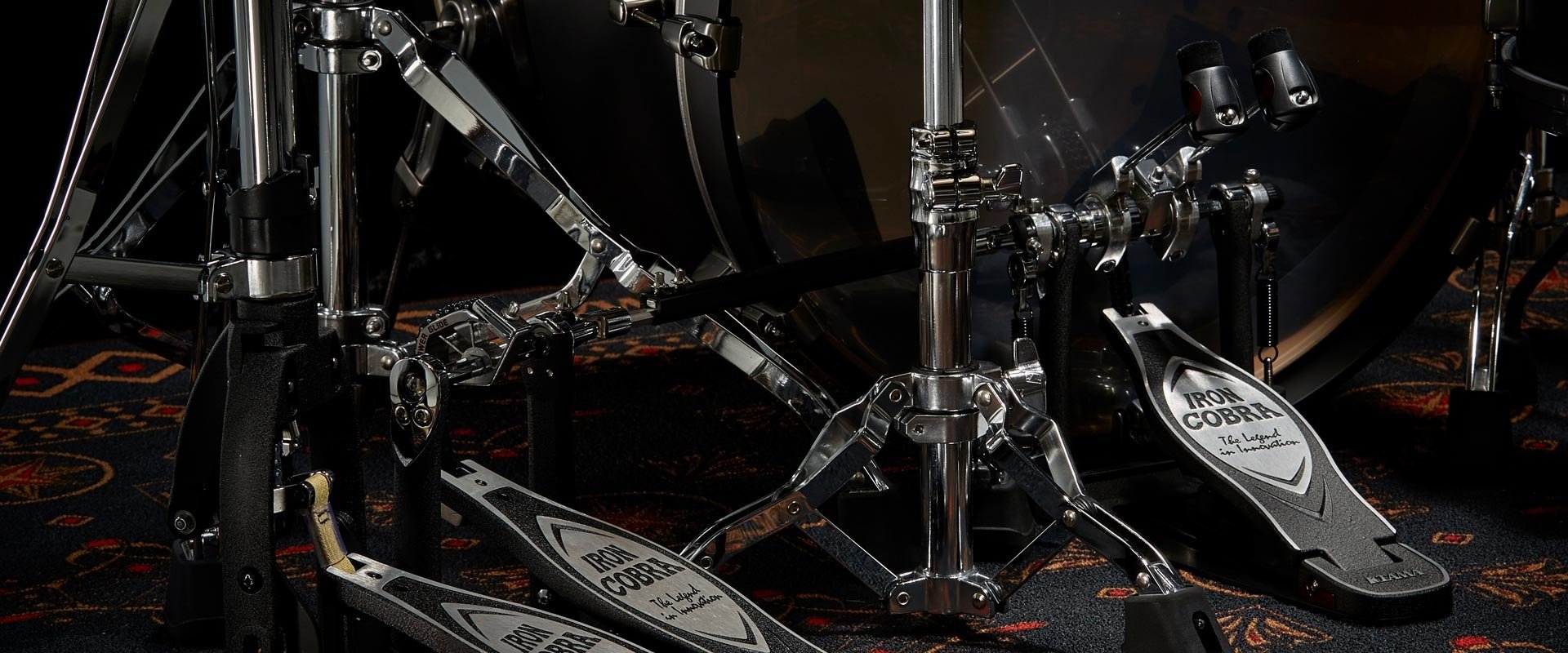
A Complete Breakdown of the full Tama bass drum pedal range we stock at Graham Russell Drums!
Last updated: 22 August 2026
Tama has long been one of the most recognised names in bass drum pedal design. From the iconic Iron Cobra to the speed-focused Speed Cobra and direct-drive Dyna-Sync, the range covers everything from lightweight rehearsal pedals to flagship professional models.
In this guide, we compare the full progression of Tama single pedals and double bass drum pedals, including chain-drive and direct-drive systems, standard and extended footboards, Power Glide and Rolling Glide cam options, and left-footed configurations. Drawing on our experience selling, setting up and playing Tama pedals at Graham Russell Drums, we explain how each model feels, what changes as you move up the range and which pedal is likely to suit your playing style.
Written by Alex Neave
Originally published 27 February 2026
The Tama Bass Drum Pedal Range Explained
Entry Level: HP50, Stagemaster and Iron Cobra 200
At the most accessible end of the range sit the HP50, Stagemaster and Iron Cobra 200. Each provides a different route into the Tama range rather than simply offering three versions of the same pedal.
The Tama HP50 The Classic is designed around a traditional, lightweight feel. Its compact and straightforward design suits students, smaller kits and drummers who prioritise portability, while retaining the dependable build quality associated with Tama hardware.
The Tama Stagemaster single pedal and Stagemaster double pedal provide a more conventional modern layout with improved stability. They are practical choices for beginners, rehearsal spaces and entry-level gigging, offering straightforward adjustment without the more advanced systems found higher in the range.
The Iron Cobra 200 single pedal and Iron Cobra 200 double pedal bring the Cobra design and a more powerful, controlled response into an affordable tier. For players who want a recognisable Iron Cobra feel without moving into professional pricing, the 200 Series is a strong starting point.
Choose the HP50 for lightweight simplicity, the Stagemaster for a dependable modern all-rounder, or the Iron Cobra 200 for a firmer and more powerful introduction to the Cobra range.
Mid-Range: Iron Cobra 600 and Speed Cobra 310
Stepping into the mid-range brings a meaningful improvement in drive, stability and consistency. The main choices are the Iron Cobra 600 single pedal, Iron Cobra 600 double pedal, Speed Cobra 310 single pedal and Speed Cobra 310 double pedal.
The Iron Cobra 600 is particularly versatile because of its reversible Duo Glide cam. A simple adjustment switches the pedal between a round Rolling Glide-style profile for a smooth, linear stroke and an offset Power Glide-style profile for increased acceleration and impact near the end of the stroke. This makes the 600 a useful choice for drummers who want to experiment with both feels before committing to one.
The Speed Cobra 310 uses an extended footboard to provide increased leverage and a quicker-feeling response. It is often chosen by players who favour faster footwork, heel-toe or sliding techniques, or a lighter sensation underfoot, but who do not require the full adjustment and premium engineering of the 910 Series.
The Iron Cobra 600 adds a double-chain drive, the switchable Duo Glide cam and a smoother, more substantial mechanism. It is the more adaptable option for regular rehearsing, gigging and players who want greater control over pedal feel.
Professional: Iron Cobra 900 Series
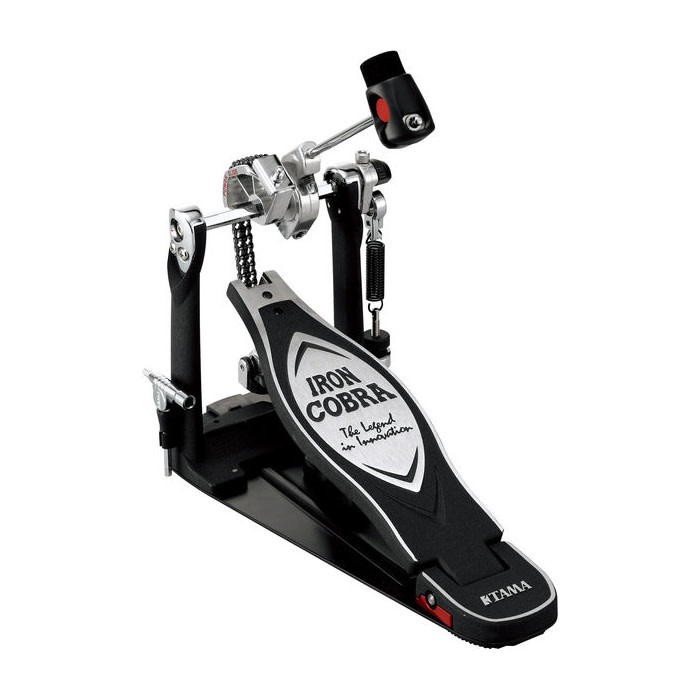
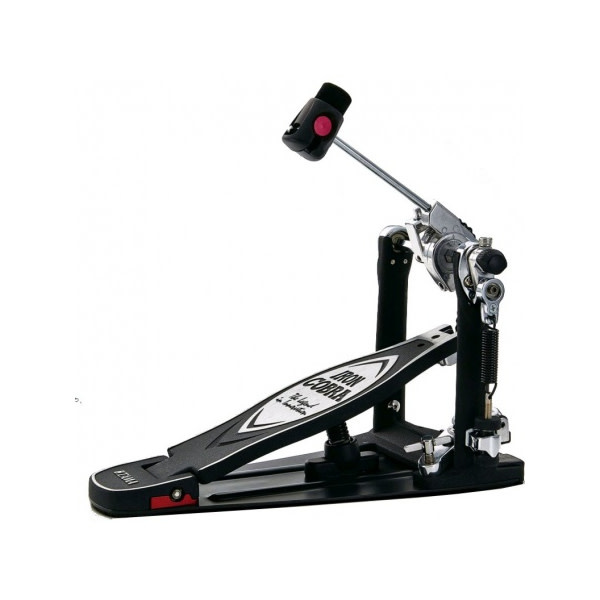
The Iron Cobra 900 Series is Tama’s professional chain-drive range, combining a substantial feel with extensive adjustment and the durability required for regular touring, studio work and demanding live use.
Models stocked by Graham Russell Drums include:
- HP900PN – Power Glide single pedal
- HP900PWN – Power Glide double pedal
- HP900PWLN – left-footed Power Glide double pedal
- HP900RN – Rolling Glide single pedal
- HP900RWN – Rolling Glide double pedal
The main choice within the 900 Series is between Power Glide and Rolling Glide. Both share the same professional platform, but the cam shape changes how the pedal delivers energy through the stroke. We explain that difference in more detail below.
The 600 is the value-focused all-rounder, while the 900 provides a more refined professional mechanism, broader adjustment and a more planted feel. The 900 is most worthwhile for drummers who play frequently, know the cam response they prefer and want a premium pedal for long-term use.
Professional: Speed Cobra 910 Series
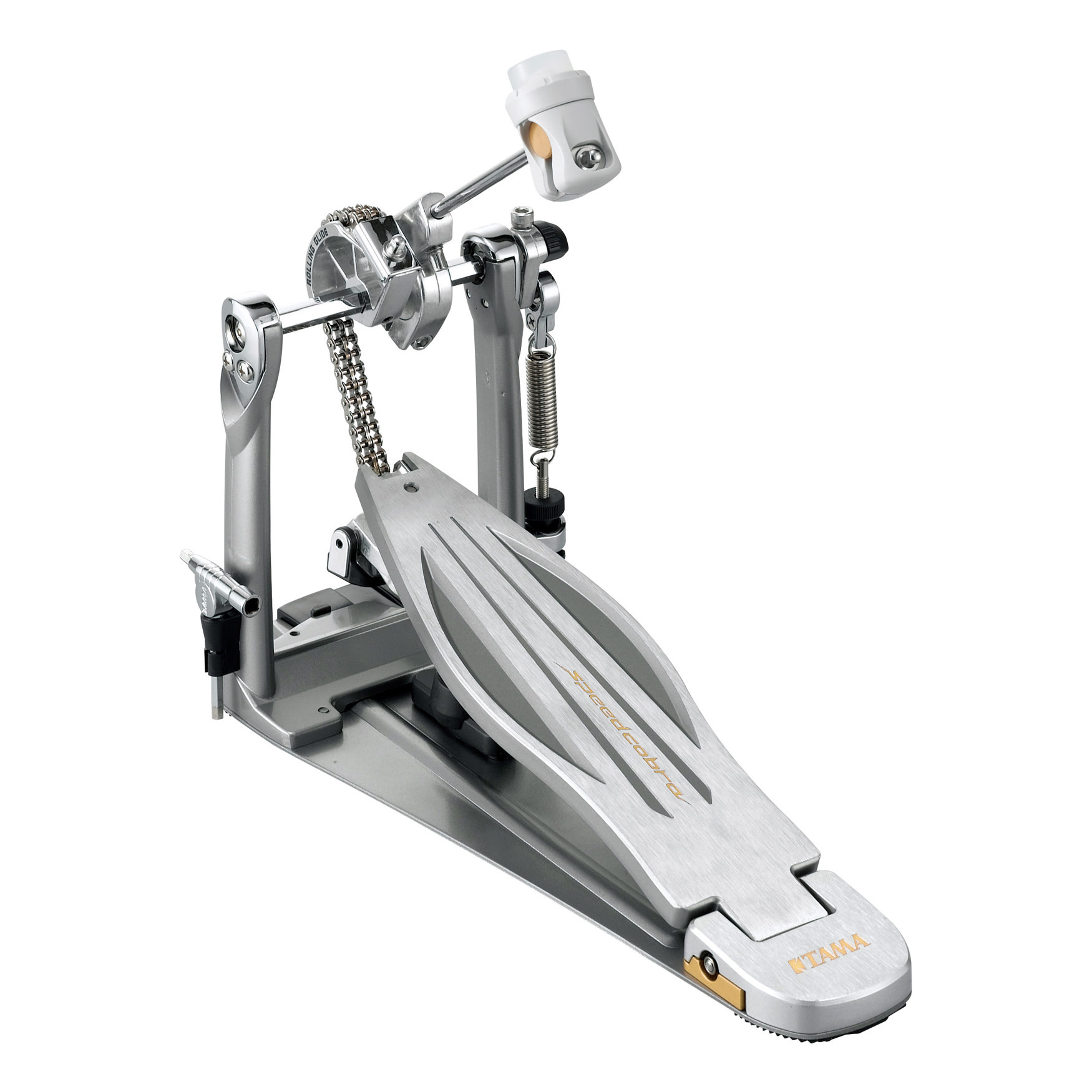
The Speed Cobra 910 Series takes Tama’s extended-footboard concept further and is engineered to combine speed, leverage and power. Its long, lightweight footboard and efficient mechanism create a fast, fluid sensation without making the pedal feel uncontrolled.
Models stocked by Graham Russell Drums include:
Compared with the Iron Cobra 900, the Speed Cobra 910 typically feels lighter and more responsive, with its extended footboard providing extra leverage for rapid patterns and modern foot techniques. It remains a powerful pedal, but its character places greater emphasis on efficiency and rebound than on the heavier, more planted sensation associated with an Iron Cobra.
The 310 provides the essential long-footboard Speed Cobra feel at a more accessible price. The 910 adds a more refined mechanism, greater adjustment and the premium stability expected from a professional pedal.
Flagship Direct Drive: Dyna-Sync
At the top of the range sits the Tama Dyna-Sync single pedal and Dyna-Sync double pedal. Unlike the chain-driven Iron Cobra and Speed Cobra ranges, the Dyna-Sync uses a rigid direct-drive linkage between the footboard and beater mechanism.
This produces an immediate connection with very little sensation of delay, giving the Dyna-Sync a precise and highly responsive feel. Its detailed adjustment allows players to alter the relationship between power, footboard movement and beater response. It is the flagship choice for drummers who specifically want direct-drive accuracy, although players who prefer a more forgiving or familiar response may still favour one of Tama’s chain-driven models.
Important Tama Pedal Differences
Iron Cobra vs Speed Cobra
The most important distinction is the footboard and the resulting sensation underfoot. Iron Cobra pedals use a more conventional footboard length and tend to feel substantial, planted and focused on power and control. Speed Cobra pedals use an extended footboard, providing additional leverage and a lighter, quicker-feeling response.
Neither design is universally better. Iron Cobra often suits drummers who want a familiar position, strong attack and a solid connection with the bass drum. Speed Cobra can suit drummers who use more of the footboard, favour sliding or heel-toe techniques, or want rapid rebound for technical patterns. The fairest comparison is the Iron Cobra 600 against the Speed Cobra 310, and the Iron Cobra 900 against the Speed Cobra 910.
View Tama Iron Cobra HP900PN Power Glide
Dyna-Sync vs Speed Cobra: What's the Difference?
The biggest difference between the Tama Dyna-Sync and Speed Cobra is the drive system. Speed Cobra pedals use a chain drive with an extended footboard, combining longboard leverage with a fast, fluid response. The Dyna-Sync uses a rigid direct-drive linkage between the footboard and beater mechanism, creating a more immediate connection and a more precise feel underfoot.
Choose the Speed Cobra if you want an extended footboard with the familiarity and slightly more forgiving feel of a chain drive. Consider the Dyna-Sync if you specifically prefer the immediacy and precision of direct drive. Neither is automatically better; they offer distinctly different responses, so trying both is the best way to decide which system suits your technique.
Power Glide vs Rolling Glide
Power Glide uses an offset cam profile that increases leverage as the beater approaches the drumhead. This creates a stronger sense of acceleration and a more aggressive attack near the end of the stroke. Rolling Glide uses a round cam profile that maintains a more consistent relationship throughout the stroke, creating a smoother and more linear response.
Power Glide often appeals to players who want punch and assistance through the end of the stroke, while Rolling Glide suits drummers who prefer predictable resistance and an even response. The Iron Cobra 600’s reversible Duo Glide cam is useful because it allows you to experience both approaches on the same pedal.
View Tama Iron Cobra HP900PN Power Glide
Chain Drive vs Direct Drive
Chain-drive pedals provide a familiar and slightly more forgiving connection between the footboard and beater. They are versatile across playing styles and make up the Iron Cobra and Speed Cobra ranges. Direct-drive pedals use a rigid linkage to transfer movement immediately, creating a precise response and fast rebound with less flexibility in the mechanism.
Direct drive is not automatically an upgrade for every drummer. Some players love its accuracy, while others prefer the feel and familiarity of a chain. Where possible, trying both systems is the best way to establish which response feels natural.
Single vs Double Pedals
Single pedals cover the requirements of most musical settings, including rock, pop, funk, jazz and general session work. Double pedals allow both feet to operate one bass drum and are useful for double-bass patterns, sustained low-end articulation and techniques commonly heard in metal and progressive styles.
Tama offers double-pedal options across entry, mid-range and professional tiers, as well as left-footed professional configurations. A player who only occasionally uses double-pedal patterns may not need a flagship model, while somebody relying on fast and even double-pedal work is more likely to benefit from the stability, linkage and adjustment available higher in the range.
Tama Bass Drum Pedals at a Glance
After looking at the main models and design differences, this table provides a quick reference for the complete Tama pedal range. The best choice is not necessarily the most expensive one; it depends on your preferred footboard, cam profile, drive system and playing feel.
| Range | Level | Drive | Typical feel | Best suited to |
|---|---|---|---|---|
| HP50 The Classic | Entry | Chain | Lightweight and traditional | Compact kits, portability and straightforward setups |
| Stagemaster | Entry | Chain | Simple, stable and familiar | Beginners, rehearsal rooms and dependable everyday use |
| Iron Cobra 200 | Entry | Chain | Punchy and controlled | Players wanting an affordable introduction to the Cobra feel |
| Iron Cobra 600 | Mid-range | Double chain | Versatile, with switchable cam feel | Regular gigging and players unsure which cam profile they prefer |
| Speed Cobra 310 | Mid-range | Double chain | Longer and lighter-feeling underfoot | Faster footwork without flagship-level adjustment |
| Iron Cobra 900 | Professional | Double chain | Substantial, powerful and highly adjustable | Touring, recording and professional chain-drive performance |
| Speed Cobra 910 | Professional | Double chain | Longboard leverage with fast, fluid rebound | Technical playing and drummers who prefer a quicker response |
| Dyna-Sync | Flagship | Direct | Immediate, precise and highly responsive | Players who specifically want direct-drive response and detailed adjustment |
Which Tama Bass Drum Pedal Should You Choose?
Use the recommendations below as a starting point, but remember that pedal choice is highly personal. Foot size, technique, spring tension and previous pedals can all influence which model feels most comfortable.
- Best for a lightweight, traditional setup: Tama HP50 The Classic
- Best straightforward beginner option: Tama Stagemaster
- Best affordable introduction to the Cobra range: Iron Cobra 200
- Best versatile mid-range choice: Iron Cobra 600
- Best affordable extended-footboard option: Speed Cobra 310
- Best professional choice for power and control: Iron Cobra 900
- Best professional choice for speed and leverage: Speed Cobra 910
- Best for precise direct-drive response: Dyna-Sync
The GRD Take
At Graham Russell Drums, we see and demonstrate a wide variety of Tama pedals in the shop, and while every drummer has a personal preference, the Speed Cobra 910 is a standout for many of us. Personally, I favour the Speed Cobra for its durability and incredibly responsive feel. The longer footboard and smooth action make it feel fast without becoming overly sensitive, while still providing enough power for general rock, pop and function work.
Several members of the GRD team also lean towards the Speed Cobra range, particularly for players who want a pedal that feels powerful but agile underfoot. That said, drummers who prefer a shorter footboard, a more planted sensation and a stronger sense of weight through the stroke may feel more at home on an Iron Cobra. This is why we always recommend comparing pedal feel rather than choosing from specifications alone.
We stock Tama pedals across the full range, alongside a wide selection of new and used alternatives from other leading brands. Visit our Fareham showroom to compare pedals in person, or contact the GRD team for practical advice.
Frequently Asked Questions
What is the difference between Tama Iron Cobra and Speed Cobra?
Iron Cobra pedals use a more conventional footboard length and generally feel planted, powerful and controlled. Speed Cobra pedals use an extended footboard that provides additional leverage and a lighter, quicker-feeling response. The better option depends on the player’s foot position and preferred technique.
What is the difference between the Iron Cobra 600 and 900?
The Iron Cobra 600 is a versatile mid-range pedal with a reversible Duo Glide cam that switches between round and offset profiles. The Iron Cobra 900 is the professional range, offering a more refined mechanism, wider adjustment and dedicated Power Glide or Rolling Glide models. The 600 provides excellent versatility, while the 900 is aimed at frequent and professional use.
What is the difference between the Speed Cobra 310 and 910?
Both ranges use an extended footboard for increased leverage. The Speed Cobra 310 delivers the core long-footboard feel in a more accessible design, while the Speed Cobra 910 adds a more refined professional mechanism, greater adjustment and enhanced stability for demanding use.
What is the difference between Power Glide and Rolling Glide?
Power Glide uses an offset cam that increases leverage towards the end of the stroke, creating more acceleration and attack. Rolling Glide uses a round cam that produces a smoother and more linear response. Neither is inherently better; the choice depends on whether you prefer added punch or consistent resistance.
Is direct drive better than chain drive?
Direct-drive pedals such as the Tama Dyna-Sync provide an immediate and precise response through a rigid linkage. Chain-drive pedals provide a slightly more forgiving and familiar feel and remain highly versatile. The choice is personal rather than one system being objectively superior.
Which Tama bass drum pedal is best for beginners?
The Tama HP50, Stagemaster and Iron Cobra 200 are all suitable for beginners. The HP50 is best for lightweight simplicity, the Stagemaster is a dependable modern all-rounder, and the Iron Cobra 200 is the strongest choice for beginners who want a more powerful Cobra-style response.
Written by Alex Neave
I've been a part of the Graham Russell Drums team since October 2025, but my connection with the shop goes back much further as a customer since 2012. Over the years I've advised drummers of all ages and experience levels, refurbished countless second-hand kits and spent a lot of time helping customers navigate the often overwhelming world of drum gear. Alongside over 13 years of playing experience, that hands-on exposure to thousands of products allows me to write buying guides based on real-world knowledge and practical experience rather than simply repeating manufacturer specifications.












Comments
Be the first to comment...