

Best Electronic Drum Kits For Beginners: Yamaha vs Roland (2026 Buyer's Guide)
- Posted on
- By Alex
- Posted in electronic drum kits
- 0
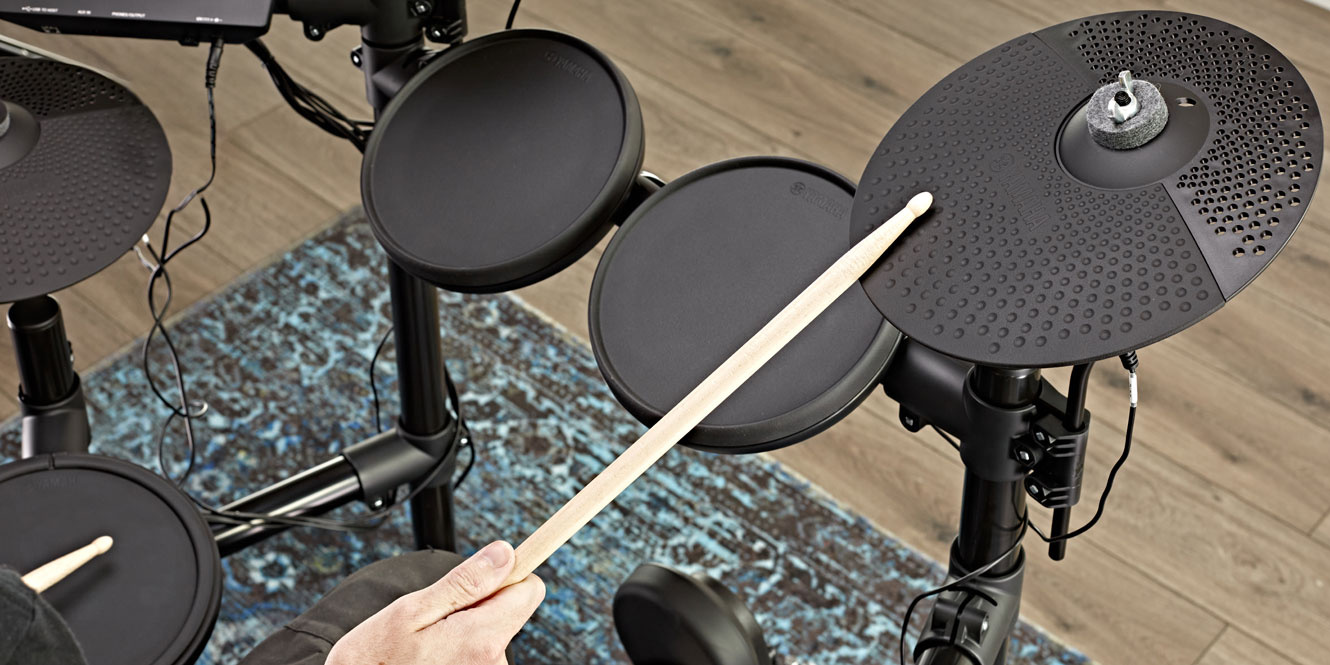
Not sure which electronic drum kit to buy? This guide compares Yamaha and Roland's beginner models to help you choose the right one with confidence.
If you are trying to decide which electronic drum kit is best for a beginner, you are certainly not alone. It is one of the most common questions we are asked at Graham Russell Drums, whether the kit is for a complete beginner, a child or somebody who needs a quieter way to practise at home.
This guide focuses specifically on Roland electronic drums and Yamaha electronic drums. Both manufacturers offer established beginner ranges that we regularly demonstrate, sell and support in store.
Having played electronic drums for years and currently owning a Roland TD-07KV, I have spent a great deal of time comparing how these kits feel in real use. I also help customers choose between them each week, and the most important lesson is simple: the best beginner electronic drum kit depends on your budget, available space and the type of playing experience you want.
Quick Answer: The Best Electronic Drum Kits for Beginners
These recommendations prioritise playing feel, learning features, included equipment and how long each kit is likely to remain satisfying as your technique develops.
- Best entry-level learning option: Yamaha DTX402K
- Best value for most beginners: Yamaha DTX452K
- Best Roland value: Roland TD-07DMK
- Best overall: Roland TD-07KV
Still undecided? The sections below explain which upgrades genuinely affect how natural a kit feels, followed by a model-by-model comparison.
Are Electronic Drum Kits Good for Beginners?
Yes. For many new drummers, an electronic drum kit is one of the most practical ways to start learning. The ability to connect headphones means you can practise without filling the whole house with the volume of an acoustic kit.
Modern beginner kits also include useful learning tools such as metronomes, coaching exercises, play-along connectivity and USB recording. These features do not replace lessons or regular practice, but they can make it easier to work on timing and stay motivated.
Electronic kits also remove the need for regular tuning. You can switch the module on and access a consistent set of sounds immediately, allowing you to concentrate on learning grooves, coordination and technique.
The main compromise is physical feel. Pad material, cymbal size and the type of bass drum setup all affect how closely the kit resembles an acoustic instrument. Choosing carefully at the beginning can make the kit more enjoyable and reduce the urge to upgrade too quickly.
How We Chose These Electronic Drum Kits
Every model in this guide is available through Graham Russell Drums and has been selected for a specific type of beginner. The recommendations are not based simply on the number of sounds or the price shown on a specification sheet.
We have considered the playing surfaces, kick setup, module, coaching tools, included equipment, space requirements and how likely a developing drummer is to outgrow each configuration. Where two kits offer different strengths, the guide explains the trade-off rather than pretending there is one universal winner.
The Features That Matter Most
When comparing electronic drum kits for beginners, it is easy to focus on large sound counts or cosmetic differences. In our experience, the following factors have a much greater effect on everyday playing.
1. The Kick Drum Setup
Entry-level kits may use a beaterless foot controller, while more advanced models include a pad that works with a conventional bass drum pedal. Foot controllers are compact and often quieter, but a proper kick pad develops pedal technique in a way that transfers more naturally to an acoustic kit.
2. The Playing Surfaces
Rubber, mesh and Yamaha TCS pads all work for learning, but they feel different under the stick. Mesh and TCS generally provide a more forgiving response, while rubber pads are durable, consistent and help keep the initial cost down.
3. The Drum Module
The module controls the sounds, coaching tools, connectivity and response of the kit. A beginner does not need hundreds of presets, but a clear interface, reliable triggering, a metronome and an easy way to play along to music all make regular practice more enjoyable.
4. Space and Included Equipment
Measure the area where the kit will be used and check what is included. Some kits use a compact rack and beaterless kick unit, while others need extra floor space for a freestanding kick pad. A bass drum pedal, throne, sticks and headphones may also need to be added to the total budget.
Rubber vs Mesh vs Yamaha TCS Pads
All three surfaces can be used to learn successfully. The best choice depends on budget and personal preference rather than one material being automatically correct for every drummer.
Rubber Pads
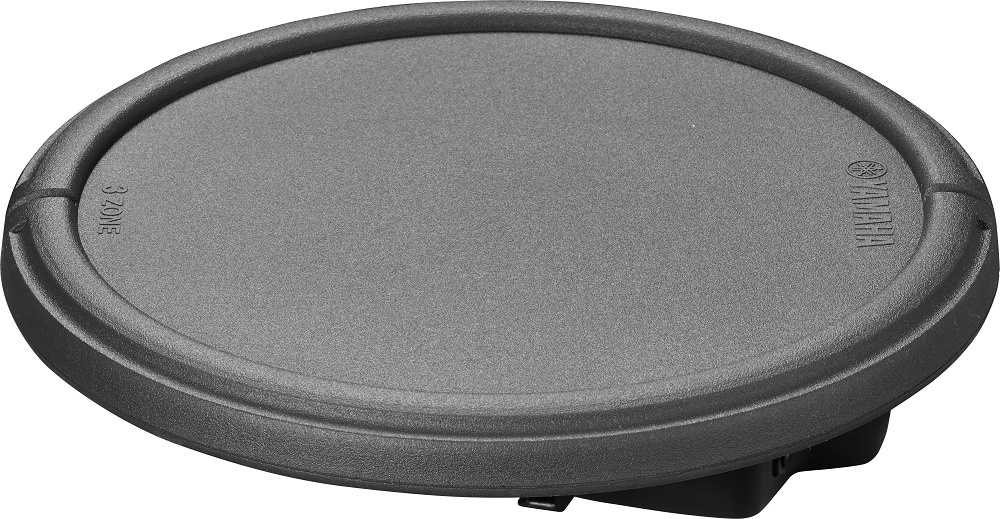
Rubber pads feature throughout Yamaha’s DTX402 range. Their biggest strengths are durability, consistency and low maintenance. They feel firmer than mesh or TCS, but modern rubber pads remain responsive and perfectly suitable for lessons and home practice.
A rubber pad should not automatically rule a kit out. The Yamaha DTX452, for example, combines rubber toms with a three-zone TP70S snare and a conventional kick setup, creating a very capable beginner package.
Mesh Drum Heads
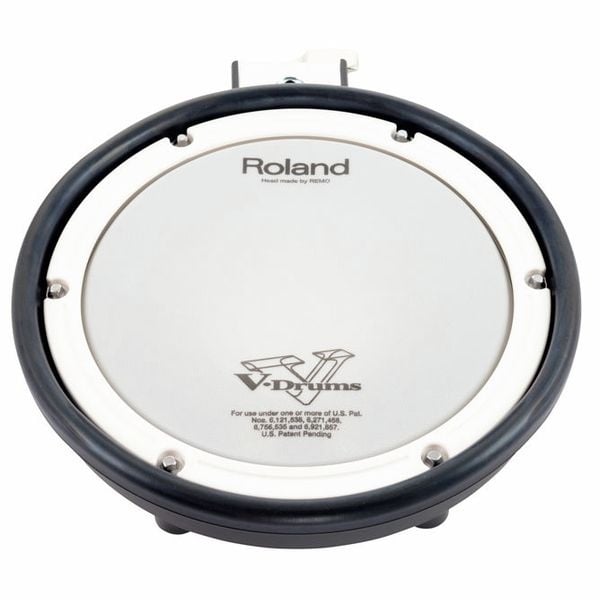
Mesh heads use a woven surface that can normally be tensioned. They are quieter under the stick than rubber and many drummers find their rebound closer to an acoustic drum head.
Roland uses a mesh snare on the TD-02KV and mesh snare and tom pads throughout the TD-07 kits. As a TD-07KV owner, I find mesh particularly comfortable during longer practice sessions, although some players prefer the more controlled response of Yamaha TCS.
Yamaha TCS Pads
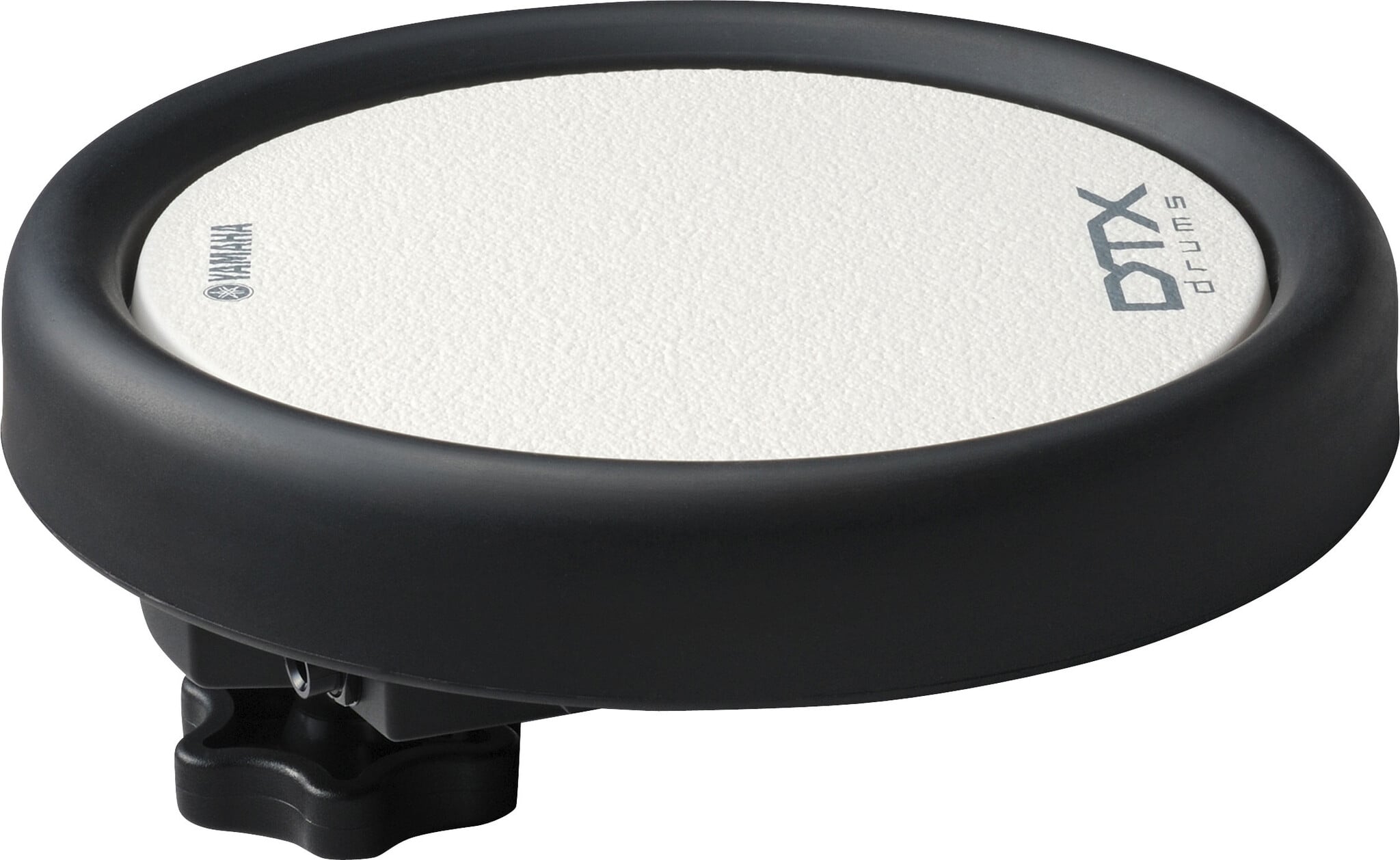
Yamaha’s Textured Cellular Silicone surface is used on the XP80 snare supplied with the DTX482K. It has a softer and more controlled rebound than standard rubber and is designed to imitate the feel of a coated acoustic drum head.
Some drummers prefer TCS to mesh, while others feel the opposite. This is one of the strongest reasons to try the kits in person where possible. A few minutes playing both surfaces is more useful than treating either manufacturer’s marketing as the final answer.
Foot Controllers vs Kick Drum Pads
The kick setup is one of the most important differences between the kits in this guide. It affects noise, space, technique and the accessories included in the box.
Beaterless Foot Controllers
The Yamaha DTX402K, Roland TD-02K and Roland TD-02KV use compact beaterless kick units. These take up less space, avoid the impact of a beater striking a pad and can be a sensible choice for bedrooms, flats and younger players.
The compromise is feel. There is no conventional pedal mechanism or beater, so the motion is different from an acoustic bass drum. You can still learn coordination and timing, but some foot techniques will not transfer as directly.
Conventional Kick Drum Pads
The Yamaha DTX432K, DTX452K and DTX482K include a KP65 kick pad and Yamaha FP6110A bass drum pedal. The Roland TD-07DMK and TD-07KV also use dedicated kick pads, but require a bass drum pedal to be purchased separately.
A conventional pad allows the beginner to learn foot control, pedal balance and beater technique from the beginning. It also makes moving between electronic and acoustic kits feel more natural.
A kick pad is not essential for learning, and a quieter foot controller may be the right compromise for your home. However, when two kits are otherwise close, I usually favour the model with a conventional kick setup for long-term development.
Beginner Electronic Drum Kits Compared
The following kits are arranged by buying decision and overall progression rather than placing every Yamaha model together and every Roland model together. This makes it easier to see what each additional step provides.
For a broader look at Yamaha’s complete range, read our Ultimate Yamaha DTX Electronic Drum Kit Buyer’s Guide.
Yamaha DTX402K
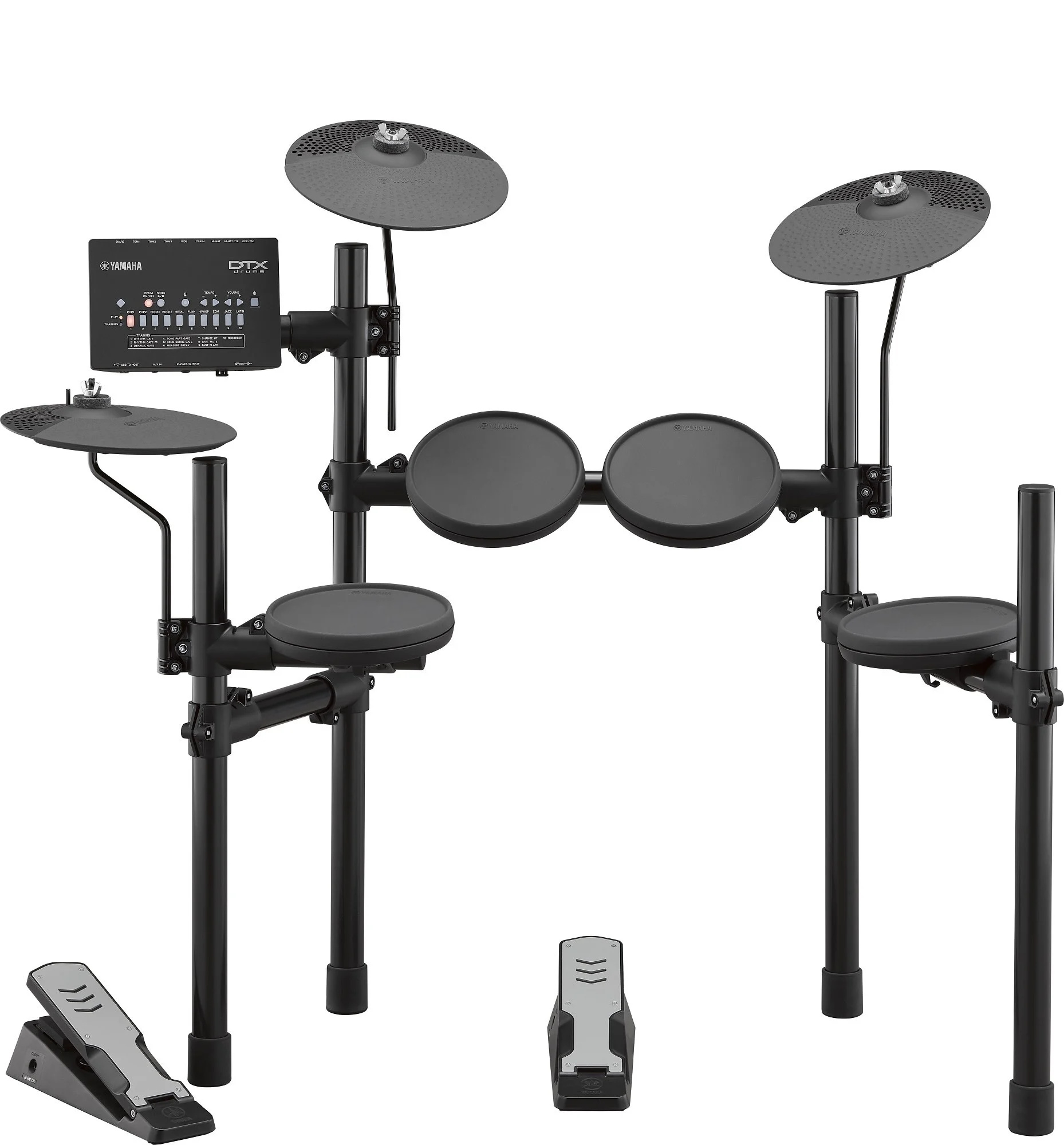
Best for: Complete beginners who want strong learning tools and a quiet, compact kick setup.
The Yamaha DTX402K is our best entry-level learning option. Its DTX402 module provides 10 editable kits, 287 drum and percussion sounds and 10 training functions, while the DTX402 Touch app gives beginners a visual way to customise sounds and use the coaching exercises.
The compact rack and KU100 beaterless kick unit make it particularly practical for bedrooms and noise-sensitive homes. Headphones, auxiliary input and USB audio/MIDI also make it easy to play along to music or connect to recording software.
The main limitation is the kick controller. It is quiet and simple, but does not feel like a conventional bass drum pedal. Choose the DTX402K when affordability, coaching tools and low-impact home practice matter more than an acoustic-style kick response.
Main advantage: Excellent coaching features at the lowest Yamaha price point.
Main consideration: Uses a beaterless kick unit and single-zone rubber snare.
Roland TD-02K
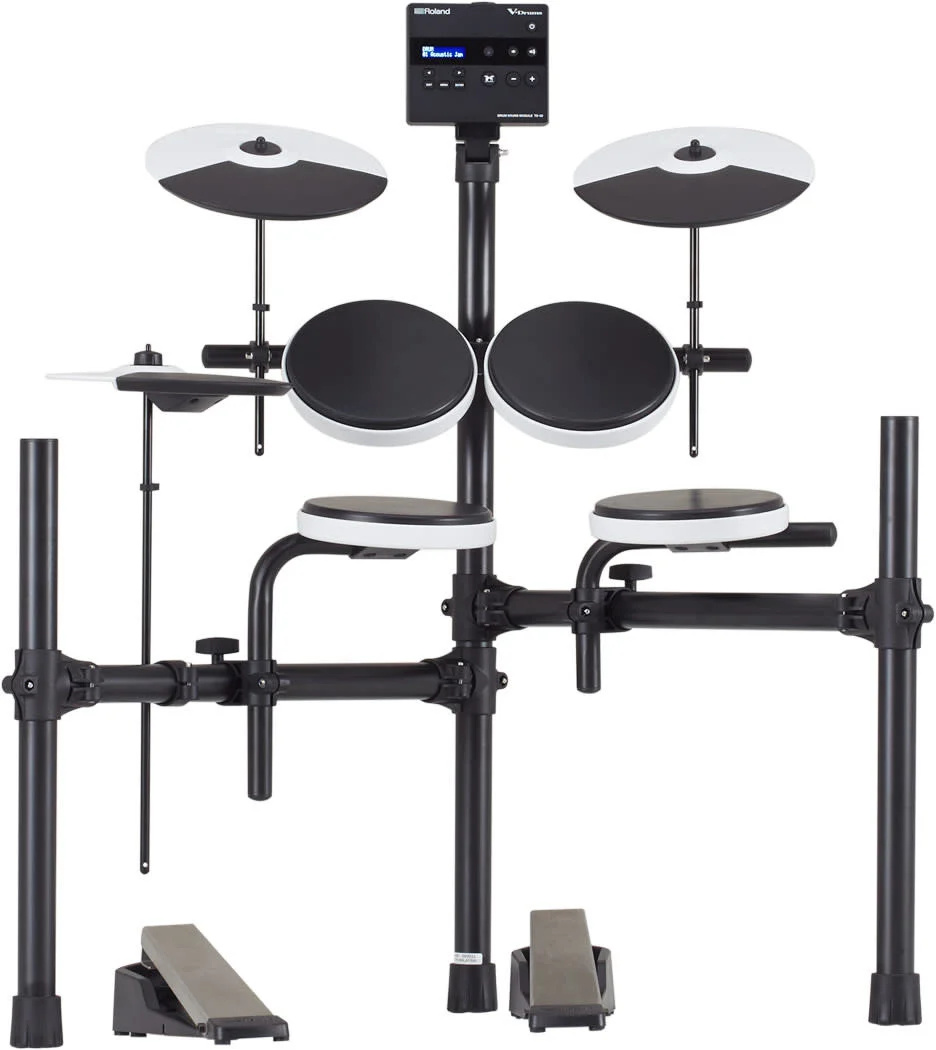
Best for: Beginners who want the most compact and affordable route into Roland V-Drums.
The Roland TD-02K combines a height-adjustable three-post stand with Roland’s responsive triggering and TD-02 module. Its compact design works especially well for younger players, bedrooms and practice spaces where a larger rack would be inconvenient.
The module includes 16 ready-to-play kits, Coach functions, a metronome, audio input and USB audio/MIDI. Bluetooth can be added later using Roland’s optional BOSS BT-DUAL adaptor, giving the setup a useful upgrade path.
Like the DTX402K, it uses a quiet beaterless kick pedal rather than a conventional kick pad. The Yamaha offers more built-in training variety, while the Roland may appeal more to players who prefer its compact stand, triggering and wider V-Drums ecosystem.
Main advantage: Very compact, height adjustable and easy to expand within Roland’s ecosystem.
Main consideration: Rubber drum pads and a beaterless kick controller.
Yamaha DTX432K
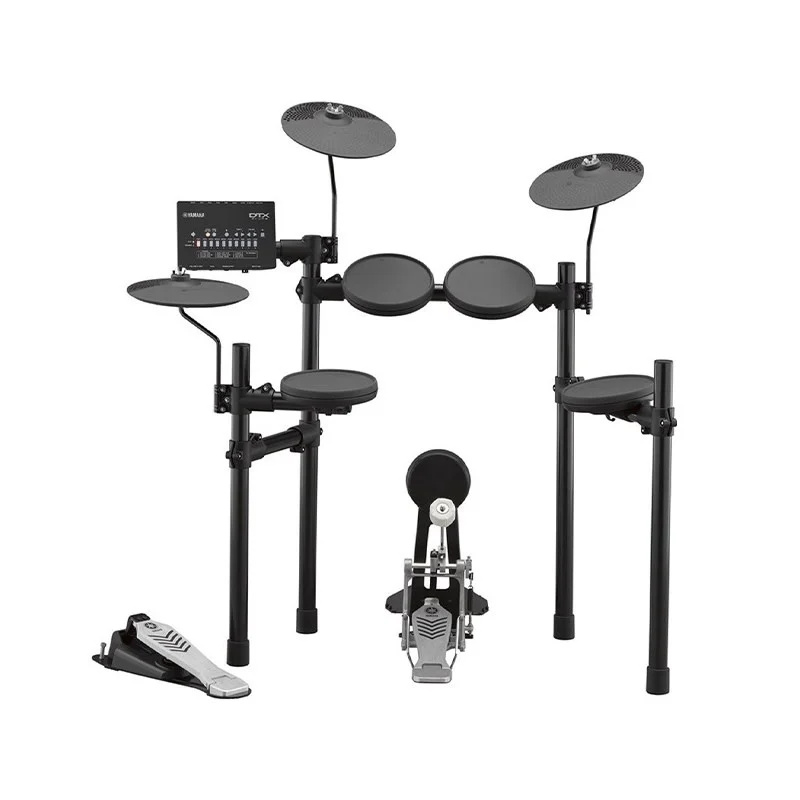
Best for: Beginners who want a conventional bass drum pedal without moving too far up in price.
The Yamaha DTX432K retains the DTX402 module and rubber pads from the DTX402K, but replaces the beaterless kick unit with a KP65 pad and Yamaha FP6110A bass drum pedal.
That upgrade makes the kit feel much closer to an acoustic setup and allows proper pedal technique to develop from the beginning. The KP65 is also compatible with a twin pedal, giving players more flexibility as their musical interests expand.
The DTX432K is the logical choice when the kick setup matters more than snare articulation. It remains compact and beginner friendly, but the basic single-zone snare is the reason many buyers consider stretching to the DTX452K.
Main advantage: Includes both a dedicated KP65 kick pad and FP6110A pedal.
Main consideration: The snare remains a basic single-zone rubber pad.
Yamaha DTX452K
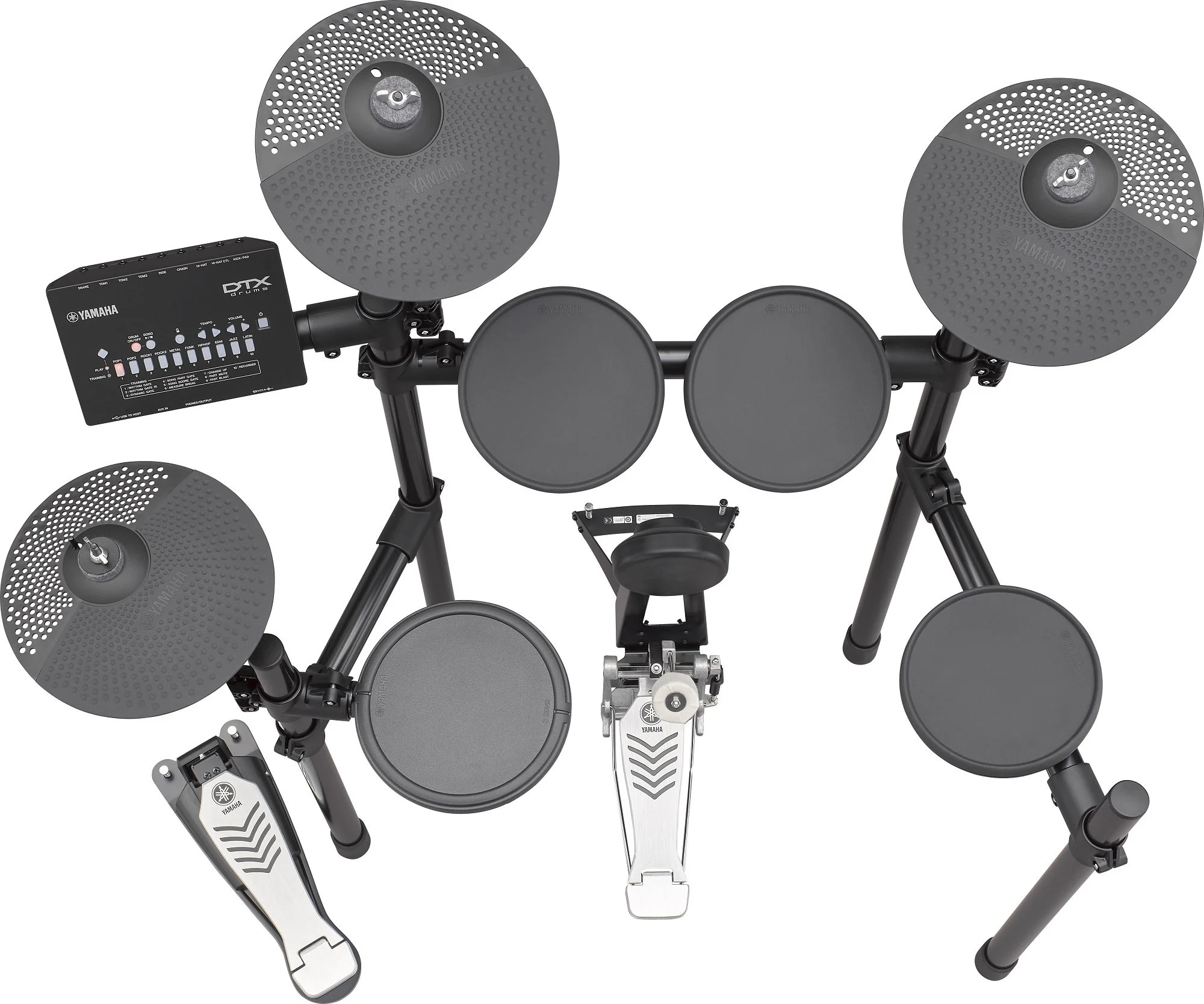
Best for: Most beginners seeking the strongest balance of price, included equipment and long-term playability.
The Yamaha DTX452K is our best-value recommendation for most beginners. It keeps the KP65 kick pad and FP6110A pedal from the DTX432K, then upgrades the snare to Yamaha’s three-zone TP70S rubber pad.
Separate head, rimshot and cross-stick triggering makes the snare more expressive and provides a more complete learning experience. The kit also retains the DTX402 module, coaching functions, app control and USB connectivity found throughout the range.
The toms are still firm rubber pads, so players who strongly prefer mesh may favour Roland. However, the combination of a proper kick setup, three-zone snare and included pedal addresses the areas that affect beginner technique most, making this a remarkably complete package.
Main advantage: Conventional kick setup, included pedal and expressive three-zone snare.
Main consideration: Rubber tom pads and a relatively simple module compared with Roland TD-07.
Roland TD-02KV

Best for: Beginners who prioritise a mesh snare, Roland triggering and a wider rack layout.
The Roland TD-02KV uses the same beginner-friendly TD-02 module as the TD-02K but introduces a PDX-8 mesh-head snare and a wider four-post stand. The mesh snare is quieter, tension adjustable and capable of cross-stick playing.
This creates an interesting comparison with the Yamaha DTX452K. The Roland provides the more forgiving snare surface and Roland’s triggering, while the Yamaha includes a conventional kick pad and bass drum pedal.
Choose the TD-02KV when the snare feel, compact Roland module and future V-Drums upgrades are your priorities. Choose the DTX452K when developing conventional bass drum technique immediately is more important.
Main advantage: PDX-8 mesh snare and a stable acoustic-style rack layout.
Main consideration: Still uses the KT-1 beaterless kick pedal unless upgraded separately.
Yamaha DTX482K
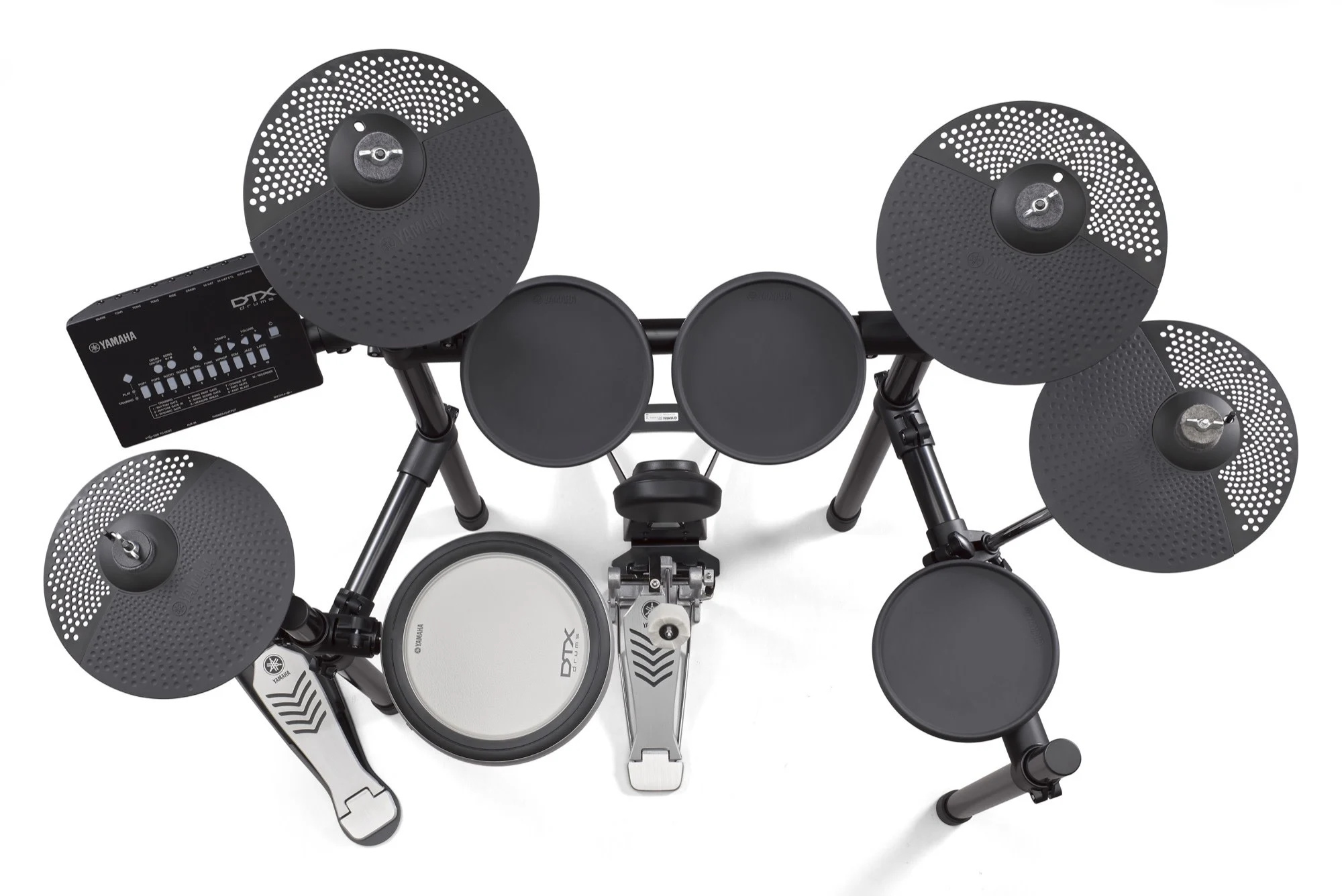
Best for: Beginners who want Yamaha TCS snare feel and an expanded cymbal setup.
The Yamaha DTX482K builds on the DTX452K with an eight-inch XP80 three-zone TCS snare and an additional crash cymbal pad. It retains the KP65 kick pad, FP6110A pedal and familiar DTX402 module.
The XP80 is the main attraction. Its Textured Cellular Silicone surface offers a controlled, cushioned response that many players find extremely close to a coated acoustic head. The extra crash also creates a more complete layout for learning fills, accents and kit movement.
At this level the choice becomes more personal. The DTX482K offers the premium Yamaha pad and an included pedal, while the similarly positioned TD-07DMK provides mesh pads throughout and a more advanced module. Trying both is the best way to decide.
Main advantage: XP80 TCS snare, extra crash pad and included Yamaha bass drum pedal.
Main consideration: The toms remain rubber and the DTX402 module is less advanced than the TD-07.
Roland TD-07DMK
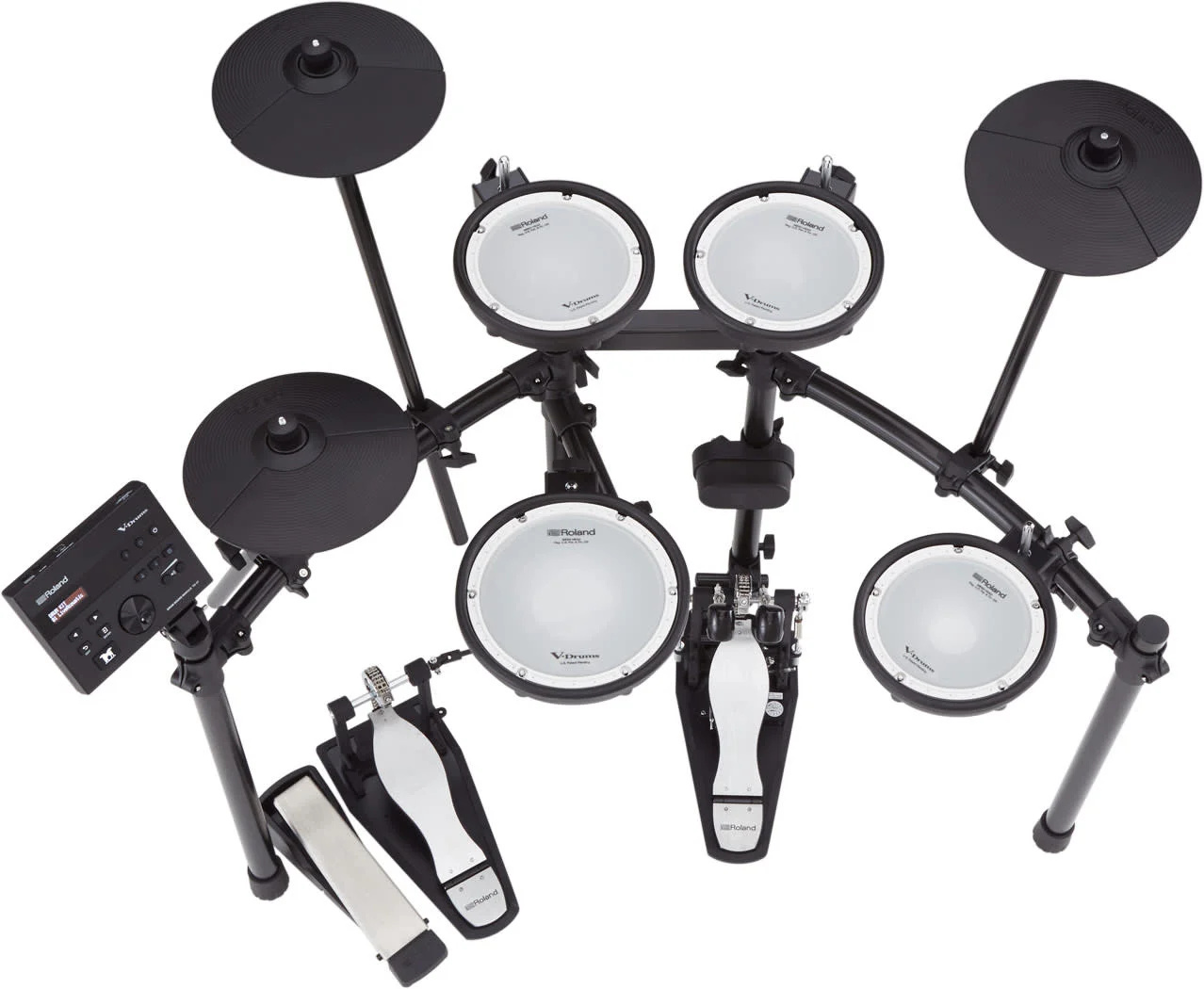
Best for: Serious beginners who want all-mesh drum pads and a module with significant room to grow.
The Roland TD-07DMK is our best Roland value and represents a clear step beyond the TD-02 series. It combines a PDX-8 mesh snare, three mesh tom pads and a rack-mounted KD-2 kick pad with Roland’s more advanced TD-07 module.
The module provides 143 instruments, 50 kit locations, Bluetooth audio, Coach functions, USB audio/MIDI and deeper sound editing. It feels less like a basic learning module and more like a platform that can remain useful as recording, customisation and expansion become important.
The rack-mounted kick keeps the footprint controlled, although it is less substantial than the freestanding KD-10 supplied with the TD-07KV. A bass drum pedal is not included, so remember to include one in the total budget.
Main advantage: All-mesh drum pads and the capable TD-07 module at a strong price point.
Main consideration: Bass drum pedal is separate and the kick pad is attached to the rack.
Roland TD-07KV
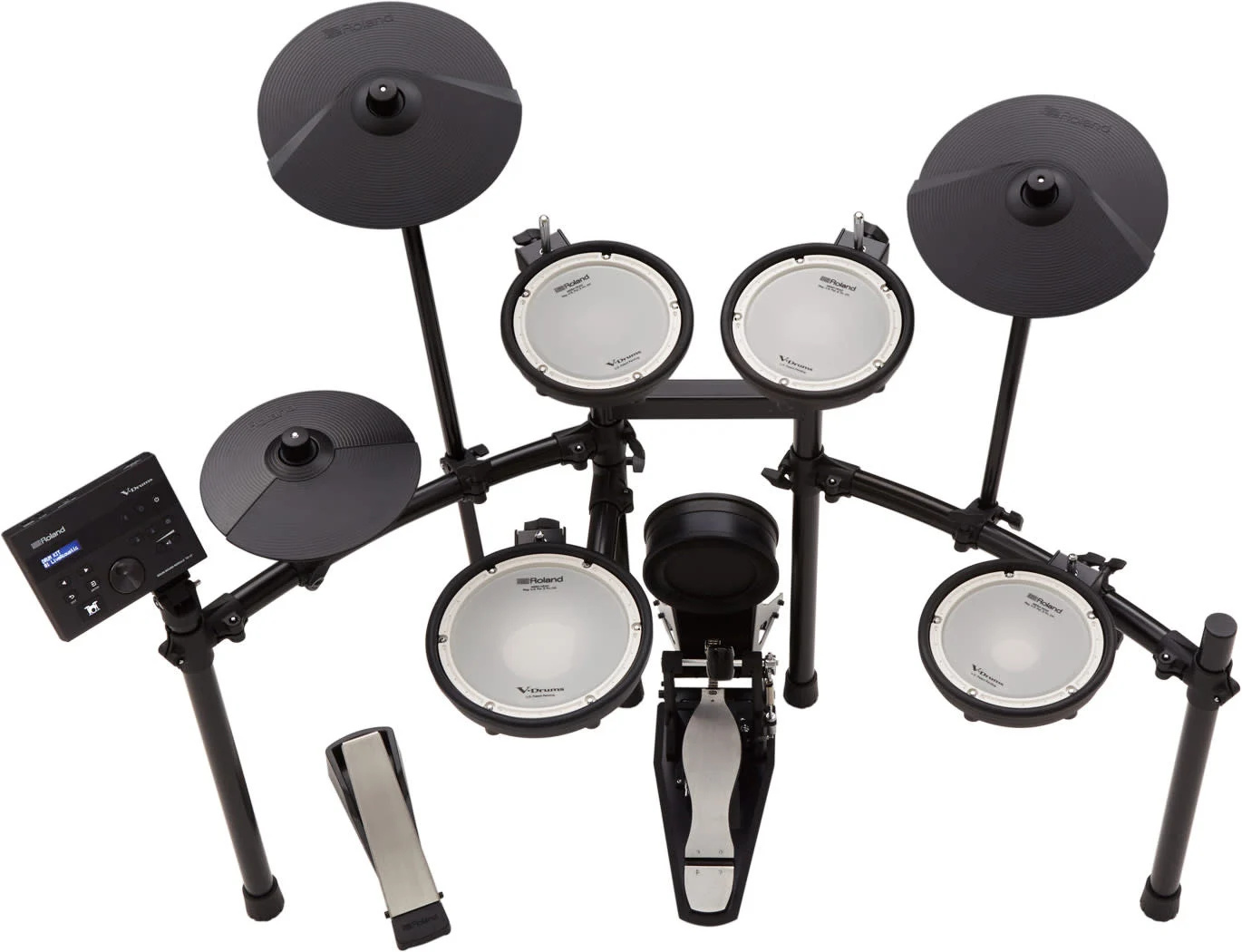
Best for: Committed beginners who want the best overall playing experience in this guide.
The Roland TD-07KV is our best overall recommendation. It uses the same TD-07 module and mesh drum pads as the TD-07DMK, then adds larger 12-inch CY-8 crash and ride cymbals and a freestanding KD-10 kick pad.
I currently own this kit, and the improvements are more noticeable in use than they may appear on paper. The larger cymbals are easier to move around naturally, while the KD-10 feels more stable and substantial than a rack-mounted kick pad. Together, they make the kit feel considerably more refined.
Bluetooth makes playing along to music simple, and the module provides enough editing, coaching and recording capability to remain engaging well beyond the beginner stage. A bass drum pedal still needs to be purchased separately, but if the budget allows, this is the kit I would be happiest recommending as a long-term home setup.
Main advantage: The strongest combination of module, mesh pads, larger cymbals and kick feel.
Main consideration: Highest initial cost in the guide and no bass drum pedal included.
What Else Do You Need?
It is important to compare the complete cost rather than spending the entire budget on the module and pads. Depending on the kit, several essentials may need to be purchased separately.
- Bass drum pedal: included with the Yamaha DTX432K, DTX452K and DTX482K, but required separately for both Roland TD-07 kits.
- Drum throne: a stable drum stool supports posture and makes longer sessions more comfortable.
- Drumsticks: choose a comfortable general-purpose pair rather than anything unusually heavy.
- Headphones: closed-back headphones designed for electronic drums make it easier to hear the module over the acoustic pad noise.
- Drum mat: prevents the rack and kick pedal from moving and protects the floor.
- Amplification: not required for headphone practice, but a drum monitor or PA is needed when other people need to hear the kit.
Bass Drum Pedals We Recommend for Beginners
- Tama Iron Cobra 200 – smooth, reliable and the easiest all-round recommendation.
- Mapex 400 Series – excellent value for a straightforward first pedal.
- Sonor 1000 Series – sturdy construction and a dependable beginner option.
GRD Final Thoughts
Choosing your first electronic drum kit does not need to become a battle between Yamaha and Roland. Both brands make dependable beginner instruments, but they prioritise different aspects of the playing experience.
The Yamaha DTX402K is an excellent low-cost learning platform, while the DTX452K is the strongest value for most beginners because it combines a conventional kick setup, included pedal and three-zone snare. The Roland TD-07DMK is the best Roland value, and the TD-07KV provides the most complete long-term setup in this guide.
The correct choice is the kit that fits your room, encourages regular practice and provides the features you will genuinely use. Where possible, visit us in store and compare the surfaces and kick setups side by side. Ten minutes behind each kit often makes the answer much clearer than another hour reading specifications.
Explore our complete range of electronic drum kits, or contact the GRD team for advice based on your budget, available space and playing goals.
Frequently Asked Questions
Do I need an amplifier for an electronic drum kit?
No. You can connect headphones directly to every kit covered in this guide. An amplifier, drum monitor or PA is only needed when you want other people to hear the module.
Do beginner electronic drum kits include a bass drum pedal?
Some do and some do not. The Yamaha DTX432K, DTX452K and DTX482K include an FP6110A pedal. The Roland TD-07DMK and TD-07KV include kick pads but require a separate pedal, while the DTX402K and Roland TD-02 kits use beaterless controllers.
Can I use a double bass drum pedal?
The Yamaha KP65 and Roland KD-10 are designed to accept twin pedals. Compatibility with smaller kick pads can vary, so check the individual product specification before buying. Beaterless controllers such as those supplied with the DTX402K and TD-02 kits do not accept a conventional double pedal without changing the kick trigger.
Are electronic drum kits completely silent?
No. Headphones remove the amplified drum sound from the room, but sticks still strike pads and the kick mechanism creates impact noise. Pad material, floor construction, a drum mat and additional isolation all affect how much sound reaches neighbouring rooms.
Can children learn on an electronic drum kit?
Yes. Electronic kits are popular for children because the rack height and pad positions can be adjusted, volume is controlled and headphones make regular home practice easier. A stable throne and sensible setup height are important for comfortable posture.
Written by: Alex Neave
I've been part of the Graham Russell Drums team since October 2025, but my connection with the shop goes back much further as a customer since 2012. I've advised drummers of all ages and experience levels, worked on a wide range of second-hand kits and spent a lot of time helping customers navigate the often overwhelming world of drum gear. Alongside over 13 years of playing experience, that hands-on exposure to a wide range of products allows me to write buying guides based on real-world knowledge and practical experience rather than simply repeating manufacturer specifications.












Comments
Be the first to comment...