


Yamaha EAD20: What’s New & How Does It Compare to the EAD10?
- Posted on
- 0
A closer look at the new Yamaha EAD20, including its key upgrades, recording and hybrid features, and how it compares with the EAD10.
YAMAHA EAD SERIES
Written by Alex Neave
Yamaha has expanded its Electronic Acoustic Drum range with the new Yamaha EAD20, the new standard model in the EAD series. Sitting between the long-established EAD10 and flagship EAD50, the EAD20 combines the simple setup that made the original EAD concept so successful with a much more advanced platform for recording, sound processing and hybrid drumming.
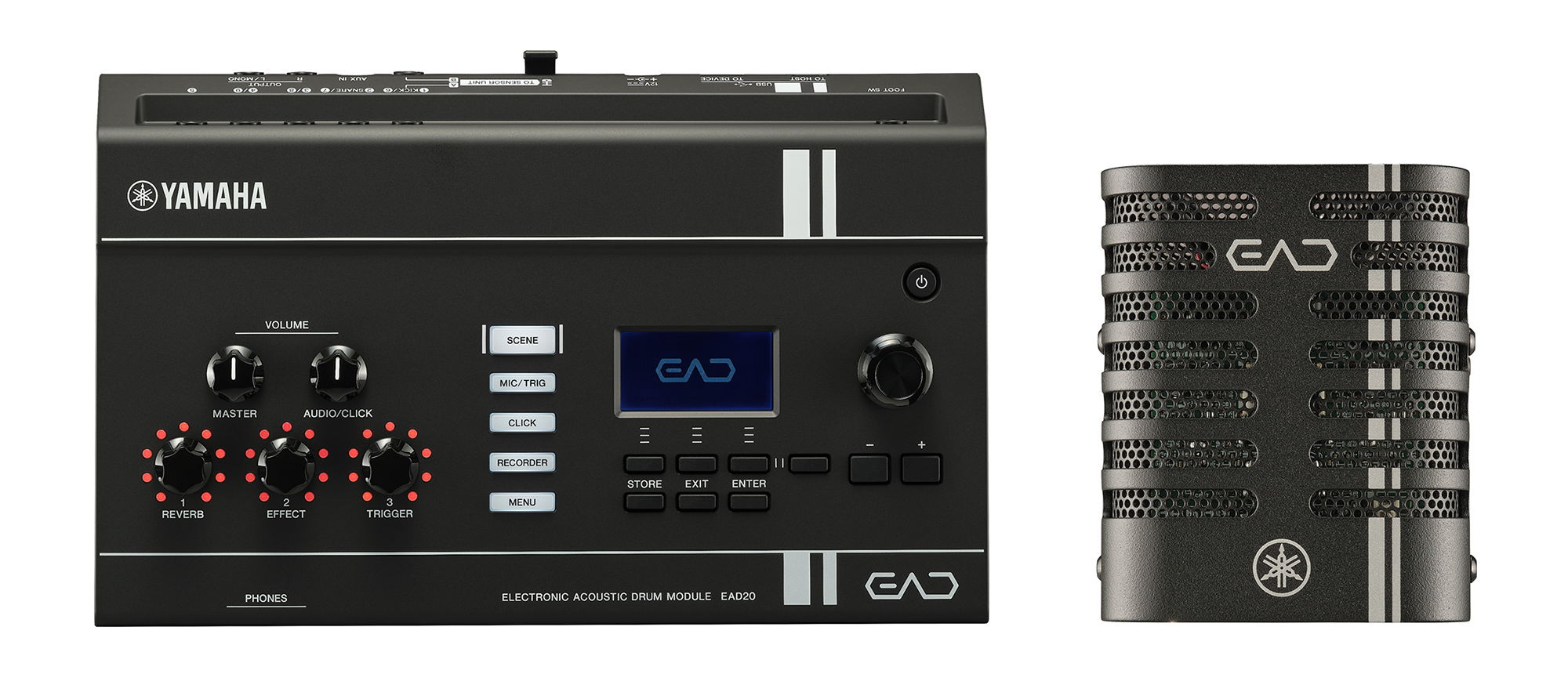
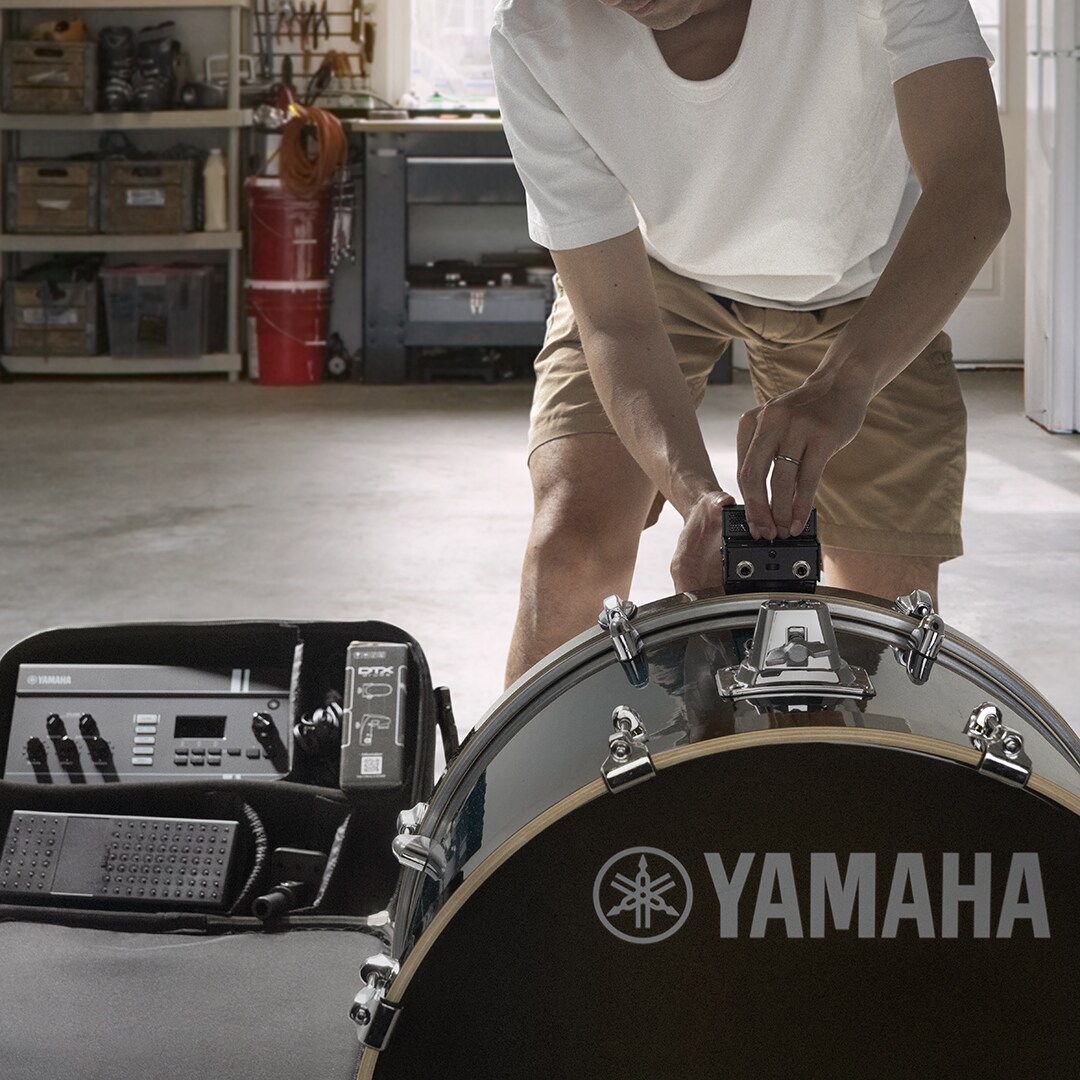
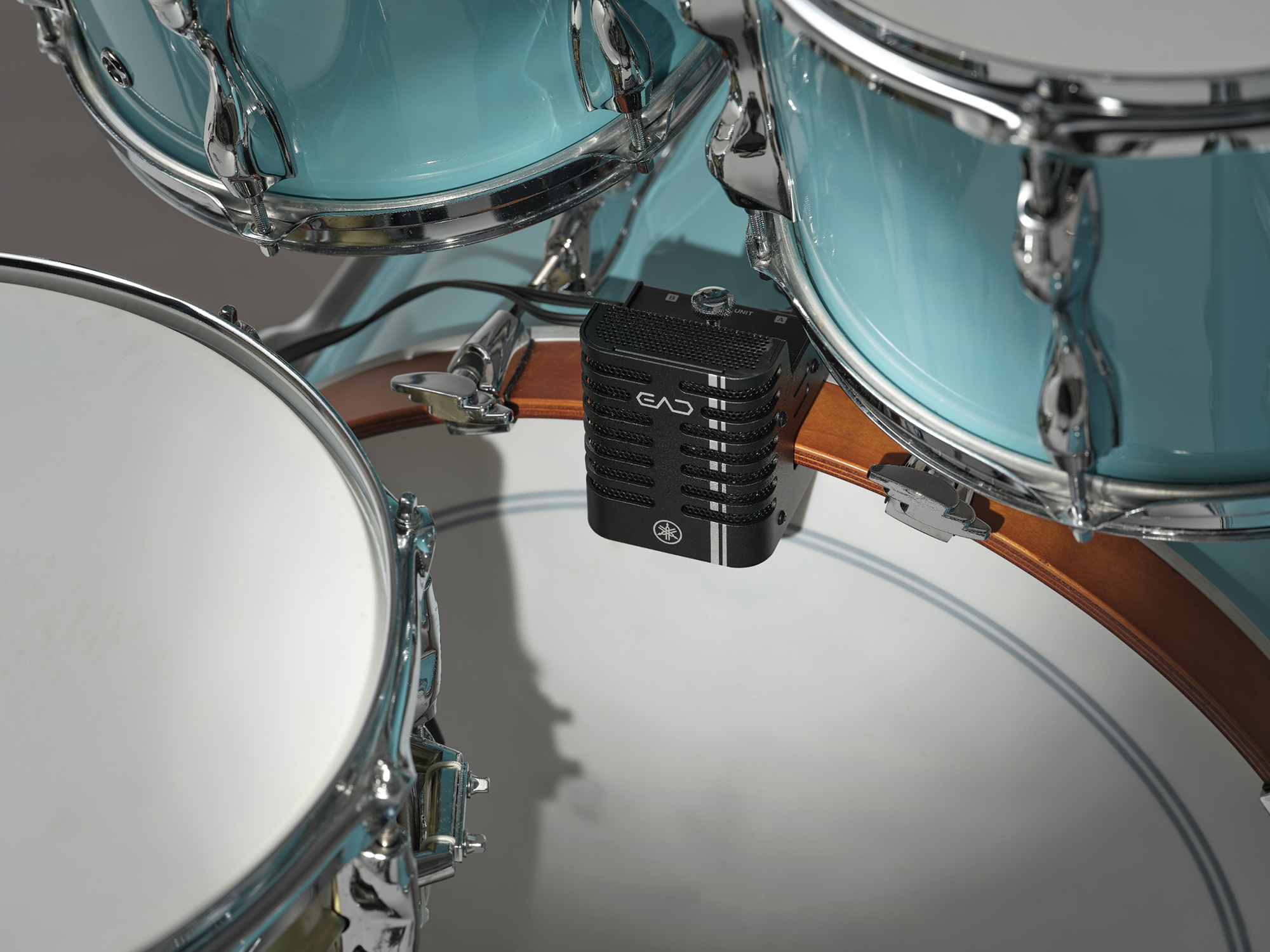
At its core, the idea remains brilliantly simple. A sensor unit attaches directly to the bass drum hoop and captures the complete acoustic drum kit without requiring a conventional multi-microphone setup. The EAD20 develops this considerably further with a newly designed sensor, EAD50-derived sound and processing technology, multichannel USB recording, greater trigger expansion, sampling, looping and compatibility with Yamaha's EAD Touch app.
These are substantial upgrades over the EAD10, but what do they actually mean for a drummer? In this guide, we'll look at what's new, compare the EAD20 directly with the EAD10, explore where the EAD50 still goes further and help you decide which Yamaha EAD system best suits the way you play, practise and record.
What Is the Yamaha EAD20?
Quick Answer
The Yamaha EAD20 is an Electronic Acoustic Drum system that captures, processes and records the sound of an acoustic drum kit using a compact sensor mounted to the bass drum hoop. The sensor combines stereo condenser microphones with a dedicated bass drum trigger, while the module adds effects, electronic sounds, recording, sampling and hybrid drum functionality.
Instead of positioning separate microphones around the snare, toms, cymbals and bass drum, the EAD sensor captures a balanced stereo image of the complete kit from one position. That sound can then be monitored through headphones, sent to a PA, recorded or enhanced using the module's built-in sounds and effects.
Acoustic drum triggers and electronic pads can also be added, allowing the EAD20 to develop from a straightforward acoustic drum capture system into the centre of a much more extensive hybrid setup.
What's New on the Yamaha EAD20?
Although the basic EAD concept remains familiar, the EAD20 represents a significant technical step forward from the EAD10. Yamaha has upgraded the sensor, sound processing, recording capabilities, trigger expansion and overall control of the system.
A Newly Developed Sensor Unit
The EAD20 uses a newly developed sensor featuring a Yamaha-selected matched pair of condenser microphones in a custom-tuned XY stereo configuration. Yamaha has also redesigned the housing and incorporated a floating microphone mount to help reduce unwanted vibration and mechanical noise from the bass drum.
The result is designed to provide a more natural, balanced and three-dimensional representation of the acoustic kit while retaining the simplicity of capturing everything from a single bass drum-mounted unit.
More Powerful Sound & Effects Processing
The EAD20 shares the newer platform developed for the EAD50 and features Yamaha's AWM2 tone generator with 2,203 built-in Voices and 256-note maximum polyphony. By comparison, the EAD10 provides 757 Voices and 64-note polyphony.
The processing options are considerably deeper too, with dedicated microphone and trigger processing alongside reverb, compression, EQ, delay, modulation and master effects. This gives the EAD20 much greater scope for shaping both the natural acoustic kit and any electronic sounds layered alongside it.
Multichannel USB Recording
One of the most important upgrades is the EAD20's USB audio capability. It can function as an 8-input / 10-output, 24-bit audio interface at 44.1kHz, allowing multiple audio channels to be routed independently between the module and compatible recording software.
The important difference is control. Rather than committing everything to a finished stereo EAD mix, the EAD20 can provide much greater flexibility over microphone audio, trigger sounds, effects, backing tracks and click tracks when working in a DAW.
Greater Hybrid Expansion
The dedicated bass drum trigger remains built into the sensor, but the EAD20 provides significantly greater room to expand the electronic side of the setup. Yamaha specifies a maximum of nine connected pads through the EAD20's trigger inputs when Y-cables are used.
USB Trigger Link provides another expansion route, allowing a compatible Yamaha drum module to communicate with the EAD20 through a single USB connection. This makes it possible to incorporate additional electronic pads and triggers without running individual analogue trigger connections between the two modules.
Sampling, Looping & EAD Touch
The EAD20 introduces dedicated Sampling and Looper functions alongside User Voice import, while Yamaha's EAD Touch app provides graphical control over Scenes, effects and trigger settings. Automatic microphone gain and trigger/crosstalk setup also help reduce the amount of manual configuration required before playing.
-
New sensor unit: Matched condenser microphones in a custom-tuned XY stereo configuration.
-
More processing power: 2,203 Voices and 256-note maximum polyphony.
-
Multichannel recording: Up to 8-in / 10-out, 24-bit USB audio at 44.1kHz.
-
Expanded creative tools: Dedicated Sampling and Looper functions.
-
Greater control: EAD Touch compatibility, assignable Modifier controls and automatic setup functions.
Yamaha EAD20 vs EAD10: What's the Difference?
The easiest way to understand the EAD20 is to compare it directly with the EAD10. Both are built around the same convenient idea of capturing an acoustic kit through a bass drum-mounted stereo sensor, but the EAD20 greatly expands what can be done with that sound afterwards.
| Feature | Yamaha EAD10 | Yamaha EAD20 |
|---|---|---|
| Sensor | Original EAD10 sensor unit | Newly developed matched-pair stereo sensor |
| Voices | 757 | 2,203 |
| Maximum Polyphony | 64 | 256 |
| USB Audio | 2-in / 2-out | 2-in / 2-out or 8-in / 10-out multichannel |
| Pad / Trigger Expansion | Maximum 6 triggers and pads including the sensor bass drum trigger | Maximum 9 connected pads through trigger inputs when Y-cables are used |
| EAD Touch | No | Yes |
| Modifier Controls | Dedicated Reverb, Effect and Trigger controls | 3 assignable Modifier controls |
| Looper | No dedicated Looper | Built-in Looper |
| Sampling | WAV sample import | Built-in Sampling + User Voice import |
| Setup Assistance | Trigger sensitivity adjustment | Automatic microphone gain and trigger/crosstalk setup |
| Headphone Connections | Standard stereo jack | Standard + 3.5mm stereo jacks |
Technical note: Yamaha describes the expansion limits differently for each model. The EAD10 figure is stated as a maximum of six triggers and pads including the bass drum trigger built into its sensor, while the EAD20 specification states a maximum of nine connected pads when Y-cables are used.
The difference is therefore much greater than simply having a newer sensor. The EAD20 offers substantially more processing power, a larger sound library, much deeper recording functionality and a stronger platform for hybrid drumming.
The EAD10 still makes sense for drummers whose priorities are straightforward stereo capture, headphone monitoring, Rec'n'Share content and simple live amplification. The EAD20 is the more compelling choice when multichannel recording, hybrid expansion, sound design and greater creative control are important to your setup.
Recording, Practice & Content Creation
Multichannel Recording
For anyone recording drums at home, the move to 8-in / 10-out USB audio is one of the EAD20's biggest upgrades. The EAD20 can route multiple audio channels between the module and a compatible DAW, rather than treating the complete EAD sound only as a finished stereo mix.
Yamaha allows microphone audio, electronic trigger sounds, effects, backing tracks and click tracks to be routed through USB. This gives considerably greater control when balancing, processing and producing a recording afterwards while retaining the convenience of capturing the acoustic kit from one sensor unit.
When full multichannel recording is not required, the EAD20 can also operate as a conventional 2-in / 2-out, 24-bit USB audio interface at 44.1, 48 or 96kHz.
Practice & Monitoring
GRD TIP
From our experience with the EAD10: I originally bought my own EAD10 primarily for recording drum content, but it quickly became one of my favourite ways to practise. Monitoring the complete acoustic kit through headphones makes small details such as ghost notes, dynamics and the balance between different parts of the kit much easier to hear.
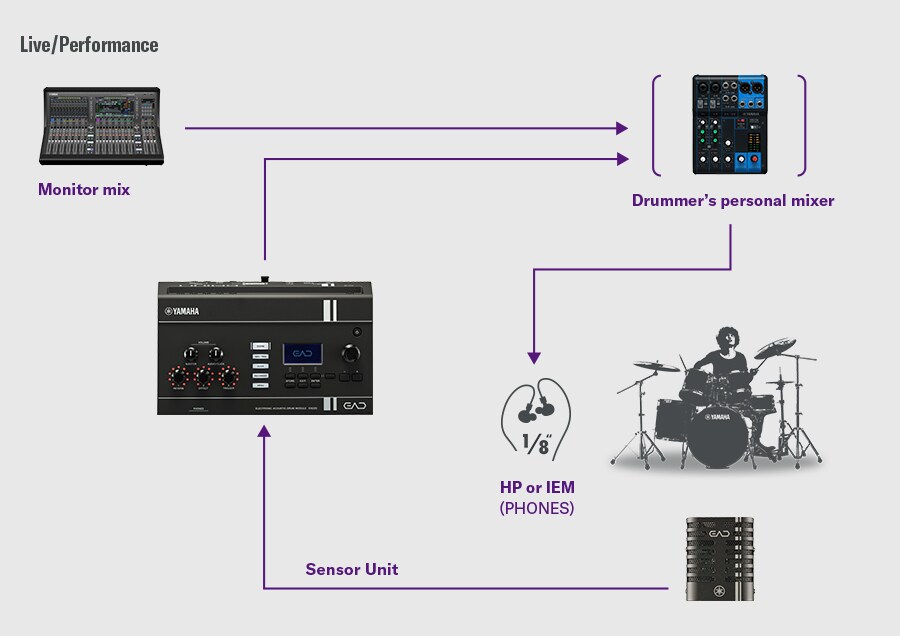
The EAD20 retains that core benefit while offering much greater control over the monitoring sound. Headphone EQ, effects and electronic layers can all be incorporated, while the addition of a 3.5mm headphone connection is particularly convenient for drummers using modern in-ear monitors.
Rec'n'Share & Video Creation
Yamaha's Rec'n'Share app remains an important part of the EAD20 workflow, allowing a compatible smart device to combine EAD audio with video, backing tracks and click functions. This makes the system particularly useful for drum covers, social media content, lessons and reviewing your own playing.
The EAD20 also includes Yamaha's Mic Talk function, which allows the sensor setup to switch quickly between capturing the drum performance and making speech clearer. This is particularly useful for online lessons, demonstrations and videos where the drummer needs to move between playing and speaking.

Hybrid Drumming, Sampling & EAD Touch
Hybrid drumming is another area where the EAD20 takes a major step forward. The sensor includes a dedicated bass drum trigger, allowing an electronic kick sound to be layered immediately with the natural bass drum. Additional acoustic triggers and electronic drum pads can then be connected to expand the setup further.
Yamaha specifies a maximum of nine connected pads through the EAD20's trigger inputs when Y-cables are used. USB Trigger Link provides additional expansion by allowing a compatible Yamaha drum module and its connected pads or triggers to communicate with the EAD20 through a single USB connection.
With 2,203 built-in Voices available, electronic sounds can be blended with the acoustic kit or assigned to external pads. Your own samples can also be imported as User Voices, while the built-in Sampling function allows sounds to be captured and reused as part of a custom setup.
The dedicated Looper adds another creative option, allowing microphone, trigger and other connected signals to be recorded and layered into repeating phrases. For drummers incorporating electronics into an acoustic performance, this gives the EAD20 considerably more creative scope than the EAD10.
EAD Touch & Easier Control
The EAD20 is compatible with Yamaha's EAD Touch app, providing a graphical interface for editing Scenes, assigning effects and managing trigger settings from a compatible smartphone, tablet or Mac.
On the module itself, three upgraded Modifier knobs can be assigned to functions such as reverb, EQ and compression, giving quick real-time access to important sound adjustments without repeatedly navigating through menus.
Automatic microphone gain and trigger setup further simplify the process. By playing the kit, the EAD20 can optimise key microphone and trigger settings, helping the drummer get to a usable setup quickly when moving between practice rooms, studios or live environments.
Yamaha EAD10 vs EAD20 vs EAD50: Which One Should You Choose?
Yamaha now offers three distinct EAD systems. The EAD10 remains the straightforward original concept, Yamaha positions the EAD20 as the new standard model, while the EAD50 is the high-spec option with considerably more extensive microphone inputs, outputs and routing.
| Feature | EAD10 | EAD20 | EAD50 |
|---|---|---|---|
| Best Suited To | Simple monitoring, recording and content creation | Advanced all-round recording, content and hybrid use | Professional recording, live sound and complex routing |
| USB Audio | 2-in / 2-out | Up to 8-in / 10-out | 8-in / 10-out |
| Microphone Inputs | Dedicated EAD10 sensor | Dedicated EAD20 sensor | DSU50 and external microphone support |
| Individual Outputs | No | No | 8 individual outputs |
| EAD Touch | No | Yes | Yes |
| Bluetooth | No | No | Bluetooth Audio & MIDI |
Choose the EAD10 if...
Your priorities are straightforward full-kit monitoring, stereo recording, Rec'n'Share content and simple live amplification. It remains a very capable option if you do not need the EAD20's more advanced recording and hybrid features.
Choose the EAD20 if...
You want to retain the convenient EAD workflow but need considerably more room to grow. The newly developed sensor, multichannel recording, deeper sound processing, greater trigger expansion, sampling, looping and EAD Touch make the EAD20 a substantial upgrade and an extremely strong all-round option.
Choose the EAD50 if...
You require external microphone inputs, eight individual outputs, balanced XLR master outputs, Bluetooth and the deeper routing flexibility required for more complex professional studio or live setups.
For a more detailed look at the differences between Yamaha's original EAD10 and flagship EAD50, you can also read our Yamaha EAD10 vs EAD50 comparison guide.
Who Is the Yamaha EAD20 For?
The EAD20 should be particularly appealing to:
-
Acoustic drummers who want clear, detailed headphone monitoring.
-
Home recordists who want more control than a finished stereo drum recording.
-
Drummers producing covers, performance videos or social media content.
-
Hybrid players combining acoustic drums with electronic pads, triggers and samples.
-
Teachers and students using recording or online lessons.
-
EAD10 users who have started to outgrow its recording, processing or expansion capabilities.
Importantly, you do not need to be an experienced electronic drummer to benefit from the EAD20. Yamaha has retained the simple bass drum-mounted sensor concept and added automatic setup functions specifically to make its expanded capabilities easier to access.
There is still a clear reason to choose either of the other models. If all you need is straightforward monitoring and stereo content creation, the EAD10 may provide everything you need. If your setup demands additional microphones, individual outputs and much deeper professional routing, the EAD50 goes considerably further.
FROM THE SHOP FLOOR
The GRD Take
The EAD10 has remained such a useful product because Yamaha managed to make something that would traditionally involve microphones, stands, cables and an audio interface remarkably straightforward. Attach the sensor, put on a pair of headphones and you can very quickly hear and record a processed version of your complete acoustic kit.
From our experience using the EAD10, that simplicity is a major part of the appeal of the EAD concept. What makes the EAD20 particularly interesting is that Yamaha has retained the accessible EAD concept while making some genuinely substantial upgrades around it.
The newly developed sensor is a major upgrade in its own right, but the biggest step forward is arguably everything the EAD20 can now do once that sound has been captured. Multichannel USB recording, much deeper processing, a considerably larger sound library, stronger hybrid expansion, sampling, looping and EAD Touch turn the EAD20 into a much broader recording and creative tool.
For drummers wanting to take home recording, content creation or hybrid performance considerably further, the EAD20 represents a major step up from the EAD10 without requiring the more extensive connectivity of the EAD50.
Yamaha EAD20 Key Specifications
Sound & Scenes
- Tone Generator: AWM2
- Voices: 2,203
- Maximum Polyphony: 256 notes
- Parts: 10
- Preset Scenes: 50 or more
- User Scenes: 200
Recording & Creative Tools
- USB Audio: 2-in / 2-out, 24-bit at 44.1 / 48 / 96kHz
- Multichannel USB Audio: 8-in / 10-out, 24-bit at 44.1kHz
- Maximum Loadable Sample Time: Approx. 50 minutes mono / 25 minutes stereo at 44.1kHz, 16-bit
- Recorder: Built in
- Looper: Built in
- Sampling: Built in
Hybrid & Control
- Maximum Connected Pads via Trigger Inputs: 9 when Y-cables are used
- USB Trigger Link: Supported
- Mic Talk: Supported
- Gain Auto Setup: Supported
- Crosstalk Auto Setup: Supported
- Apps: Yamaha EAD Touch and Rec'n'Share
Connections & Physical
- Mic / Line Input: Dedicated EAD20 sensor unit
- Main Outputs: L/Mono and R
- Headphones: Standard stereo jack + 3.5mm stereo mini jack
- External Storage: USB Flash Drive
- Bluetooth: No
- Main Module Dimensions: 300 x 70 x 190mm
- Main Module Weight: 1.4kg
Explore the Yamaha EAD20, EAD10 and EAD50 or speak to the GRD team if you're unsure which system best suits your setup.
Frequently Asked Questions
What is the Yamaha EAD20?
The Yamaha EAD20 is an Electronic Acoustic Drum system that uses a bass drum-mounted stereo microphone and trigger sensor to capture, process, monitor and record an acoustic drum kit. It also supports electronic sounds, effects, pads, triggers, sampling and hybrid drum setups.
What is the difference between the Yamaha EAD10 and EAD20?
The EAD20 introduces a newly developed sensor, 2,203 Voices, 256-note polyphony, 8-in / 10-out multichannel USB audio, expanded sound processing and trigger support, a built-in Looper and Sampling function, automatic setup and Yamaha EAD Touch compatibility. It is a substantial expansion of the EAD10 concept rather than simply a replacement sensor or minor module update.
Is the Yamaha EAD20 replacing the EAD10?
No. Yamaha currently lists the EAD10, EAD20 and EAD50 within the EAD range. Yamaha describes the EAD20 as the standard model, while the EAD50 is positioned as the high-spec option.
Can the Yamaha EAD20 record separate tracks?
Yes. The EAD20 can operate as an 8-input / 10-output, 24-bit USB audio interface at 44.1kHz, allowing multiple audio channels to be routed independently between the module and compatible DAW software.
How many pads and triggers can you connect to the EAD20?
Yamaha specifies a maximum of nine connected pads through the EAD20's trigger inputs when Y-cables are used. USB Trigger Link can also connect the EAD20 to a compatible Yamaha drum module for further hybrid expansion.
Does the Yamaha EAD20 work with Rec'n'Share and EAD Touch?
Yes. The EAD20 is compatible with Yamaha's Rec'n'Share app for recording and creating performance videos, as well as the EAD Touch app for graphical control of Scenes, effects and trigger settings.
Can you use the Yamaha EAD20 live?
Yes. The EAD20 can send its processed drum sound through the L/Mono and R outputs to a PA or monitoring system, while electronic sounds, effects, triggers, pads and performance controls can all be incorporated into a live setup.
Do you need additional microphones with the Yamaha EAD20?
No. The supplied EAD20 sensor is designed to capture the complete acoustic drum kit from its position on the bass drum hoop. The EAD20 does not provide the conventional external microphone expansion of the EAD50, so drummers who need additional microphones and more extensive output routing should consider the EAD50 instead.
STILL NOT SURE?
Ask a drummer
Still not sure? Give us a call and speak to a member of our expert team.
Written by Alex Neave
I've been a part of the Graham Russell Drums team since October 2025, but my connection with the shop goes back much further as a customer since 2012. Alongside over 13 years of playing experience, my role at GRD involves advising drummers on acoustic and electronic equipment, working hands-on with new products and helping customers find the right equipment for the way they play.












Comments
Be the first to comment...