

Ultimate Yamaha DTX Electronic Drum Kit Buyer's Guide
- Posted on
- By GRD
- Posted in Drum Kit Guides
- 0
Choosing your first (or next) electronic kit? Here’s everything you need to know about Yamaha’s DTX range and which kits the Graham Russell Drums team recommend for every level.
Yamaha DTX Drum Kit Buyer’s Guide (GRD)
If you came into Graham Russell Drums looking at Yamaha electronic kits, we would start with a few practical questions: what style you are playing, how quiet it needs to be, how much space you have, whether you are learning from scratch or upgrading, and whether recording or gigging is part of the plan.
This buyer’s guide is designed to mirror that in-store conversation as closely as possible, just in blog form. We will walk you through the Yamaha DTX range, explain what changes as you move through the line-up, and highlight which kits make the most sense for different drummers.
What matters most when choosing a Yamaha DTX kit
1) Your main use case
-
Quiet practice at home (noise and vibration control matters as much as sound)
-
Learning properly (especially foot technique and timing)
-
Recording and content (USB audio, MIDI, app workflow)
-
Rehearsal and gigging (outputs, routing, durability, pad feel)
2) The module
The module determines your core sound library, coaching tools, editing depth, connectivity, and how far you can take the kit in a studio or live environment.
3) The feel under sticks and feet
Pad materials matter, but the kick setup matters just as much. A quiet pedal can be a lifesaver at home, but a beater-driven pedal is a key skill-builder if you want to move between electronic and acoustic kits.
Start with the module: DTX402 vs DTX-PRO vs DTX-PROX
DTX402 module (DTX402K, DTX432K, DTX452K, DTX482K)
This is Yamaha’s coaching-focused platform. The DTX402 module includes 10 drum kits, 287 sounds, 10 coaching modes, and app compatibility.
- Best for: beginners, home practice, lessons, structured improvement
-
Strengths: coaching tools, simple workflow, strong value
-
Reality check: it is intentionally simpler than the DTX-PRO and DTX-PROX platforms
DTX-PRO module (DTX6 series and DTX8 series)
This is the step into Yamaha’s more serious sound shaping and performance workflow, including the “Kit Modifier” style control and deeper editing. It is also designed to sit comfortably in a modern recording and content creation setup, with Rec’n’Share compatibility.
-
Best for: committed learners, intermediate drummers, home studios
-
Strengths: deeper editing, more advanced pad and cymbal behaviour, more “pro module” workflow
DTX-PROX module (DTX10 series)
This is Yamaha’s flagship platform for the DTX10 range, with expanded routing and studio-grade control. The DTX-PROX platform includes 256-note polyphony and extensive connectivity, plus Rec’n’Share compatibility.
-
Best for: studio players, advanced e-kit users, professional rehearsal and performance
-
Strengths: higher-end routing, deeper control, flagship pad systems
The Yamaha DTX ranges and what actually changes
DTX402 range: DTX402K, DTX432K, DTX452K, DTX482K
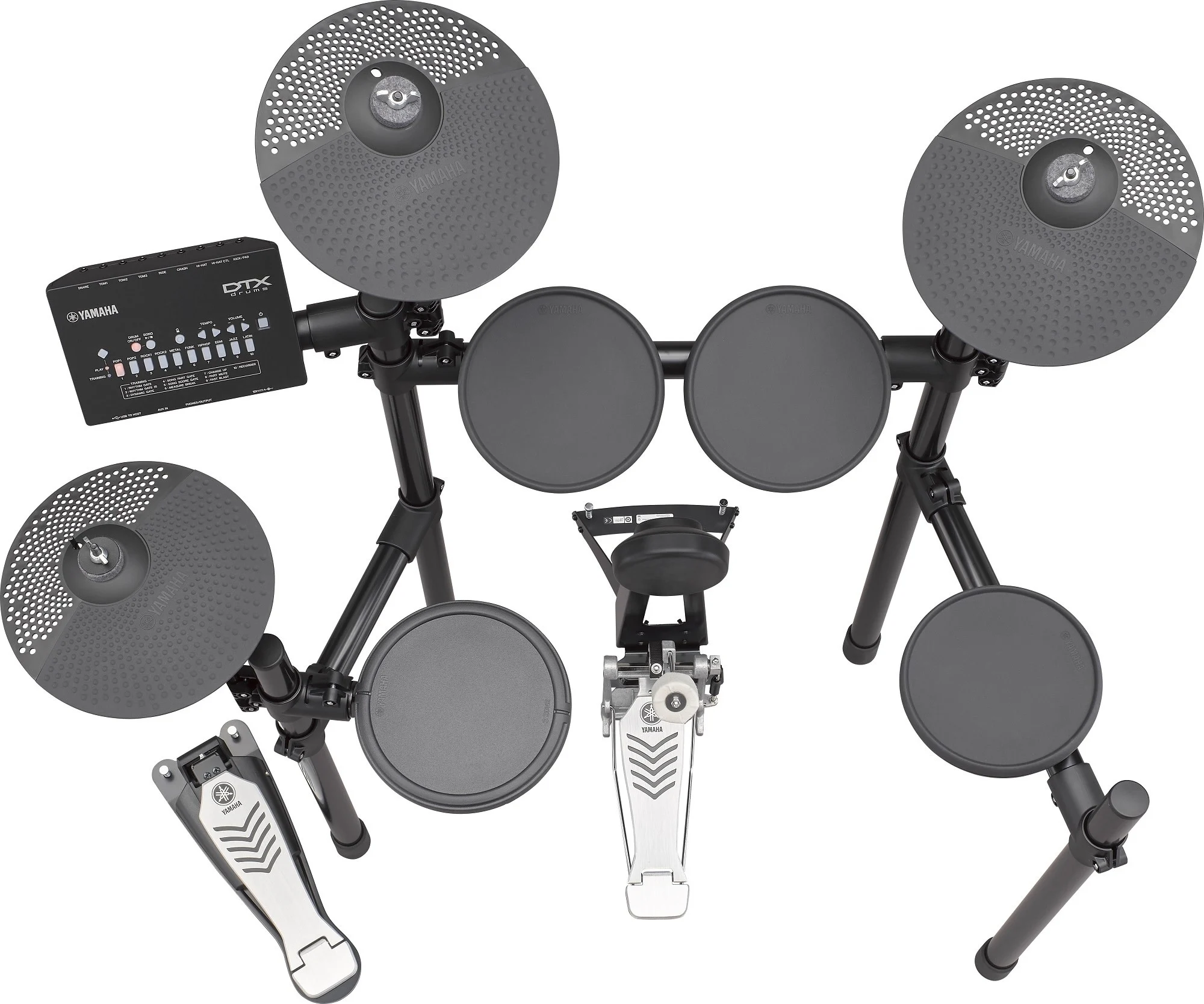
This is where many drummers start, and the differences between models are more meaningful than people expect. The big decision is not only the pads, it is the kick setup.
DTX402K
-
Uses the DTX402 module with coaching functions and app support.
-
Includes Yamaha’s KU100 silent kick unit, designed to reduce pedal noise compared with a beater striking a kick pad.
-
Best for: late-night practice, flats, noise-sensitive households
DTX432K
-
Uses the DTX402 module.
-
Moves you into a more realistic kick approach with a kick pad and a mechanical pedal.
-
Best for: learning proper foot technique while staying in the DTX402 ecosystem
DTX452K
-
Uses the DTX402 module.
-
A key upgrade is the snare: this model features a 3-zone snare pad.
-
Includes a kick pad and mechanical pedal.
-
Also includes an additional mono pad input, useful if you want a simple expansion option.
DTX482K
-
Uses the DTX402 module.
-
The standout upgrade is the snare feel: this model includes the XP80 TCS snare pad, plus the kick pad and mechanical pedal setup.
-
Best for: players who want to stay in the DTX402 family but want a noticeably more satisfying snare experience
A GRD note on kick pedal choice
If you are learning properly and want the option to move between electronic and acoustic kits, a mechanical kick pedal matters. It builds the right muscle memory, control, and dynamic response. If that is your goal, models like the DTX432K, DTX452K, and DTX482K make a lot of sense. If you need maximum quiet, the DTX402K and its silent kick unit can be the better fit.
DTX6 range: DTX6K-X, DTX6K2-X, DTX6K3-X
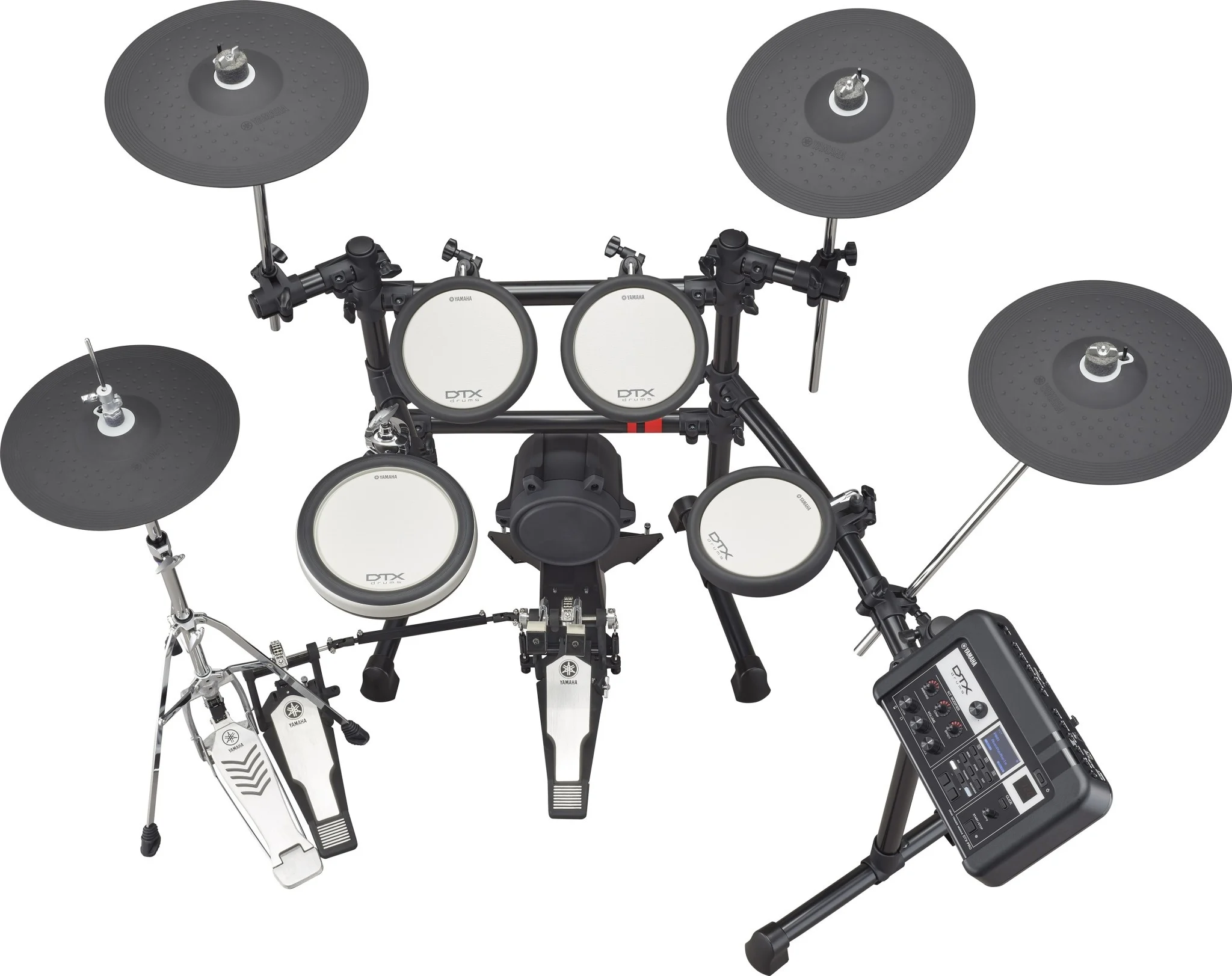
This is where Yamaha starts to feel like a serious instrument rather than simply a practice kit. You move to the DTX-PRO module, more advanced cymbal behaviour, and a layout that suits both learning and recording.
What they have in common
-
DTX-PRO workflow with Kit Modifier control and deeper sound shaping
-
An XP80 TCS snare pad as a core feature (8-inch, 3-zone TCS snare)
-
Bass drum pedal is typically not included, allowing you to choose your preferred pedal feel and quality level
DTX6K-X
A strong entry point into the DTX-PRO platform and TCS snare feel, while keeping the tom pads straightforward. This configuration commonly includes TP70 tom pads, PCY-series cymbals, and a KP65 kick pad.
DTX6K2-X
A major step forward in hi-hat realism. This configuration moves you to the RHH135 hi-hat system on a hi-hat stand, and steps into a more “acoustic kit” feeling layout. It also upgrades the kick pad to KP90, while keeping the XP80 TCS snare.
DTX6K3-X
This is the one many serious learners land on because it balances a more premium playing surface set with the DTX-PRO workflow. It typically keeps the XP80 snare, uses the RHH135 hi-hat on a stand, and the KP90 kick pad, with upgraded tom pad spec compared with the entry DTX6 configuration.
DTX8 range: DTX8K-M and DTX8K-X (Real Wood or Black Forest)
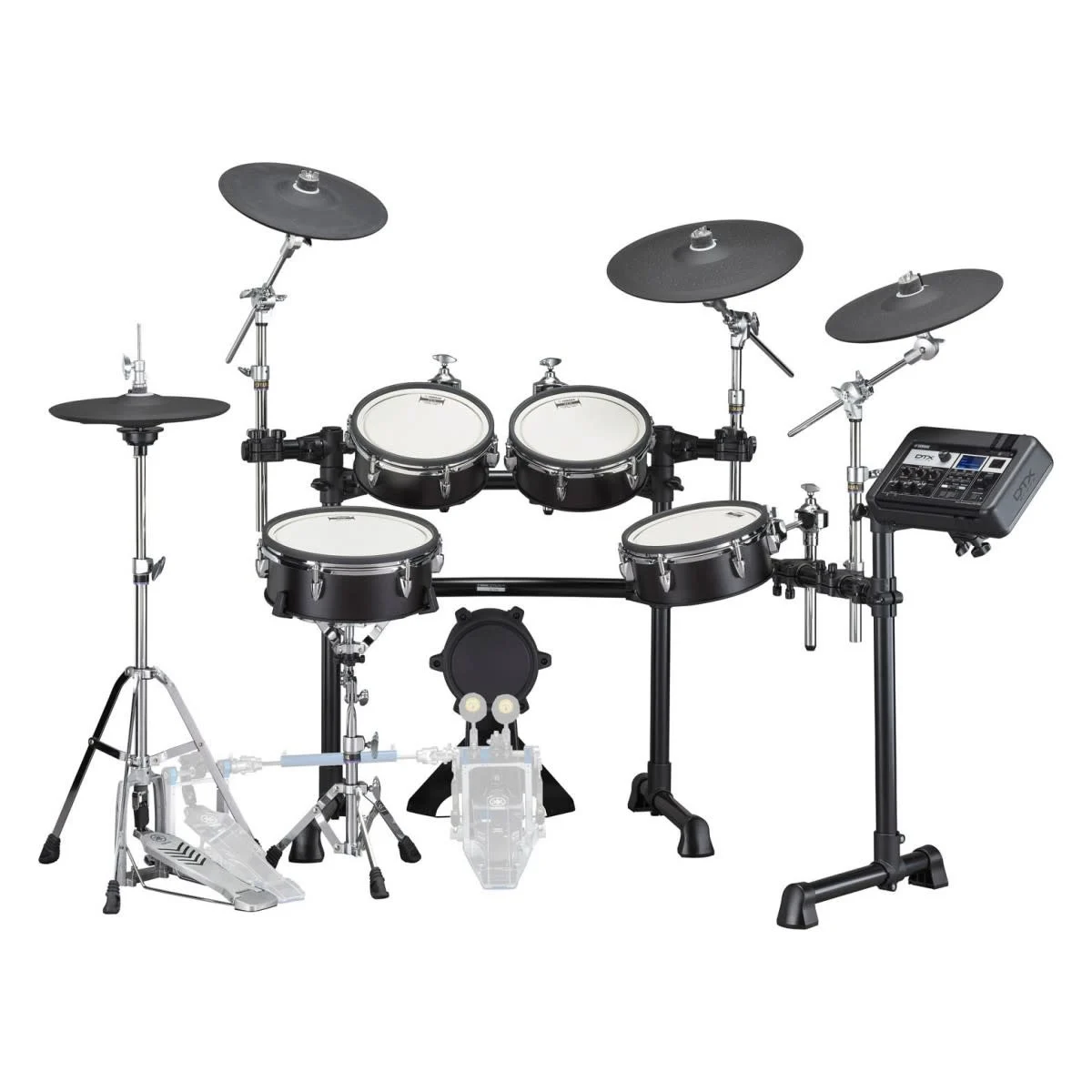
This is where the kits begin to look and behave much more like full stage and studio instruments, including premium aesthetics and higher-end pad systems. Finish options in this range include Real Wood and Black Forest.
DTX8K-M (Mesh)
- Uses the DTX-PRO module.
-
Uses mesh snare and tom pads.
-
Best for: drummers who want mesh feel and a refined “proper kit” playing experience at home or in a studio environment
DTX8K-X (TCS)
-
Uses the DTX-PRO module.
-
Uses Yamaha TCS playing surfaces and real Yamaha birch shells, with premium finish options.
-
Includes deeper editing features and sample import capability.
-
Best for: drummers who prefer the Yamaha TCS playing surface and want premium looks and feel
DTX10 range: DTX10K-M and DTX10K-X (Real Wood or Black Forest)
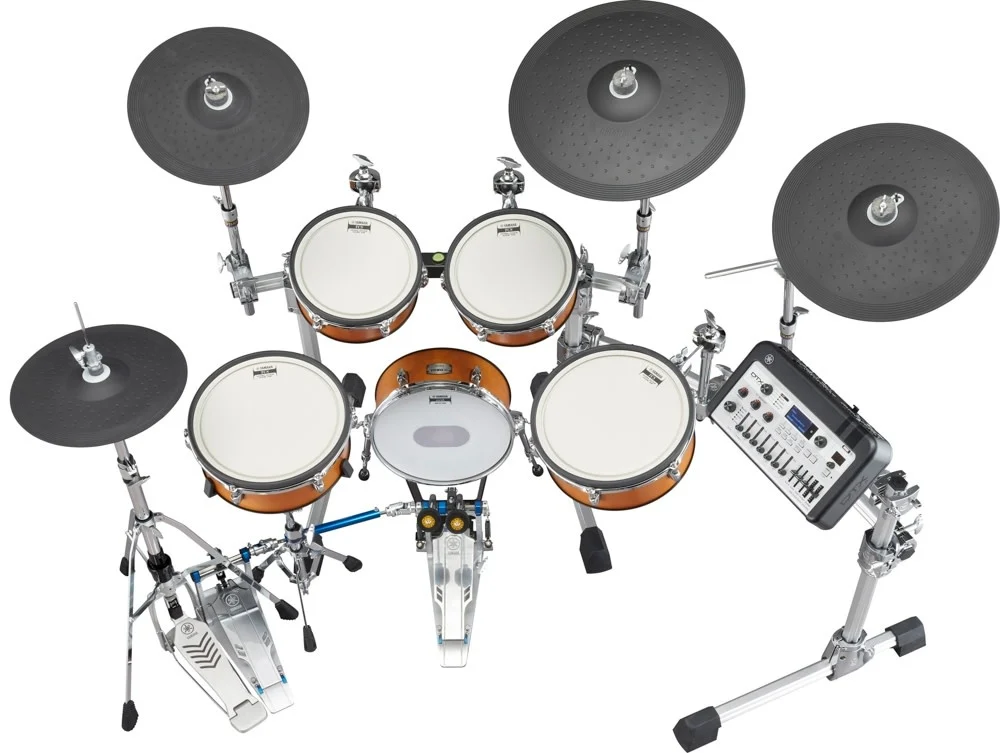
This is Yamaha at the flagship end of electronic drums. Finish options in this range include Real Wood and Black Forest.
DTX10K-M (Mesh)
-
Uses the DTX-PROX module.
-
Full mesh pad set including a 12-inch mesh snare.
-
Includes 256-note polyphony and Rec’n’Share compatibility.
-
Built for high-end studio and professional use.
DTX10K-X (TCS)
-
Uses the DTX-PROX module.
-
Combines Yamaha TCS pads with real birch shells.
-
Includes a 12-inch mesh head kick pad.
-
Includes multi-zone cymbals and positional sensing on the ride.
-
Designed for maximum realism, routing flexibility, and high-level performance use.
Pads and playability: what is accurate, and what is not
A quick correction that keeps the guide clean and non-misleading:
-
TCS is not on every Yamaha DTX kit. It appears in specific models and is clearly specified where included, such as the XP80 TCS snare pad on certain kits.
-
Mesh vs TCS is a DTX8 and DTX10 decision. The “M” versions are mesh configurations, and the “X” versions are TCS configurations.
-
Rubber pads are not “better” or “worse” than mesh or TCS. They are durable, consistent, and practical for learning and home practice, especially on the DTX402 kits.
Expandability and accessories worth budgeting for
Expansion
Some kits include simple expansion capability, such as an additional mono pad input on certain models. As you move into DTX-PRO and DTX-PROX ecosystems, the intent is clearly wider connectivity and deeper setup flexibility.
Accessories that make a big difference
-
A proper drum mat to stop creep and reduce vibration transfer
-
Headphones or a monitor that let you hear the kit properly
-
Kick pedal choice (where applicable). If you need quieter foot noise, Yamaha’s silent kick options can make a genuine difference.
-
A hi-hat stand if your kit uses a hi-hat system designed to mount on one (common on DTX6 and above configurations using the RHH135 style pad)
GRD’s verdict
-
Best place for most beginners to start: DTX432K. You stay in the coaching-friendly DTX402 ecosystem and build proper foot technique with a mechanical pedal.
-
If you need maximum quiet: DTX402K. The silent kick unit is a legitimate advantage for noise-sensitive homes.
-
If you are serious about progressing and want a kit that records well: DTX6K3-X. You step into the DTX-PRO workflow and a stronger overall configuration.
-
If you want premium looks and a more “real kit” experience: DTX8K-M or DTX8K-X. Choose mesh feel (M) or TCS feel (X), then choose Real Wood or Black Forest to suit your space.
-
If you want Yamaha’s flagship platform: DTX10K-M or DTX10K-X. DTX-PROX, expanded routing, and Yamaha’s most advanced electronic kit systems.
The part a blog cannot replace
A buyer’s guide can get you close, but nothing beats sitting down at a kit and feeling the pads, cymbals, and pedal response for yourself. If you can, come into the shop and have a proper play. We have Yamaha DTX kits set up and ready, and we will happily talk you through what you are hearing and feeling as you move through the range. If you cannot get in right away, give us a call and we will recommend the most suitable options for your space, your playing level, and your goals.
Nothing beats the GRD in-store experience.












Comments
Be the first to comment...