


ChatGPT master prompt test
- Posted on
- 0
Choosing the right drum kit size is about much more than deciding how large you want your bass drum to be. The size of each drum affects its pitch, response and feel, while the complete configuration determines how comfortably the kit fits around you and how practical it is to transport.
Many acoustic drum kits, particularly intermediate and professional models, are sold as shell packs built around familiar size combinations. A 20" bass drum, for example, is commonly paired with 10" and 12" rack toms and a 14" floor tom, while many 22" kits use 10", 12" and 16" toms. Looking at the whole configuration is usually more useful than judging one drum in isolation. At Graham Russell Drums, this is how we normally approach size comparisons with customers in store – by considering how the entire kit will sound, feel, fit and be used.
Quick Answer
What Drum Kit Size Should I Choose?
- 18" bass drum kits – compact and responsive, commonly paired with 12" and 14" toms.
- 20" bass drum kits – a versatile middle ground, often using 10", 12" and 14" toms.
- 22" bass drum kits – the familiar modern all-round configuration, commonly paired with 10", 12" and 16" toms.
- 24" bass drum kits – larger in feel and footprint, often paired with a 13" rack tom and 16" floor tom.
These are common configurations rather than fixed rules. The best choice depends on the sound, feel, positioning and practicality you want from the complete kit.
What Do Drum Kit Sizes Mean?
Drum sizes are normally given in inches, with most modern manufacturers listing diameter first and depth second, although notation can occasionally vary. A 22" x 16" bass drum has a 22" diameter and 16" depth, while a 12" x 8" rack tom has a 12" diameter and 8" depth.
Diameter has the strongest relationship with the natural pitch range and physical size of the drum. Larger diameters generally allow a lower fundamental pitch, while smaller drums naturally sit higher.
Depth also affects response and feel, but it is worth treating the two measurements separately. We look at shell depth in more detail later in the guide.
How Does Drum Size Affect Sound, Feel & Setup?
All else being equal, smaller diameters tend to favour higher tunings and can feel quicker and more immediate, while larger drums offer greater low-pitch potential. These are tendencies rather than strict limits, as heads, tuning, bearing edges and shell construction can all alter the final sound.
Size also affects the way a kit feels around the player. The diameter of the bass drum determines how much vertical room is available for rack toms, while larger toms increase the overall footprint of the setup.
It is also worth avoiding the assumption that bigger automatically means louder or better. Shell construction, bearing edges, drumheads, tuning, hoops and the player all contribute to the finished sound.
18" Bass Drum Kits
A common 18" shell-pack configuration is an 18" bass drum, 12" rack tom and 14" floor tom. Some sets add a 10" rack tom, but 18/12/14 remains one of the most familiar compact layouts.
The smaller bass drum allows the rack tom to sit particularly low and keeps the overall kit compact. Sonically, the bass drum tends to offer a quick, focused response, while the 12" and 14" toms provide a balanced spread without requiring much floor space.
GRD Tip
In store, one thing we often notice with 18" kits is how immediately comfortable they can feel for players who struggle to get rack toms low enough over a larger bass drum.
Some 18" bass drums also use a small riser to lift the drum slightly, helping a standard bass drum pedal strike closer to the centre of the head.
Although this configuration is strongly associated with jazz, it is not limited to it. Different heads, tuning and muffling can give an 18" bass drum a surprisingly wide range of sounds.
20" Bass Drum Kits
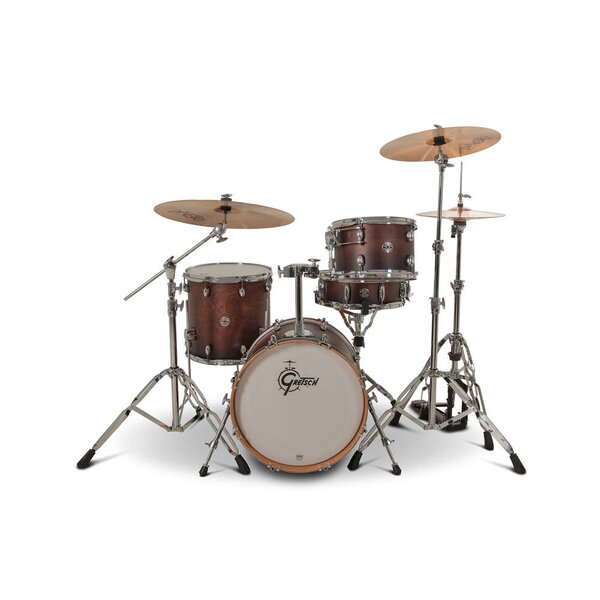
A typical 20" kit uses a 20" bass drum, 10" and 12" rack toms and a 14" floor tom. It sits neatly between compact 18" setups and the larger 22" configurations found across many mainstream ranges.
The 20" bass leaves plenty of room for low rack-tom positioning, while the 10"/12"/14" tom combination gives an even tonal progression across the kit. This makes the configuration particularly comfortable for players who want a conventional five-piece setup without a large footprint.
A 20" bass drum should not be viewed as a reduced or beginner version of a 22". With the right heads and tuning it can sound full, punchy and powerful. From handling and setting up kits in store, one of the biggest advantages we notice with 20" configurations is how easily the rack toms can be positioned without making the complete kit feel unusually small.

22" Bass Drum Kits
The 22" bass drum with 10", 12" and 16" toms is one of the most common modern five-piece configurations. It provides a broad tonal range and the bass drum size will feel familiar to a huge number of players.
Compared with a 20/10/12/14 setup, the biggest difference is not simply the extra two inches of bass drum diameter. The 16" floor tom also extends the bottom end of the kit, creating a noticeably larger step down from the 12" rack tom.
This combination appears across so many manufacturers' ranges because it covers a wide variety of live and studio situations without being particularly specialised.

24" Bass Drum Kits
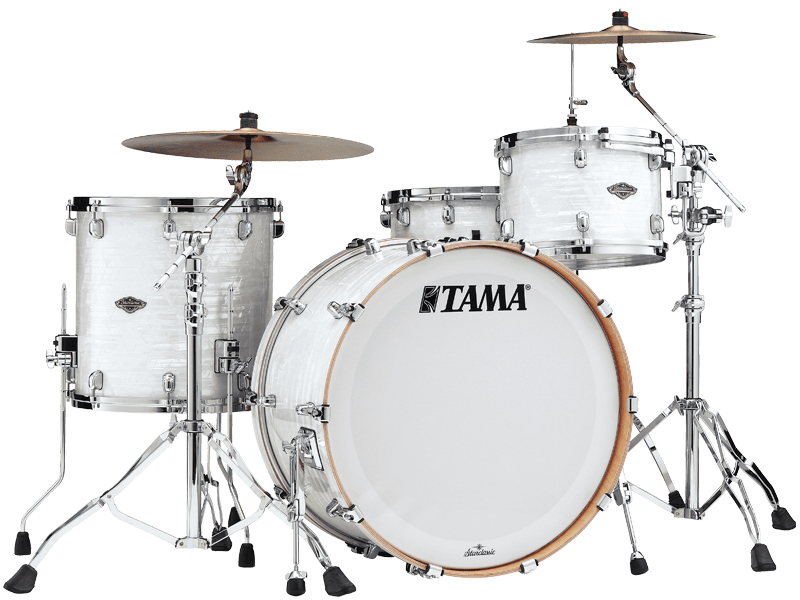
A 24" bass drum is often paired with a 13" rack tom and 16" floor tom, although 12"/16" and two-floor-tom setups are also common. The result is a kit with a noticeably larger physical and tonal character.
The bass drum has greater low-pitch potential and a substantial feel under the beater. The main practical difference is height: a rack tom positioned above a 24" bass drum naturally sits higher or needs to move further to the side.
These sizes are often linked with rock, but that is better treated as a historical association than a rule. A 24" kit makes most sense when you actively prefer the larger feel and lower overall range.
What About Other Drum Kit Sizes?
The configurations above are useful reference points rather than industry standards. Compact kits may use 14" or 16" bass drums, while larger or vintage-inspired sets can feature 26" bass drums, 18" floor toms or deeper rack toms.
Some shell packs also add an 8" rack tom above the usual 10" and 12", while others include two floor toms such as 14"/16" or 16"/18". These additional drums increase the tonal range without changing the basic principles covered above.
If a smaller setup is your priority, our Compact Drum Kit Buyer's Guide looks more closely at kits specifically designed around reduced dimensions.
How Does Drum Depth Affect the Sound?
Two drums can share the same diameter but behave differently because of their depth. A 22" x 14" and 22" x 18" bass drum, for example, have the same head diameter but a very different amount of air inside the shell.
Bass Drum Depth
Shallower bass drums are often perceived as more immediate and responsive, with the added benefit of taking up less front-to-back space. Deeper shells can produce a different sense of body and air movement. These differences are usually subtler than the effects of diameter, heads and tuning.
Tom Depth
Tom depth affects both response and positioning. Modern rack toms such as 10" x 7" and 12" x 8" are relatively shallow, making them easy to position above the bass drum. Deeper toms can provide a different response and character, but require more vertical space.
One-Up, Two-Up & Two-Floor-Tom Setups
Drum sizes are only part of the equation; the number and position of the toms also changes how a kit feels to play.
Two up, one down describes the familiar five-piece layout with two rack toms and one floor tom. It gives a wide tonal range while keeping the floor area relatively simple.
One up, one down removes one rack tom, leaving more space above the bass drum and often allowing the ride cymbal to move closer to the player.
One up, two down combines a single rack tom with two floor toms, such as 12"/14"/16" or 13"/16"/18". This keeps the open rack-tom layout while extending the lower end of the kit.
Common Drum Kit Configurations Compared
For the shorthand below, 20/10/12/14 means a 20" bass drum, 10" and 12" rack toms and a 14" floor tom.
| Typical Sizes | General Character | Footprint | Useful For |
|---|---|---|---|
| 18 / 12 / 14 | Quick and focused | Very compact | Small stages, jazz, portable setups |
| 20 / 10 / 12 / 14 | Balanced and versatile | Compact | Gigging and general use |
| 22 / 10 / 12 / 16 | Full and familiar | Medium | Broad all-round use |
| 24 / 13 / 16 | Large and deep | Large | Players wanting a bigger overall feel |
These examples are best used as a starting point rather than a set of rules. Kits with identical dimensions can still sound very different because of shell construction, bearing edges, hoops, heads and tuning. Our Drum Shell Woods Guide looks at another major part of that equation.
Which Drum Kit Size Is Right for You?
For Home & Smaller Spaces
An 18" or 20" bass drum setup is easier to accommodate in a restricted room, particularly when paired with a 14" floor tom. Remember that cymbal stands and your seated playing position also add to the total footprint. Bass drum depth matters too: a shallow 22" x 14" drum can actually take up less front-to-back room than a deeper 20" x 18" bass drum.
For Player Height & Comfort
Your height and preferred playing position can also influence which sizes feel comfortable. Shorter players, or anyone who likes their rack toms particularly low and flat, may find an 18" or 20" bass drum easier to work around. A 22" or 24" can still be positioned comfortably, particularly with an offset or one-up tom setup, but it gives you less vertical clearance directly above the bass drum.
For Regular Gigging
Think about transport as well as sound. A 20/10/12/14 configuration offers conventional five-piece range while remaining easier to fit into vehicles and onto smaller stages than many larger shell packs.
For Maximum Versatility
Both 20/10/12/14 and 22/10/12/16 are excellent all-round choices. The decision largely comes down to whether you prefer the compact feel of the 20" setup or the broader low-end range of the 22"/16" combination.
GRD Tip
We regularly see customers arrive expecting to prefer a 22" simply because it is the familiar “standard” size, then find that a 20" configuration feels more natural once they sit behind both. It is a good reminder that published dimensions are a starting point rather than the final decision.
For Studio Use
There is no single ideal studio configuration. Choose the sizes that suit the sound you are trying to record rather than assuming that recording requires a particular diameter.
Don't Choose by Genre Alone
Terms such as “jazz sizes” and “rock sizes” can be useful shorthand, but they are not rules. Choose the configuration that feels and sounds right to you, while also considering where and how often the kit will be used.
GRD Tip
Try Different Drum Kit Sizes in Person
Specifications are useful, but the best way to choose a drum kit size is always to sit behind a few different configurations and see what feels natural. Differences in bass drum height, tom positioning, floor-tom placement and overall footprint are much easier to judge from the playing position than from a specification sheet. At Graham Russell Drums, we stock acoustic kits with bass drums ranging from compact 16" models right up to 26", giving you the chance to compare very different setups side by side before deciding what works best for you.
Once you have chosen your kit, our How to Set Up a Drum Kit guide explains how to position the drums, pedals and cymbals comfortably around you.
Still deciding between drum kit sizes? Call the shop and talk through the options with us.
Call 01329 834012Drum Kit Size FAQs
What is the standard drum kit size?
A very common modern five-piece configuration is a 22" bass drum with 10", 12" and 16" toms. However, there is no single standard followed by every manufacturer.
Is a 20" or 22" bass drum better?
Neither is better overall. A 20" is more compact and easier to position around, while a 22" offers a larger feel and greater low-pitch potential.
Is an 18" bass drum only for jazz?
No. An 18" bass drum is associated with jazz, but head choice, tuning and muffling allow it to work across many styles.
Does a bigger bass drum sound louder?
Not automatically. Larger bass drums can move more air, but volume also depends heavily on the player, heads, tuning and construction.
Does drum depth affect the sound?
Yes. Depth can affect response, feel and sustain, although diameter generally has a stronger relationship with fundamental pitch.
Is a 14" or 16" floor tom better?
A 14" floor tom is more compact and naturally higher in pitch, while a 16" offers a broader low-end voice. Both can work across a wide range of styles.
What is the most versatile drum kit configuration?
For most players, 20/10/12/14 or 22/10/12/16 are excellent all-round configurations. The best choice depends on the feel, range and physical size you prefer.
Does drum size matter more than shell material?
They affect different things. Size strongly influences pitch range, response and setup, while shell material contributes to tonal character. Heads, bearing edges, hoops and tuning also play important roles.
Keep Reading
Related GRD Guides
Ultimate Beginner Acoustic Drum Kit Buyer's Guide
Compact Drum Kit Buyer's Guide
Need Some Help?
Ask a Drummer
Not sure which drum kit size will suit your setup? Call the shop and talk through the options.
Phone
Call The Shop











Comments
Be the first to comment...