
Ultimate Beginners Cymbal Guide
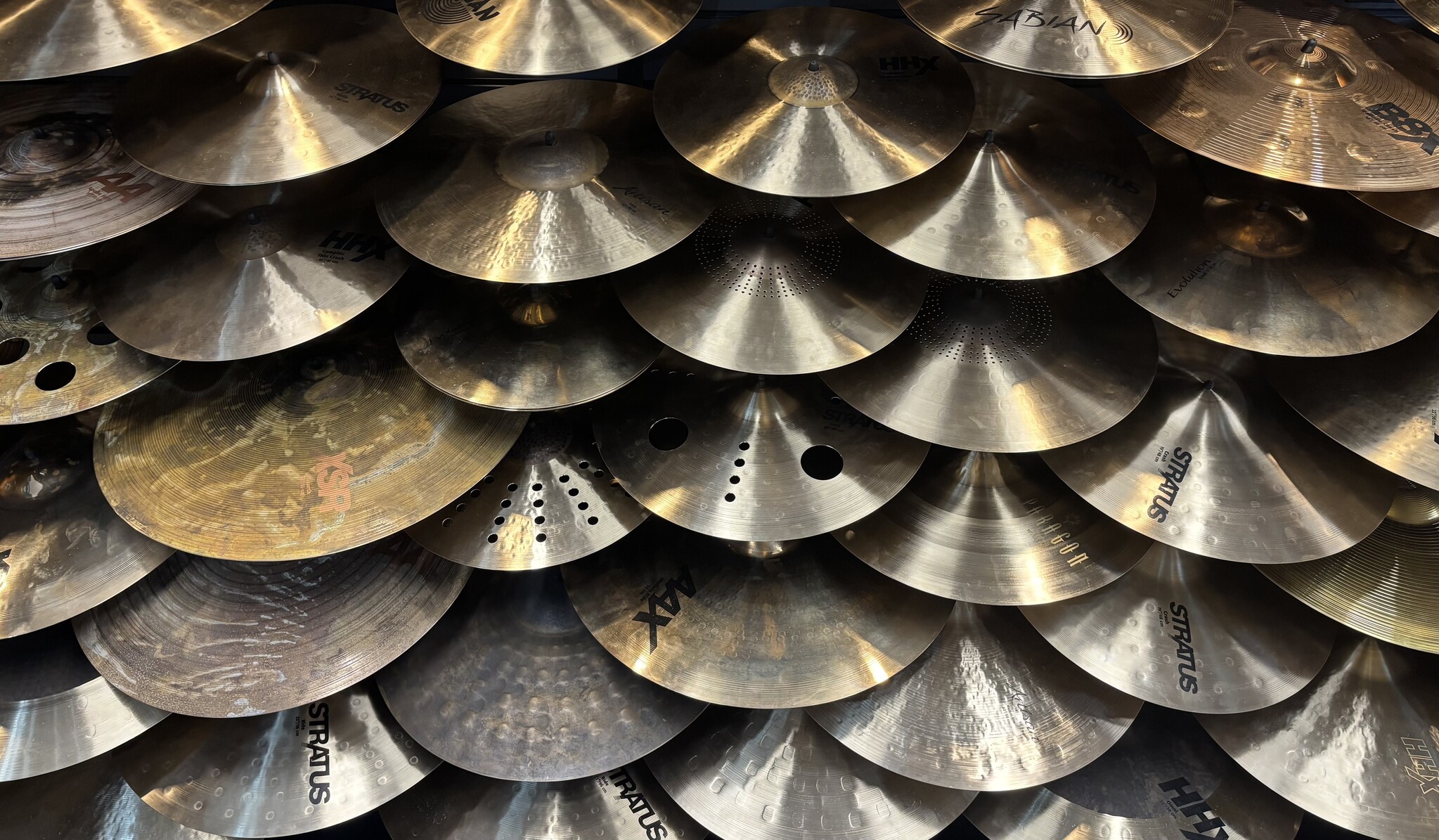
A guide to choosing cymbals at Graham Russell Drums: build your core setup , understand key sound profiles and alloys, compare pack options , and consider second hand for better value.
Beginner Cymbal Buyer’s Guide
The best way to choose cymbals is still to come into our dedicated cymbal showroom and try a few. There is no substitute for hearing and feeling the response in front of you. Cymbals are one of the most personal parts of a setup, and they are also one of the most room-dependent parts of the kit. What sounds controlled on a video can feel completely different in the space you actually play in.
When getting into the showroom isn’t possible, this guide gives you the same kind of advice we offer in-store. It is practical, experience-led, and focused on what matters. Our team are gigging drummers and teachers, so we approach cymbals from real-world use rather than spec-sheet theory.
Just as importantly, cymbals are one of the most significant upgrades you can make to a kit. You can tune a drum and change its heads, but you cannot tune a cymbal. What you buy is the sound you get, and in most playing situations cymbals are also one of the most consistently heard parts of your kit. When the largest in-store selection of cymbals in the country is available to you, knowing what to listen and look for is essential.
Start here: what most beginners actually need
For most players building a first usable setup, this is the core:
From there, the most common next steps are:
-
a second crash
-
a splash, china, or another effects cymbal once the core sound is sorted
A crash/ride can cover two jobs temporarily, but long-term, most drummers require a dedicated crash and ride.
Once you’ve got that foundation, you can start exploring the character cymbals that shape your identity as a player. That includes splashes, chinas, riveted rides, and modern effects cymbals such as cymbals with holes, clap stacks, and stack-style effects. They are not essential on day one, but they are often the most enjoyable part of building a setup once your hats, crash, and ride are doing the heavy lifting.
Normally in-store, we’d ask you these questions first
These are the questions that quickly narrow the field:
-
What styles are you playing most: rock, pop, indie, metal, worship, jazz?
-
How loud is your typical situation: bedroom, rehearsal room, stage?
-
Are you completing a first setup, or upgrading the cymbals that came with a starter kit?
-
Do you prefer cymbals that are bright and cutting, or darker and more controlled?
-
Do you want a cymbal that crashes easily, or one that stays more defined under the stick?
Answering those honestly avoids the most common beginner mistake: buying cymbals that are “fine,” but do not actually work for your reality.
Cymbal sound profiles and why they matter
When we talk about cymbal sound in the showroom, we’re usually describing a few core profiles. These aren’t strict rules, but they are the quickest way to translate what you’re hearing into a confident choice.
Bright and Dark
Brightness is a clean, glassy top end with a sharp attack. It can help your cymbals cut and stay clear, especially in louder bands. Darkness is lower and warmer, with a smoother top end and more weight to the tone.
Dry
Dryness means control. You get fewer lingering overtones, a shorter sustain, and a more direct sound that does not hang around too long. The opposite is wash. Wash is a wide, blooming spread that can sound huge and exciting, but it can also blur detail if you need clear patterns.
Stick Definition
Stick definition is a big one, particularly on rides. It is how clearly you can hear the “tick” of the stick on top of the cymbal’s tone. If you play faster patterns, or you want clarity in a busy mix, stick definition matters as much as the overall colour.
Projection
Projection is how well the cymbal carries into the room. Cut is how easily it pushes through guitars and bass without needing to be hit harder. Trashiness is that deliberately gritty, broken-up character you get from chinas, stacks, cymbals with holes, and other effects cymbals. It is not a “bad” sound, it is a very specific flavour.
A simple way we test quickly in-store is to make sure you like the cymbal at a light touch, then at normal playing volume, and finally with a proper accent. If it stays musical and controllable across those levels, you are in the right territory.
Cymbal alloys and why they matter
Alloy is not the whole story (weight, profile, hammering, lathing and finish all matter), but it is still a useful guide when you are buying your first proper set.
-
Brass: true entry-level. It can get you playing, but it often sounds more one-dimensional and can feel harsh at volume. It is easily identifiable by its yellow colour.
-
B8 bronze: typically bright, clean and direct. Great for clear stick sound and consistent cymbal packs.
-
B10 / B12 bronze: common in step-up ranges. Often a touch fuller and more “musical” than basic entry-level cymbals.
-
B20 bronze: the classic pro alloy. This is where cymbals often start to feel far richer and more complex, especially when there is more hand finishing involved. This is why we rate sets like Istanbul Agop Xist so highly as a an early option.
A practical way to think about it is this: entry-level cymbals are often designed for consistency and price. Pro-level cymbals are often designed for tone, feel, and character. Neither is “right” or “wrong”, it depends where you are in your playing.
Cymbal brands and who they are
You will see a few names come up again and again. The main thing to understand is that many brands have a wide spread. Entry-level and midrange cymbals are often made with higher-volume manufacturing methods, while top-end cymbals are more likely to involve more hand finishing, smaller-batch production, and more variation from cymbal to cymbal.
-
Istanbul Agop (Turkey)
Based in Istanbul with deep roots in traditional cymbal making. This is where our Xist packs sit, and they are one of the strongest value routes into B20 bronze and a genuinely musical, professional sound.
-
Zildjian (USA, founded 1623)
One of the oldest names in cymbals and a benchmark brand for decades. Zildjian’s instruments are made in the USA, and their higher-end ranges are built around more involved manufacturing processes and smaller-batch work.
-
Sabian (Canada, founded 1981)
A major manufacturer based in New Brunswick. Sabian cover everything from starter cymbals to professional lines and are a go-to option for many drummers who want a wide choice of sounds and strong pack options.
-
Paiste (Switzerland, origins 1906)
Paiste are known for consistency and clarity, and they operate across Switzerland and Germany. At the very top end, some Paiste lines are explicitly handcrafted in Switzerland, which is part of why they have such a reputation for precision.
-
Meinl (Germany, founded 1951)
Meinl is a modern heavyweight with a huge range. One useful example of “where high-end is made” is the Meinl Byzance family, which is made in Turkey from B20 bronze with significant hand work. That is a big part of why those cymbals tend to have such a distinctive feel and character compared to entry-level cymbals.
Why does this matter? Handmade and heavily hand-finished cymbals often have more individuality and complexity, but they also vary more from cymbal to cymbal. More automated manufacturing tends to create more consistency and value, which is ideal for beginner packs and predictable matching.
Size: the quickest way to change pitch, feel, and response
Size affects pitch and how fast a cymbal reacts.
Hi-hats (usually 13" to 15")
-
14" is the standard and the most versatile
-
13" often feels tighter and more articulate
-
15" often feels bigger, lower, and thicker
Crashes (usually 14" to 20")
-
16" to 18" are the most common all-round crash sizes
-
smaller crashes respond faster and feel higher
-
larger crashes feel lower and broader, with more spread
Rides (usually 20" to 22")
-
20" is a common all-rounder size
-
21" to 22" often feels bigger, lower, and more room filling
-
if you want clear patterns, look for a ride with good stick definition
-
if you want a ride that can crash, you’ll typically go thinner and more crashable
A useful rule of thumb is simple:
-
bigger tends to mean lower and broader
-
smaller tends to mean higher and quicker
Packs vs buying individually
Cymbal packs
A pack is often the most cost-effective way to get a matched set. Most packs give you hats, a crash, and a ride, and they are a sensible choice if you want a coherent sound quickly.
Buying individually
Buying individually lets you build around what you actually use most. Many drummers put more into hats and ride, then choose crash sizes that match their volume level and style.
A common path is to buy a pack and then upgrade one cymbal at a time as your ear develops.
Our go-to recommendation: Istanbul Agop Xist
If you want a simple recommendation that punches well above its price, this is the line we point a lot of drummers toward.
The Istanbul Agop Xist packs are made from professional B20 bronze and made in Turkey. They deliver a proper, musical alloy sound for significantly less than many drummers expect to pay for that level. In short, there is nothing quite like them for value.
Other pack options we regularly recommend
If Xist is your “best value pro alloy” destination, these are other sensible pack routes depending on budget.
Starter packs
These ranges cover a lot of beginners because they offer complete setups with sensible cymbal pairings and a straightforward path for upgrading later.
Second hand cymbals: better deals on the same cymbals
Second hand is one of the easiest ways to level up sooner.
Our massive second hand cymbal section often lets you get into a better tier for less money. In most cases there is nothing “wrong” with them. They are simply pre-owned. The main differences are usually cosmetic, such as stick marks, patina, fingerprints, or finish variation. Sonically, that often does not matter at all.
Try them in our dedicated drum showroom
At Graham Russell Drums, our philosophy is simple: you learn more in five minutes playing cymbals in person than you do in hours of reading specs and watching videos. Cymbals are about response, feel, and how they sit in a room. The quickest way to understand that is by comparing a few options side by side in our dedicated drum showroom.
This guide will help you narrow your options. If you can make it in, the best next step is to come into the shop and try some cymbals properly. We’ll help you build a setup that suits your music, your volume level, and your budget, whether that means a smart-value pro pack like Xist, a step-up pack, or a great second hand find.












Comments
Be the first to comment...