


How to Choose the Right FX Cymbals for Your Sound: Stacks, Chinas, Splashes & More
- Posted on
- 0
Learn how stacks, Chinas, splashes, dry cymbals and specialist effects differ, and choose the right FX cymbal for the sound you want to add to your kit.
Last updated: 21 August 2026
FX cymbals can completely change the way you approach a drum kit. While your hi-hats, crashes and ride form the foundation of a conventional cymbal setup, effects cymbals introduce sounds that are deliberately different: short, dry, trashy, explosive, electronic, pitched or completely unconventional.
An FX cymbal is not one particular type of cymbal. A tight stack, large China, tiny splash and dedicated bell all occupy very different sonic spaces, so there is no single FX cymbal that can be considered the "best". The right choice depends on the sound you are trying to add to your setup.
In this guide, we'll break down the main types of FX cymbal, explain how their size and construction influence their sound, and look at carefully selected examples from the FX cymbals available at Graham Russell Drums. If you're still building the core of your first cymbal setup, start with our Ultimate Beginner's Cymbal Guide first.
The examples in this guide have been selected from cymbals we stock and work with at Graham Russell Drums, alongside our experience helping customers compare different FX sounds in store.
Quick Answer: Which FX Cymbal Should You Choose?
Choose an FX cymbal by starting with the sound you want to add. Stacks are ideal for short, dry and electronic-style accents; Chinas produce aggressive, explosive wash; splashes give fast, compact accents; trash and perforated cymbals create dirtier and more unpredictable textures; while dedicated bells provide focused, pitched metallic notes. There is no universally "best" FX cymbal — the goal is to find the sound that fills a gap in your current setup.
What Is an FX Cymbal?
An FX cymbal, or effects cymbal, is essentially any cymbal designed to provide a more specialised voice than the conventional crash, ride or hi-hat sounds that form the core of most setups.
The category covers everything from cymbal stacks and clap stacks to Chinas, splashes, perforated crashes, bells and experimental designs. Some are deliberately short and controlled, while others are designed to sound abrasive, explosive or almost broken.
This is what makes the category so interesting. Rather than replacing one of your core cymbals, an FX cymbal normally gives you another colour to play with.
In our experience, even adding one auxiliary effects cymbal can open up a surprising number of new ways to approach the kit. A short stack, trashy accent or dedicated bell suddenly gives you another place to finish a fill, orchestrate a groove or answer a snare hit, and that extra voice can lead to creative ideas that simply weren't available from a conventional crash, ride and hi-hat setup.
Many manufacturers now have extensive specialist ranges. If you want to understand how FX models fit into the wider catalogues, take a look at our Ultimate Guide to Zildjian Cymbals, Ultimate Guide to Meinl Cymbals and Ultimate Guide to Istanbul Agop Cymbals.
What Sound Are You Trying to Add?
Before looking at brands or individual models, it helps to decide what is currently missing from your setup.
Want a short, dry and electronic-style accent?
Start with a cymbal stack.
Want a clap or sampled-percussion style sound?
Look at a dedicated clap or smack stack.
Want a dirty, explosive crash that gets out of the way quickly?
Try a trash or perforated FX crash.
Want a broad, aggressive and cutting wash?
A China cymbal is likely the better choice.
Want a small, fast accent with very little sustain?
Look at splash cymbals.
Want a sharp and focused metallic note?
A dedicated bell cymbal may be exactly what you need.
Want something that doesn't really sound like any conventional cymbal?
This is where specialist and experimental FX designs become particularly interesting.
Those descriptions are starting points rather than strict rules. FX cymbals often deliberately blur the boundaries between traditional cymbal types, and some of the most interesting designs combine characteristics from several categories.
What Should You Listen for in an FX Cymbal?
When comparing FX cymbals, listen beyond whether you simply like the first hit. Four characteristics make it much easier to work out how the sound will function within your setup:
- Attack: how quickly and clearly the sound appears when the cymbal is struck.
- Decay: how quickly the sound disappears afterwards.
- Pitch: whether the cymbal sits higher or lower within the overall sound of your setup.
- Texture: whether the response is clean, dry, dark, trashy, washy, noisy or somewhere between several of these.
Two cymbals can both be labelled as a stack, splash or trash crash and still behave very differently across these four areas. Listening for attack, decay, pitch and texture gives you a much more useful basis for comparison than the product name alone.
Cymbal Stacks: Short, Dry & Electronic Sounds
Cymbal stacks have become one of the most recognisable sounds in modern drumming. A stack combines two or more cymbals so that they contact and interfere with one another when struck, dramatically reducing the free vibration you would hear from a normal crash or splash.
The result can range from a tight, dry "chick" through to a much broader, trashier burst depending on the cymbals used and how they are mounted.
Stacks have become particularly common in pop, hip-hop, gospel, progressive music, drum and bass-inspired playing and modern metal because they can provide a short accent without filling the same amount of sonic space as a crash.
Choose a cymbal stack if: you want a short, controlled accent that can sit inside grooves and fills without creating the longer wash of a conventional crash.
Tight vs Loose Cymbal Stacks
One of the easiest ways to change a stack is simply to adjust the tension of the cymbal wingnut. Tightening the cymbals together normally creates a shorter, sharper and more controlled response, while allowing more movement between the cymbals generally creates a looser sound with additional wash and sustain.
This means a stack is often more adjustable than it initially appears. Before deciding you don't like the sound of one, experiment with its tension and, where the design allows it, the order and orientation of the cymbals.
From our experience at GRD, stack tension is one of the easiest things to underestimate when trying these cymbals. A stack that initially feels too loose or sustained can become much tighter and more usable simply by increasing the pressure between the cymbals, so it is worth experimenting before deciding whether a particular stack suits you.
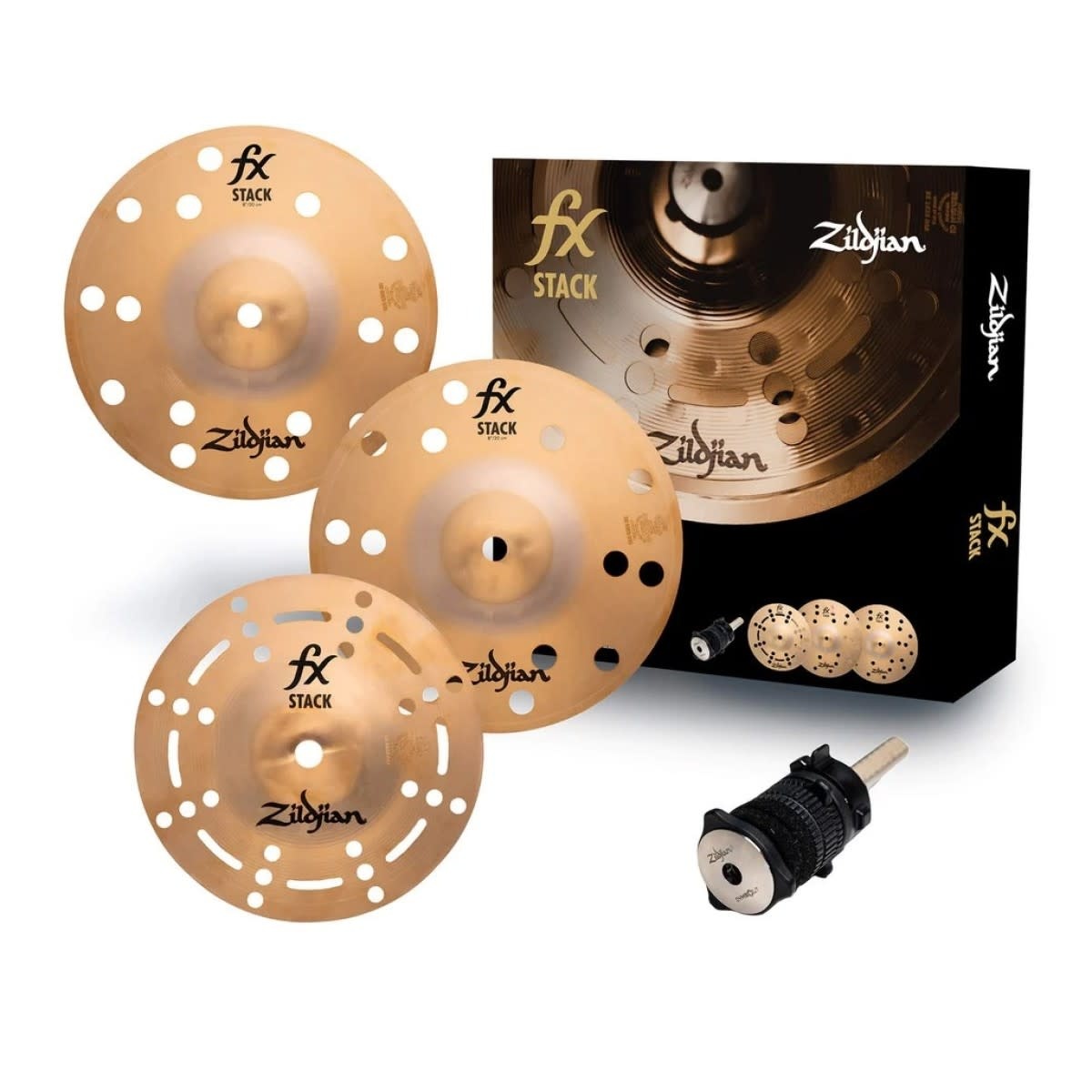
Zildjian FX 12" Cymbal Stack
The Zildjian FX 12" Cymbal Stack is a useful example of a modern purpose-built stack because it consists of three cymbals that can be configured in different ways rather than producing one fixed sound.
Its Cymbolt mounting system lets you quickly change the pressure between the cymbals, moving from tight, staccato and electronic-style accents towards a looser and trashier response. For a drummer who wants to explore what a stack can do without building combinations from individual cymbals, it is an extremely flexible starting point.
Clap & Smack Stacks
Clap and smack-style stacks take the concept in a slightly different direction. Instead of simply producing a short trash sound, their shaped cymbals are designed to create a sharp, percussive response reminiscent of an electronic handclap or sample.
In our experience at GRD, clap and smack-style stacks have become increasingly popular. They create an extremely distinctive and versatile voice that is difficult to replicate with any conventional crash, splash or China, which is why they can feel like such a substantial addition to a setup despite only occupying one cymbal position.
The Istanbul Agop Clap Stack 11", 13" & 15", developed with Istanbul Agop artist Trevor Lawrence Jr., uses three specially shaped cymbals to acoustically recreate the character of classic handclap samples. Tightening or loosening the wingnut changes the decay and overall response.
The Meinl Byzance Vintage 10", 12" & 14" Smack Stack approaches a similar idea using three shaped B20 bronze discs. Increased tension gives it a particularly crisp attack and short decay, while a looser setup allows the sound to breathe for longer.
For more on Meinl's specialist Artist Concept and effects cymbals, visit our Meinl Cymbal Series Guide.
Trash & Perforated FX Cymbals: Dirty, Explosive Accents
Not every FX cymbal gets its sound by stacking cymbals together. Another common approach is to deliberately change the way a single cymbal vibrates through holes, cut-outs, unusual profiles or heavily manipulated edges.
Removing sections of metal changes the way energy travels through the cymbal. The result is often a quicker, less uniform response with additional white noise, trashiness and a faster decay than a conventional crash.
It is worth remembering that the word "trash" describes the character of the sound rather than one single method of construction. Two trash crashes can look completely different and behave very differently.
Choose a trash or perforated FX cymbal if: you want a crash-like accent with more noise, texture and disruption in the sound, usually with a quicker and less conventional response than a standard crash.

Zildjian K 18" EFX Crash
The Zildjian K 18" EFX Crash demonstrates the perforated approach particularly well. Laser-generated cut-outs give the cymbal a sudden, explosive response with a quick, dry decay.
Its K-family character also keeps the sound darker and drier, making it useful when you want a full crash-sized accent without a long wall of sustain afterwards.
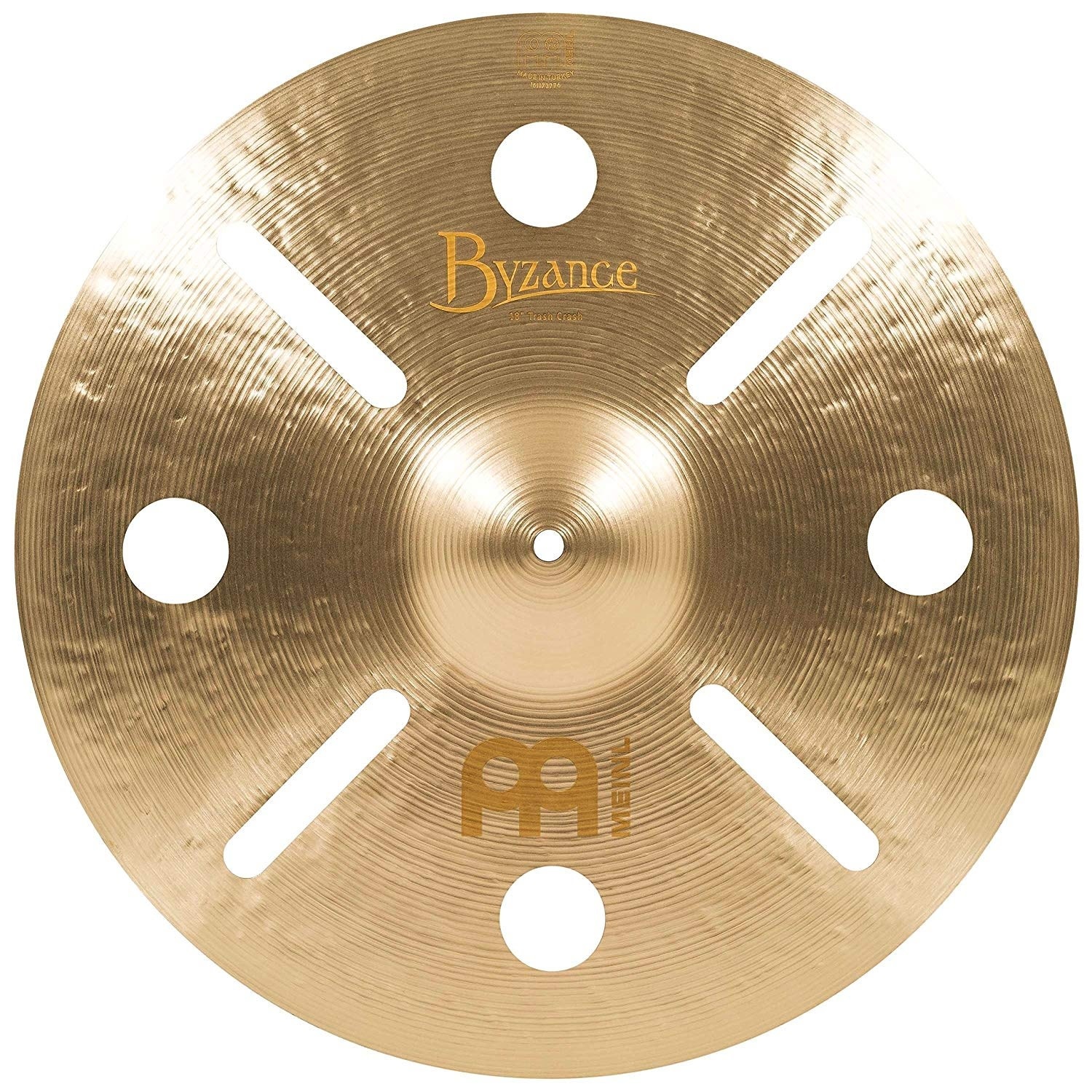
Meinl Byzance 18" Trash Crash
The Meinl Byzance 18" Trash Crash provides another take on the concept, using differently sized and shaped cut-outs to create a broad, noisy and deliberately trashy response.
This is the kind of cymbal that works well when a normal crash feels too polished or predictable. It still functions naturally as a crash accent, but the sound has considerably more texture and instability.
Dry & Dark Cymbals: FX Sounds Without Holes or Stacks
An effects sound does not always require holes, cut-outs or multiple cymbals stacked together. The Istanbul Agop XIST Dry Dark Series is a great example of how a more conventional-looking cymbal can still produce an unusually short, textured and almost electronic response.
XIST Dry Dark cymbals were developed to bridge the gap between organic acoustic cymbal sounds and more modern, synthetic textures. Across the range, Istanbul describes a pointed attack, dark overtones and very quick decay, with a soft and flexible feel that keeps the sound controlled rather than overly washy.
They are particularly interesting in an FX context because individual Dry Dark models can be used conventionally, while selected crashes also work effectively in stacks and unusual hi-hat combinations. This gives the range a modular quality that fits naturally with the more experimental side of modern cymbal setups.
Choose a dry and dark FX sound if: you want a fast, textured accent that still behaves more like a conventional cymbal under the stick than a tightly choked stack.
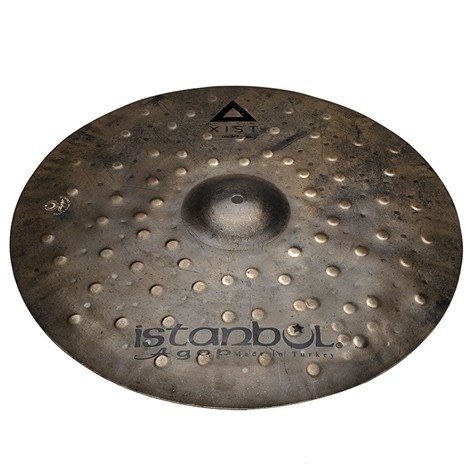
Istanbul Agop XIST 17" Dry Dark Crash
The Istanbul Agop XIST 17" Dry Dark Crash is papery thin, with an explosive, trashy attack followed by a fast decay. Played normally it provides a dark and controlled crash voice, but it can also be used as part of a stacked crash or hi-hat combination.
That versatility makes it a useful example of an FX sound created through weight, flexibility and voicing rather than obvious perforation.
At the smaller end of the range, the Istanbul Agop XIST 10" Dry Dark Splash takes the same dry, controlled concept and compresses it into a very quick accent voice. Its compact size and short sustain make it especially useful when you want an effect that appears and disappears almost instantly.
This range is also a good reminder that FX is ultimately about the sound and function of a cymbal, not simply how unusual it looks. For a deeper look at XIST Dry Dark, ION, Trash Hit, Clap Stack and the rest of the Istanbul catalogue, see our Ultimate Guide to Istanbul Agop Cymbals.
China Cymbals: Aggressive, Cutting Wash
China cymbals have been used as effects voices for decades and are one of the easiest FX sounds to recognise. Their distinctive upturned edge and unusual profile produce a fast, aggressive attack followed by a broad, trashy wash.
Compared with a tight stack or splash, a China generally occupies much more space in the mix. That makes it particularly effective for large accents, breakdowns, heavy choruses and sections where the cymbal needs to become a major part of the overall sound.
Size matters considerably. Smaller Chinas tend to feel quicker and more abrupt, while larger models generally produce a lower pitch, greater body and longer wash. These are tendencies rather than absolute rules, as weight, profile and hammering also play major roles.
Choose a China if: you want an aggressive, broad effects sound that occupies noticeably more space than a tight stack or small splash.
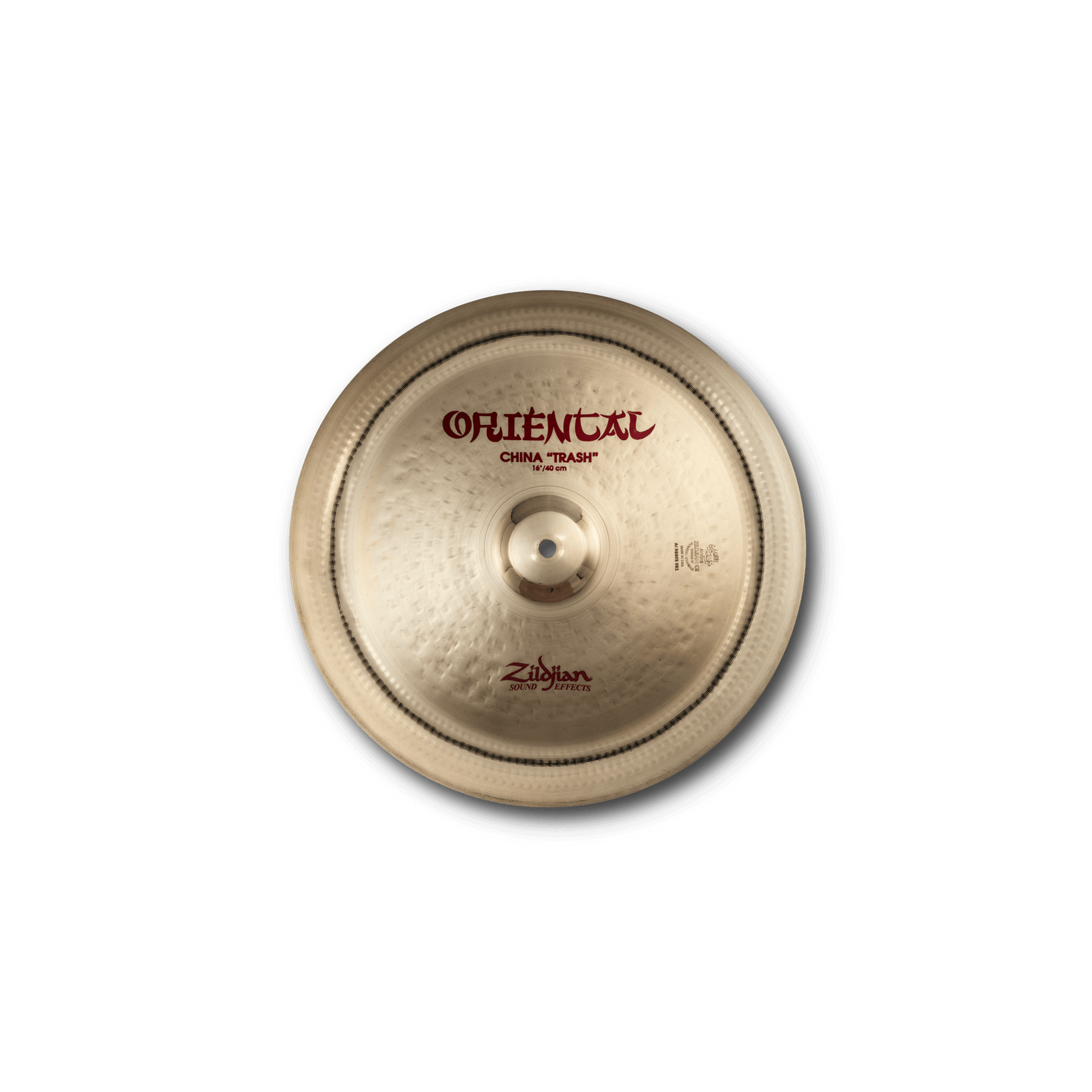
Zildjian Oriental 16" China Trash
The Zildjian Oriental 16" China Trash is a good example of a smaller, particularly immediate China sound. It produces a sharp and explosive attack followed by a relatively quick decay, making it easier to use as a punctuation point without the wash continuing for too long afterwards.
Interestingly, China Trash models can also work extremely well within custom cymbal stacks, demonstrating how much crossover exists between different FX categories.
If you want a broader or more sustained response, larger and more traditional China designs are worth exploring alongside shorter China Trash models. You can compare the wider selection in our China Cymbal collection.
Splash Cymbals: Fast, Compact Accents
A splash cymbal is one of the simplest ways to add another voice without dramatically changing the footprint of your setup. Their small diameters allow them to open almost instantly and decay quickly, creating a short accent that can sit between larger crash sounds.
A conventional splash can already be considered an effects voice, but manufacturers also apply perforation and other design changes to make splashes even trashier and more specialised.
Choose a splash if: you want a fast, compact accent that adds another punctuation point without taking up much physical or sonic space.
The Zildjian A Custom 12" Brilliant Splash is useful as a conventional reference point. Its paper-thin construction creates a fast, colourful and short crash-like response, but without the deliberately broken-up texture of a trash design.
Compare that with the Sabian AAX 10" Aero Splash. SABIAN describes it as a blend of musical effect and trash, with plenty of high-end cut and a strong white-noise component compared with a conventional splash.
This difference is important when buying a splash. If you want a clean, fast accent, a conventional splash may be all you need. If you're specifically trying to add texture or something less polished, an Aero, trash or perforated design may fit the gap more effectively.
Browse the full GRD Splash Cymbal range for more sizes and sound options.
Bell Cymbals: Focused, Pitched Accents
Dedicated bell cymbals provide something very different again. Rather than creating a spread of wash, they focus the energy into a strong metallic fundamental with very little conventional crash character.
You can of course play the bell of a ride cymbal, but a dedicated bell gives you a separate target and often a much more pronounced, consistent note. They are particularly useful for repeated patterns, punctuation within fills and moments where you want an accent that cuts through without creating another layer of wash.
Bell cymbals can vary considerably in pitch, material and sustain, so even within this relatively simple category it is worth choosing by the note and amount of resonance you want rather than diameter alone.
Choose a bell cymbal if: you want a focused, pitched metallic note that cuts through without adding another broad layer of cymbal wash.
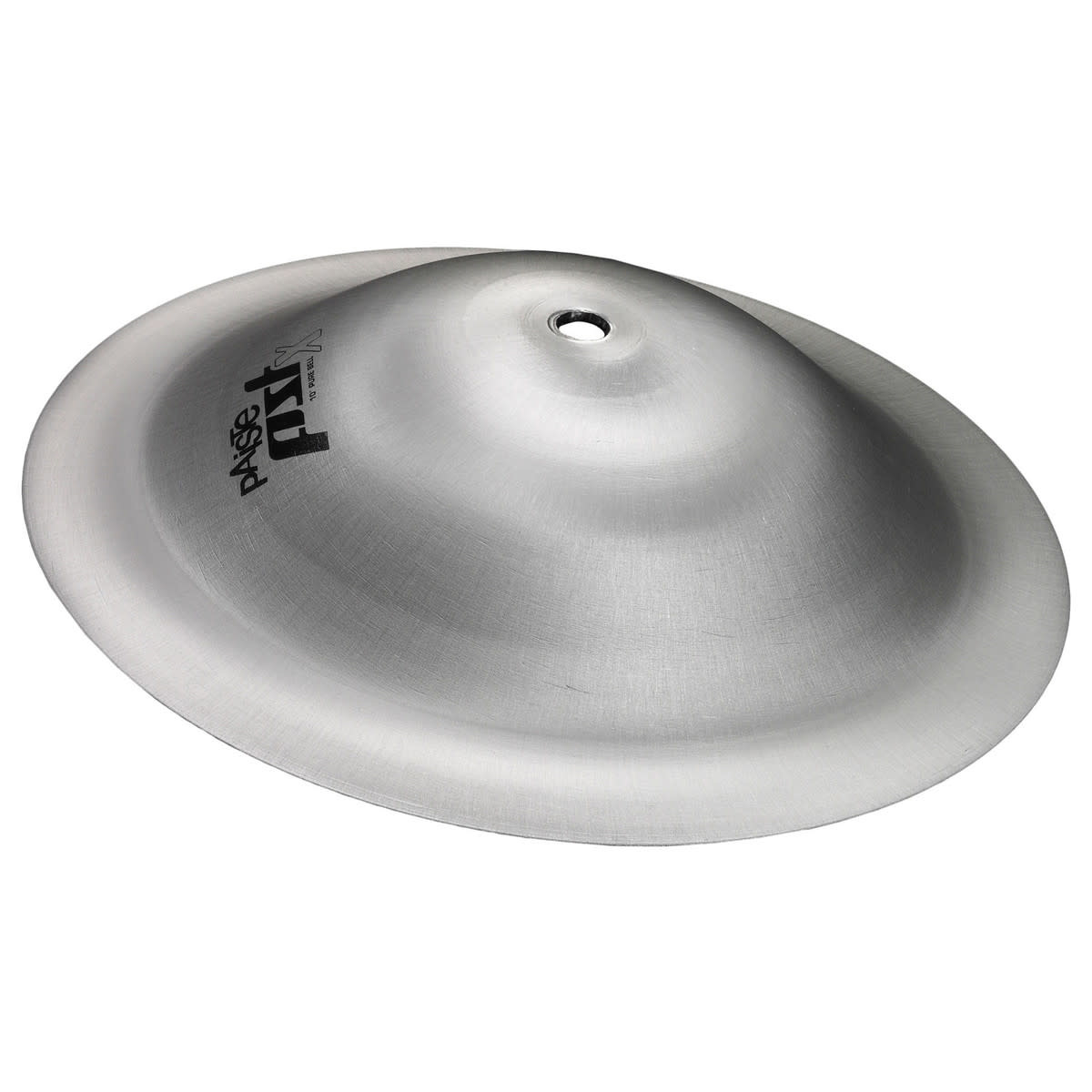
Paiste PST X 10" Pure Bell
The Paiste PST X 10" Pure Bell gives us a useful example of the category. Made from aluminium, it produces a clear ping over a warm, long bell sound with a clean and focused character.
That demonstrates why even within apparently simple FX categories, choosing by sound rather than name alone remains important.
Specialist & Experimental FX Cymbals
Some of the most interesting FX cymbals deliberately sit outside the usual categories. Manufacturers can manipulate profiles, edges, weight and construction to create specialist sounds that fall somewhere between crashes, splashes, Chinas and stacks.
Choose a specialist FX cymbal if: you already know what your core setup is missing and want a distinctive voice that does not fit neatly into a conventional cymbal category.
Istanbul Agop 16" Trash Hit
The Istanbul Agop 16" Trash Hit uses a warped, malleable outer edge to create a fast, trashy attack with a fairly quick decay. Its unusual shape gives the cymbal a more unstable, effects-led response than a conventional crash.
It is a good example of an effects cymbal that creates its character through profile, flexibility and movement rather than relying on perforation or a multi-cymbal stack.
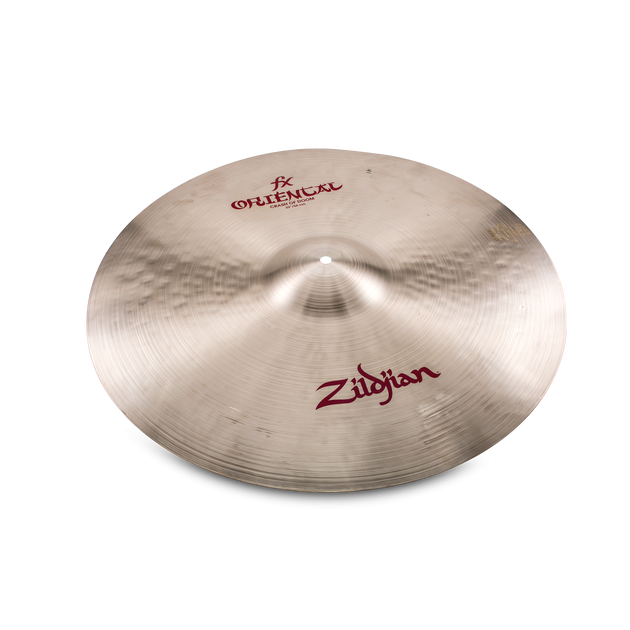
Zildjian 22" FX Oriental Crash of Doom
The Zildjian 22" FX Oriental Crash of Doom takes the opposite approach to the tiny, tight effects we've discussed earlier. It is deliberately dark and low pitched, with an immediate explosive attack followed by a broad, long sustain that creates an enormous effects voice.
It is a useful reminder that FX does not automatically mean short or quiet. Some effects cymbals are specifically designed to take up a huge amount of sonic space.
You can read more about Istanbul Agop's specialist effects and how they sit within the wider catalogue in our Ultimate Guide to Istanbul Agop Cymbals.
How Does Size Change the Sound of an FX Cymbal?
Although construction is hugely important, diameter still gives you a useful starting point when comparing similar FX cymbals.
Smaller FX cymbals will generally respond faster, sit at a higher pitch and decay sooner. This is why small splashes, bells and mini Chinas work so well for quick punctuation.
Larger FX cymbals will usually produce greater volume, a lower fundamental pitch and more sustain. A large China or Crash of Doom can therefore become a substantial part of the overall cymbal wash rather than simply adding a quick accent.
Stacks are the obvious exception to treating this as a hard rule. Two large cymbals pressed tightly against one another can still produce an extremely short response because each cymbal restricts the other's movement.
This is one reason we recommend listening to the cymbal itself rather than buying purely by diameter.
Think About the Space the FX Cymbal Needs to Fill
Genre can give you some clues, but a more useful question is how much space the new sound needs to occupy in the music. The same drummer might choose a tight stack for one arrangement and a huge China for another.
In dense arrangements, short stacks, dry crashes and compact effects can add definition without creating another long layer of cymbal wash. This can be particularly useful when guitars, synths or other percussion are already filling a lot of the frequency range.
In sparse arrangements, a darker or more sustained effect can become a much bigger part of the character of the track. A large China, unusual trash crash or resonant bell has more room to develop without competing with everything else around it.
For electronic-influenced sounds, tight stacks, clap-style cymbals and very dry effects are especially useful because they can reproduce some of the immediacy and short decay associated with programmed percussion while remaining completely acoustic.
Rather than choosing an FX cymbal because it is associated with a particular genre, listen for the space that is missing in the arrangement. That keeps the decision centred on your sound rather than somebody else's setup.
Where Should You Put an FX Cymbal?
The most useful FX cymbal in the world isn't particularly useful if you have to stretch awkwardly every time you want to play it.
Think about how frequently you intend to use the sound. A stack that forms part of regular grooves may deserve a position close to your hi-hat or ride, while an occasional large China can comfortably sit further towards the edge of the setup.
Small effects are also very easy to integrate without adding another full cymbal stand. Splashes and bells can often be mounted above existing cymbals using cymbal stackers, while boom arms and multi-clamps can add additional positions without dramatically increasing the footprint of the kit.
Most importantly, don't sacrifice your normal playing ergonomics just to make an effects cymbal fit. Your primary hi-hats, ride and crashes should remain comfortable to reach.
Can You Make Your Own Cymbal Stack?
Absolutely. In fact, experimenting with combinations is one of the most enjoyable parts of FX cymbals.
Two cymbals that don't particularly excite you individually can sometimes produce an excellent sound when they are allowed to interact with one another. Splashes, small Chinas, perforated crashes and other thin effects cymbals are all commonly used in custom stacks.
Experiment with:
- Different cymbal diameters
- Which cymbal sits on top
- Normal or inverted orientation
- Tighter and looser mounting
- Combining conventional and perforated cymbals
There is no guarantee that two random cymbals will sound good together, and that is part of the fun. Purpose-built stacks give you a predictable starting point, while DIY combinations offer almost unlimited experimentation.
If using old or damaged cymbals, always check for sharp cracks or broken edges before handling or stacking them.
Which FX Cymbal Is Right for Your Sound?
The easiest way to choose an FX cymbal is to stop thinking about which model is "best" and instead ask what sound your current setup cannot already make.
If you want short, dry and electronic, start with a stack.
If you want clappy, percussive and sample-like, try a Clapstack or Smack Stack.
If you want dirty and explosive without excessive sustain, look at perforated and trash crashes.
If you want aggressive wash and maximum impact, explore China cymbals.
If you want a tiny, fast punctuation point, try a splash.
If you want a focused metallic note with very little wash, look at dedicated bells.
And if none of those descriptions quite captures the sound in your head, that is exactly where the more experimental side of the FX category becomes worth exploring.
One thing we notice repeatedly in store is that drummers can arrive looking for a particular product, then prefer a completely different type of effect once they hear it alongside the rest of a kit. That is why we recommend choosing by sound and function first rather than by brand or appearance. The best effects cymbals are often the ones that make you play differently as soon as they are added to your setup.
You can explore our full selection of FX Cymbals, China Cymbals and Splash Cymbals online, or visit us to compare different sounds for yourself.
Frequently Asked Questions
What is an FX cymbal?
An FX or effects cymbal is a cymbal designed to add a specialised sound outside the traditional crash, ride and hi-hat roles. The category includes stacks, Chinas, splashes, bells, perforated crashes and many experimental designs.
What is a cymbal stack?
A cymbal stack combines two or more cymbals so that they contact and interfere with one another when struck. This normally creates a shorter, drier and trashier response than allowing the cymbals to vibrate freely.
Should a cymbal stack be tight or loose?
There is no single correct tension. A tighter stack will normally sound shorter, sharper and more controlled, while a looser stack allows more movement and usually creates additional wash and sustain. Experiment until the response suits your playing.
Can you stack any two cymbals together?
You can experiment with almost any cymbal combination, although the result will not always be musical. Splashes, Chinas, perforated effects and thinner cymbals are common choices because they tend to interact easily. Always check damaged cymbals for sharp edges before handling them.
What is the difference between a China and a trash crash?
A China normally uses a distinctive upturned edge and profile to produce an aggressive, broad and trashy wash. A trash crash generally retains more of a conventional crash shape but uses holes, unusual hammering or other design features to create a dirtier and less uniform crash response.
What size splash cymbal should I choose?
Smaller splashes generally respond faster, sound higher and decay sooner, while larger splashes normally have more body and sustain. There is no single correct size, so compare diameter alongside the construction, weight and tonal character of the individual cymbal.
Do I need an FX cymbal?
No. A good hi-hat, crash and ride setup can cover an enormous amount of music. FX cymbals become useful when you want to expand that core setup with sounds that your conventional cymbals cannot easily produce.
Where should I position an FX cymbal?
Position frequently used effects within easy reach and keep occasional voices further towards the edges of your setup. Small splashes and bells can often be mounted above other cymbals, while clamps and auxiliary boom arms can add extra positions without requiring another full stand.
Still Not Sure Which FX Cymbal Suits Your Sound?
FX cymbals are some of the hardest cymbals to judge from specifications alone. If possible, compare different sounds in person and listen to how they interact with the rest of your setup rather than treating them in isolation.
At Graham Russell Drums, you can explore a huge selection of cymbals in our dedicated Cymbal Loft and compare different models in a real drum-kit setup. If you're unsure where to start, our team can help you narrow the options down to the sound you're actually trying to achieve.
Explore Cymbals at Graham Russell Drums | Visit the GRD Buyer's Guide
Written by Alex Neave
I've been part of the Graham Russell Drums team since October 2025, but my connection with the shop goes back much further as a customer since 2012. I've advised drummers of all ages and experience levels, worked on a wide range of second-hand kits and spent a lot of time helping customers navigate the often overwhelming world of drum gear. Alongside over 13 years of playing experience, that hands-on exposure to a wide range of products allows me to write buying guides based on real-world knowledge and practical experience rather than simply repeating manufacturer specifications.












Comments
Be the first to comment...