





Used Vintage Sonor Drum Kits
In Stock items may be either at the shop or the warehouse.
To view before purchasing, please check the product details to confirm it's in-store.
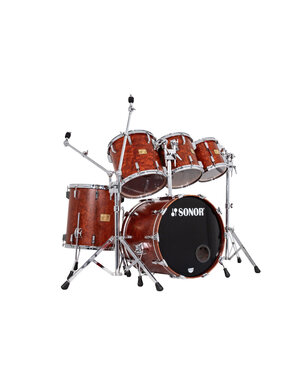
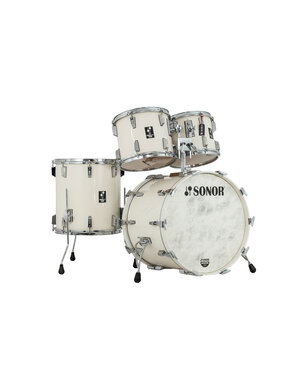
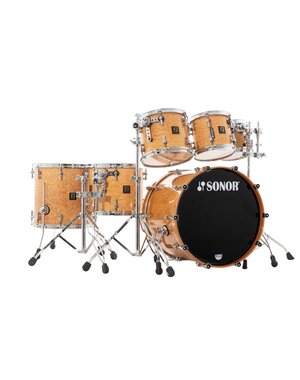

Sonor Drum Kits
Vintage and Used Sonor Drum Kits
Between 1975 and 2007 Sonor built the run of kits that made the brand: the Phonic, the Signature, the SONORLITE, the Hilite and the Designer. All of them German built, all of them turning up here in ones and twos. Working out which one you are looking at is the hard part, so this page is a guide as well as a category.
The golden run
1975
The Phonic, and the 45 degree edge
Top lines at once
3
Signature, SONORLITE and Hilite overlapped
Professional lines
Germany
All of them, for their whole lives
Offshore from
1997
Budget lines only, never the pro kits
The lines, and the order they came in
Sonor's top of the range was never a ladder. For most of the 1980s there were three flagships on sale at once, in different woods for different players: Signature from 1980, SONORLITE from 1983, Hilite from 1988. All three were still catalogued when the Designer arrived in 1994. Before any of them came the teardrop kits of the late 1950s and 60s, catalogued as K numbers named after American cities.
1975 To 1987
Phonic and Phonic Plus
SHELL9 ply beech, around 9 mm
EDGE45 degree, introduced here
Launched for Sonor's centenary, and the kit that brought in the sharp edge the company still uses. Plus is the same shell in deeper power sizes. Hi-Tech is a grey finish with black fittings, not electronics.
1980 To 1995
Signature, or Horst Link
SHELL12 ply beech, around 12 mm
VENEERBubinga or Makassar ebony, inside and out
The heaviest shell Sonor have made, built to be the best kit money could buy. Horst Link Signature and Signature are the same kit: the codes start HL, after the man who ran the company. A Lite version in 7 mm birch also exists.
1983 To 1995
SONORLITE
TOMS9 ply Finnish birch, 6 mm
BASS12 ply, 7 mm, same for the snare
The Signature's lighter sibling, and the one working drummers carried. The 1980s finish name is Scandinavian Birch, which is what most owners call the kit. Sonor rebuilt it for their 150th in 2025.
1988 To 1996
Hilite
SHELL9 ply maple, around 7.5 mm
THE IDEARubber isolation between every fitting and the shell
The forgotten one, and the first Sonor in maple. Rubber gaskets sit under the lugs, mounts, legs and spurs. Exclusive has copper plated fittings, Nussbaum a walnut veneer. Codes start HD, or EHD.
1994 To 2007
Designer
SHELLSMaple Light, Birch, Vintage Maple, acrylic from 2005
CODESDT toms, DB bass, DF-S floor toms, DS snares
The one that gets overlooked. Designer was Sonor's first build to order series: you chose the shell type, size, finish, plating, even whether a drum had a mount. Everything the SQ2 does started here.
2000 To 2025
Delite, then ProLite
TOMSThin maple, 4 mm, plus 2 mm reinforcement rings
BASS6 mm, plus the same 2 mm rings
Delite is short for Designer Lite, and it brought back reinforcement rings. It ran alongside the Designer rather than replacing it, became the ProLite in 2012, and ended in 2025. Rings inside a modern looking Sonor mean this family.
Before You Chase One Down
Not every old German Sonor is a top line kit
Plenty were never flagships, and listings rarely say so. Performer, 1982 to 1992, was the budget line, with thicker beech shells and rounded bearing edges where the Signature and SONORLITE had the 45 degree. Force 1000, 2000 and 3000 of the 1990s were German made but entry to mid level. S-Class and Sonic Plus sit in the middle. From 2001 the Force numbers become imported. If you are paying flagship money, check the line first.
How to identify a Sonor
Work down in order. Most kits are settled by step three.
-
Read the country on the badge. "Western Germany" or "West Germany" means pre-1990, and in practice the 1960s. "Made in Germany" with no West means the 1970s or later.
-
Then the logo. The flowing script badge runs roughly 1952 to 1961. The mallet logo comes in from 1961. A badge reading 1875-1975 is the centenary badge, fitted to early Phonics.
-
Look inside and count the plies. The one that decides it. 9 ply beech, 9 mm is a Phonic. 12 ply with bubinga or Makassar ebony inside and out is a Signature and nothing else. Light birch, 9 ply is a SONORLITE. 9 ply maple is a Hilite. Reinforcement rings mean Designer Vintage Maple, Delite or ProLite.
-
Check whether metal touches wood. Rubber gaskets under every lug, mount, leg and spur mean a Hilite or later. Phonic and Signature bolt straight to the shell. This is the quick way to separate a Hilite from a Phonic, because both use the same snap-lock lug.
-
Read the model code. The fastest confirmation, if the drum or case still carries it. K teardrop or Champion, XK 1970s Phonic kit, D plus three digits a Phonic era snare, HL Signature, HD Hilite, EHD Hilite Exclusive, DT, DB, DF-S, DS Designer, PK 225 or 227 a Performer.
-
Use badge colour as a steer, not a rule. On 1980s kits gold tends to mean Signature, black SONORLITE, silver Phonic, and silver with a yellow flash a Performer. Let the shell have the final word.
-
Find the date stamp inside the shell. On 1960s drums it is three digits: first the year within the decade, then the month, so 607 is July 1966. 1970s drums usually state the year outright. There is no serial number lookup for Sonor, so the shell and the fittings are the evidence.
What to check before you buy
-
Perished rubber. The weak point of the Designer and Delite era. TuneSafe collars and the rubber in the isolation mounts go hard and crumble. Replacements exist, but factor the work in. Same for the gaskets on a Hilite.
-
Measure before you buy heads on anything from the 1950s or 60s. Some shells of that era are metric, and standard inch heads will not fit. A 20 inch bass drum measuring 505 mm is a metric drum.
-
Mixed parts are normal. 1980s lugs, mounts and hoops interchange across Phonic, Signature, Performer and SONORLITE, so parts from more than one line usually mean an honest repair rather than a fake.
-
Depths, especially on a Hilite. Most surviving Hilites are deep power sizes. Check them against what you want to play before you fall for the finish.
-
What is missing. Tom holders, spurs and correct hoops are the expensive things to replace. Raw unsealed bearing edges are correct on a Phonic or Signature, not damage. What matters is dents, delamination and whether the shell is still round.
Selling or part exchanging a vintage Sonor
Tell Us What You Have
Part exchange and buy-ins
We buy vintage Sonor outright and take it in part exchange against anything in the shop. Send photographs of the badge, the shell interior, an edge and a lug, plus any model codes, and we will tell you what it is and what it is worth.
Looking For One
Tell us what you are after
These arrive unpredictably and the good ones often go before they reach the website. If you want a Signature in Makassar, a SONORLITE in Scandinavian Birch or a particular Designer shell, say so and we will watch for it.
The sound without the hunt
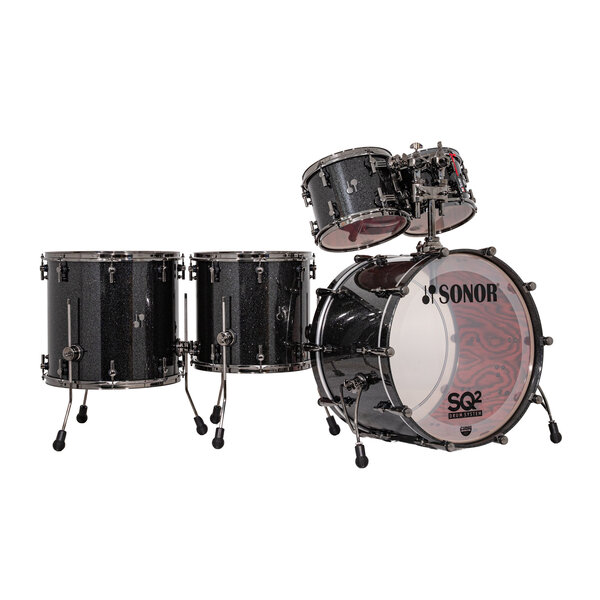

Browse wider
See every current family in Sonor Drum Kits, the Professional Drum Kits range, the 150th Anniversary reissues, or everything Sonor on our brand page.
Vintage Sonor FAQs
What is my old Sonor worth?
It depends almost entirely on which line it is, and the gap between the lines is enormous. A Signature in Makassar ebony and a Performer from the same decade look similar across a room and are nowhere near each other. Send us photographs and we will tell you what you have before we talk about money.
Is a Horst Link Signature different from a Signature?
No, the same kit. The model codes begin HL, Horst Link's initials, because he ran Sonor from 1955 to 1991 and the Signature was his project. Dealers use both names, so search for both.
Can I still get parts?
For the common things, usually. Lugs, hoops and mounts from the Phonic and Signature era interchange across several lines and turn up regularly, and badges and the perishable Designer and Delite rubbers are reproduced. The hard ones are complete tom holders, correct spurs and parts specific to a short-lived variant. Tell us what you are chasing.
Were any of these made outside Germany?
No. Every professional Sonor line was built at Bad Berleburg for its whole life. Offshore production started in 1997 and only ever applied to budget lines and some hardware. A Phonic, Signature, SONORLITE, Hilite, Designer, Delite or ProLite is German built.
Send Us Four Photographs
We will tell you what you have
The badge, the inside of a tom, a bearing edge and one lug. That is almost always enough to name the line and the decade, whether you are buying, selling or just curious about something in the loft. Bring it to the Fareham showroom and we will go through it on the bench with you.