


Acrylic Snare Drums
In Stock items may be either at the shop or the warehouse.
To view before purchasing, please check the product details to confirm it's in-store.
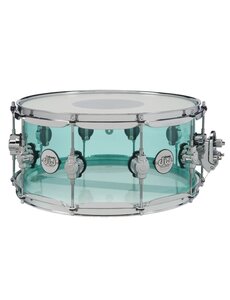

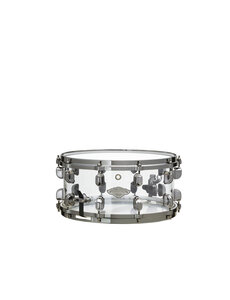
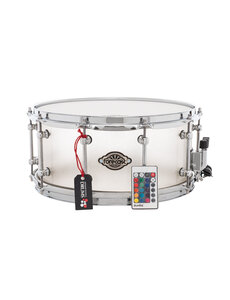
In-stock Items are either at the Store or at the Warehouse. Please click in to the product to check its location.
Acrylic kits have been around far longer than most people think. The earliest “true acrylic shell” work is usually credited to Bill Zickos, who built early experimental acrylic drums in 1959 and later secured a US patent relating to acrylic drum construction.
Acrylic really entered the mainstream in the early 1970s when Ludwig introduced Vistalite in 1972, turning transparent shells into a genuine production line rather than a niche curiosity. The look became iconic almost immediately, and Vistalites were famously popularised on big stages in that era.
Today, acrylic is firmly established rather than “retro-only”, with brands still innovating and releasing new acrylic concepts (including fresh ideas aimed at controlling overtones and sharpening rimshot response).
Acrylic drum sound profile
Acrylic has a reputation for being “loud and bright”, but the reality is more useful (and more nuanced). Across most acrylic kits you’ll notice a few consistent behaviours:
-
Fast, powerful attack and strong presence
Acrylic tends to speak immediately with a firm front-end, which makes it feel energetic under the stick and helps it read clearly in a band. -
Projection and scale
Acrylic shells often feel like they throw sound forward, which is part of why they’re so common in rock and bigger live situations. -
A “glassy” top-end character
Many players describe acrylic as having a clear, polished high end. Depending on heads and tuning, that can feel bright and cutting, or smooth and hi-fi. -
Full-range tone rather than “all treble”
A good acrylic kit can carry plenty of low end and midrange weight. One useful way Modern Drummer summarises it is warm across highs/mids/lows with a powerful attack/presence.
Where acrylic sits compared to wood
If you’re coming from maple/birch, acrylic often feels:
-
more immediate and “forward” in the initial hit
-
more consistent in perceived punch when you lean into louder dynamics
-
a little less naturally “soft” or “papery” than some wood shells at low volumes
Need help choosing a snare drum? Visit our Snare Drum Buyer’s Guide.