


Tama Starclassic Performer Drum Kits
In Stock items may be either at the shop or the warehouse.
To view before purchasing, please check the product details to confirm it's in-store.
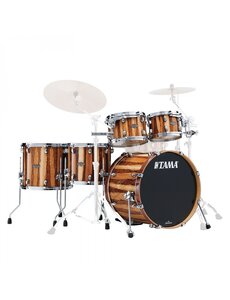
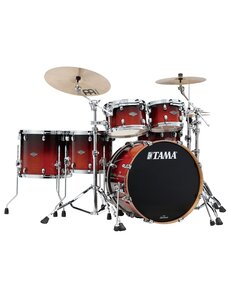
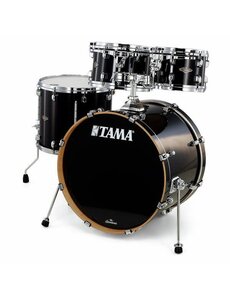
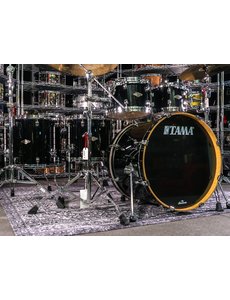

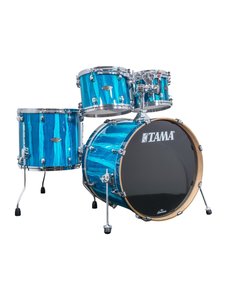

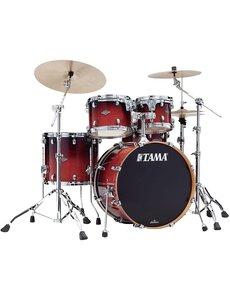


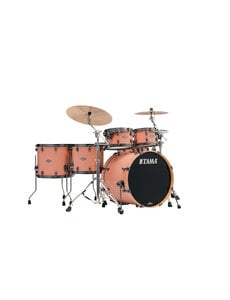
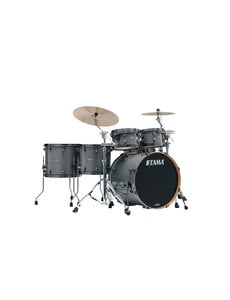
Tama Drum Kits
Tama Starclassic Performer: The Most Professional Kit For The Money
The Tama Starclassic Performer is the way into the Starclassic family, and it is a proper professional kit rather than a cheapened version of one. The shell is a maple and birch hybrid: four plies of birch with two inner plies of maple on the toms, five plies of birch with two of maple on the bass drum. Tama’s own phrase for what that gives you is the warmth of maple and the clarity of birch. It arrives with the same zinc die-cast hoops and the same Star-Cast mounting system as the kits above it. If you are looking at a birch drum kit, a hybrid shell kit or simply the best Tama pro kit you can buy without going up to a full Starclassic, this is the page.
Every Performer we stock is set up and playable in our 5,000 square foot Fareham showroom, alongside the Starclassic and Star kits it sits beneath, which is the only honest way to find out how much of a step up those actually are for the music you play.
Tom shells
6 mm
4 plies birch, 2 inner plies maple
Bass shells
7 mm
5 plies birch, 2 inner plies maple
Inner plies
Maple
The warmth, inside the birch
Hoops
Die-cast
Zinc, the same as the kits above
Shell and build: what the Performer actually is
Here is the thing nobody tells you about this kit. Look at how Tama build the Starclassic Walnut/Birch: birch outer plies wrapped around a walnut core. Now look at the Performer: birch outer plies wrapped around a maple core. Four plies of birch with two inner plies of maple at 6 mm on the toms, five of birch with two of maple at 7 mm on the bass drum.
It is the same engineering idea as the kit above it, with a different wood doing the inner job. Birch on the outside gives you the attack and the clarity, because birch is stiff and projects. The core wood decides the character of what sits underneath that: walnut is darker and drier, maple is warmer and more open. So the Performer is not a watered-down Starclassic, it is a Starclassic shell concept voiced differently. Where the two part company is in the woods on offer, the finish work and one piece of hardware, which is set out below rather than glossed over.
-
Maple and birch hybrid shells: 6 mm toms, floor toms and snare at 4 plies birch plus 2 inner plies maple. 7 mm bass drums at 5 plies birch plus 2 inner plies maple.
-
Zinc die-cast hoops, made by injecting molten metal into moulds rather than stamping and flanging steel. Tama credit them with a crisper attack and much more powerful rim shots, and they are the same hoops fitted to the Starclassic.
-
Star-Cast mounting, which carries the tom from the hoop rather than the shell so the drum is free to ring, and lets the toms sit closer together than a shell-mounted system allows.
-
MTH800 double tom holder with 10.5 mm arms and a ball and socket joint, plus a single Swivel Wing that rotates so you can get the angle right rather than nearly right.
-
Evans heads as standard: G1 coated batters on the toms with Tama clear Power Craft II resonants, a clear EQ4 on the bass drum batter, and a G1 coated batter with an Evans 300 snare side.
One thing the Performer does not get
The Starclassic and the Star both use Quick-Lock tom brackets. The Performer does not, and it is worth understanding the difference because it is a daily one rather than a tonal one.
A Quick-Lock bracket splits in two with a sliding switch. Lift the drum off and the memory-lock half stays behind on the stand or the floor tom leg, so your position is still set when you come back to it. Tama also line them with rubber to isolate the drum a little further. The Performer’s brackets instead fit straight onto the L arm, which works perfectly well and is how most kits at any price are built. You just set your angles each time rather than having them remembered for you. If you set up and break down several times a week, that is a real difference. If the kit lives in one room, you will probably never think about it.
The sound, and who it suits
Bright and punchy at the front of the note, with more body underneath than a pure birch kit gives you. The die-cast hoops are a big part of the character: they tighten everything up, sharpen the attack and make rim shots crack rather than clank. Toms are focused and quick to speak, the bass drum is tight rather than boomy, and the whole kit takes a microphone well without much help.
It suits the working drummer more than anyone: function bands, covers, theatre, church, rehearsal rooms and small studios, where the kit has to turn up, sound good quickly and go home again. It is also a sensible first properly professional kit, because very little about it will hold you back later. If you want a warmer and more open instrument, look at a Starclassic Maple. If you want the darker, drier version of this same shell idea, that is the Starclassic Walnut/Birch.
The Performer is the kit people buy expecting to upgrade from, and then do not. That is about the highest compliment a drum kit gets.
Starclassic Performer sizes
The Performer is sold as shell packs built around a 22″ bass drum rather than as a long à la carte size list, which keeps it simple. These are the sizes the standard packs are built from.
Bass Drum
22″ x 16″
Tom Toms
12″ x 9″
12″ x 8″
10″ x 8″
10″ x 7″
Floor Toms
16″ x 14″
14″ x 12″
Snare Drum
14″ x 6.5″
Built on the same maple and birch hybrid shell as the kit, and sold separately rather than as part of the shell pack.
A four piece or a five?
The four piece gives you 10″ and 12″ racks with a 16″ floor tom, and the five piece adds a 14″ floor tom and runs slightly shallower racks. If you mostly play songs rather than fills, the four piece is usually plenty and the money is better spent on a snare. Call 01329 834012 or email [email protected] and we will talk it through.
Starclassic Performer finishes
Five lacquer finishes make up the standard range, all with chrome hardware. The Aurora and Fade finishes are the ones that reward looking at in person, because the colour shifts across the shell in a way photographs flatten.
Limited editions are where the Performer gets interesting
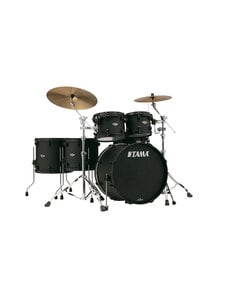
Tama run limited finishes on this series regularly, and they are often the ones worth having. The most recent is the Blacked Out Black Edition, announced in September 2026, where every external part is matte flat black: shells, lugs and hoops, with a black interior that shows through the clear tom heads and a matte textured black resonant on the bass drum. There is a matching 14″ x 6.5″ snare with flat black die-cast hoops sold separately. Limited runs come and go quickly, so if one catches your eye it is worth asking us early rather than late.
Where the Performer sits in the Tama range
Tama’s professional tier runs Performer, then Starclassic, then Star. Unlike the wood choice within each family, this one really is a budget ladder: what the money buys as you go up is thinner and more carefully built shells, more hand finishing and, at Star level, Japanese manufacture.

Browse wider
See all three families side by side in Tama Drum Kits, the full Professional Drum Kits range from every brand we stock, or everything Tama on our Tama brand page.
Tama Starclassic Performer FAQs
Is the Starclassic Performer a professional kit?
Yes, and we list it in our professional range rather than in mid-range for good reasons. It carries the same zinc die-cast hoops and the same Star-Cast mounting system as the Starclassic above it, and its maple and birch hybrid shell is a design in its own right rather than a thinned-out version of something else. Tama themselves file it as one of the three Starclassic lines. What you give up against a full Starclassic is the choice of premium woods, some of the finish work, and the Quick-Lock tom brackets, which are a setup convenience rather than a tonal one. That is set out honestly above.
Performer or Starclassic Walnut/Birch?
These two are closer relatives than the price gap suggests, which is exactly why the question comes up. Both are birch shells built around a different inner wood: maple on the Performer, walnut on the Walnut/Birch. The Walnut/Birch is darker and drier with a fatter low end, and it gets the extra finish work and the Starclassic badge. The Performer is brighter and more open in the middle of the note. If you play loud music in rooms that need cutting through, the Performer may genuinely be the one you prefer, and plenty of people who try both back to back are surprised by that.
What is a Starclassic Performer B/B, and is it the same thing?
No, and this one catches people out. B/B stands for birch and bubinga, and it was the earlier Performer: a different shell with bubinga rather than maple as the second wood. The current Performer is the maple and birch kit described on this page. Model codes are the quickest giveaway, since the current kits start MBS and the older B/B kits start PL. If you are browsing the second-hand market, older Performers from the late nineties and two thousands also turn up, and those were built in Japan. Ask us if you are unsure which one you are looking at, because the names are close and the drums are not.
Do I need the matching snare?
Not necessarily, and it is worth thinking about rather than adding automatically. The shell packs come without a snare, which is deliberate: the snare is the drum that most defines your sound and the one most worth choosing separately. The matching 14″ x 6.5″ maple and birch Performer snare is a good drum and it will look right, but a metal snare alongside this kit gives you a very different and often more useful voice. Come and try a few against the kit before you decide.
What do die-cast hoops actually change?
A fair bit, and it is one of the clearest differences you can hear between kits at this level and below. A die-cast hoop is poured as a single dense piece rather than stamped and bent from sheet steel, so it holds its shape exactly and grips the head evenly all the way round. In practice the drum tunes more easily and stays in tune, the note is shorter and more focused, and rim shots are much louder and cleaner. Some players prefer the looser, more open sound of triple-flanged hoops. Most people trying both for the first time pick the die-cast.
Hear It Before You Buy It
Play it against the kits above it
The only question worth answering here is whether the step up to a Starclassic is worth it for the music you actually play, and that takes about ten minutes in a room with both kits in it. Our 5,000 square foot Fareham showroom has them set up and ready to play, and we are perfectly happy telling you the cheaper one is the right call if it is. No appointment needed.