


Yamaha EAD10 vs EAD50, What’s the difference and which should you buy?
- Posted on
- By GRD
- 0
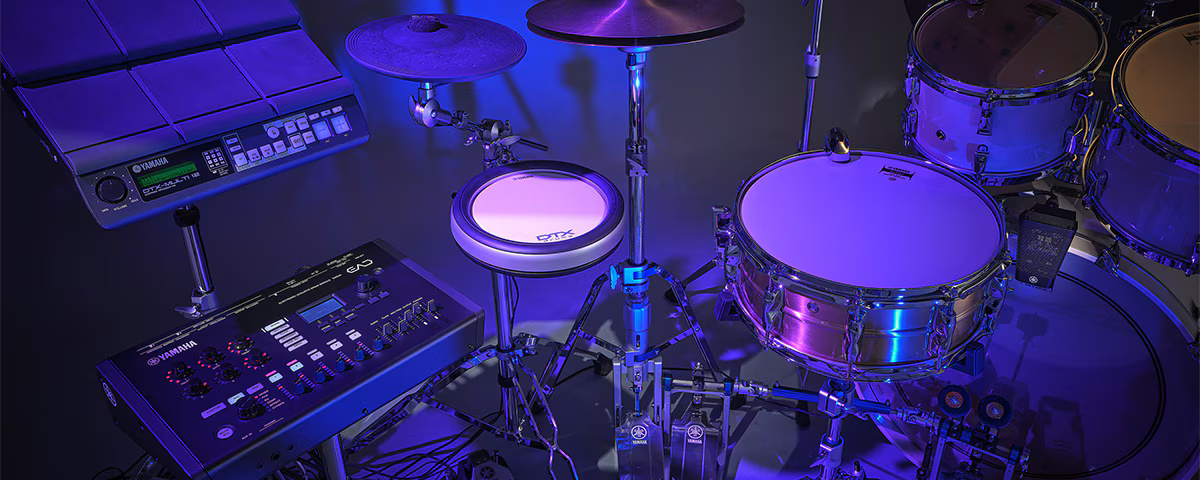
A comprehensive breakdown of the Yamaha EAD 10 and EAD50, the differences, and which one is right for you.
Yamaha EAD10 vs EAD50, what’s the difference and which should you buy?
Yamaha’s EAD systems were designed to solve a long-standing problem for drummers: how to capture a full, usable drum sound quickly, consistently, and without the complexity of traditional multi-mic setups. By combining a dedicated stereo microphone and trigger technology, the EAD range turns an acoustic kit into a flexible hybrid instrument that works for practice, recording, and live use.
The two main models, the Yamaha EAD10 and the new Yamaha EAD50, are often compared because they share the same core concept but are aimed at very different types of players. On the surface they seem to offer similar benefits, but in real-world use they approach sound control, expandability, and workflow in very different ways.
What is the Yamaha EAD10?
The Yamaha EAD10 is aimed at drummers who want a fast, reliable way to get more out of an acoustic drum kit without turning setup into a technical exercise. It uses a single sensor unit mounted on the bass drum to capture a stereo image of the entire kit, which is then processed through a compact module, mounted on a stand or accessory table, with built-in effects and sampled sounds.
In practical use, the EAD10 stands out for how quickly it works. Setup is simple, and once it’s mounted your sound is consistent every time you sit down to play. You can plug headphones straight into the front of the module and monitor your full kit immediately, and with a straightforward USB connection it’s easy to play along to music at the same time. That makes it particularly effective for practice, lessons, smaller pub gigs, and home use where convenience really matters. I find it extremely beneficial for practice, particularly when playing softer, ghost notes and other subtle touches really shine through helping me add another layer of finesse and detail to my practice sessions. Many of our customers here at GRD also love the EAD10 for smaller gigs, where a fully mic’d up kit is either not possible, or too much hassle for the venue type.
The EAD10 is also very popular for content creation, one of the main reasons I decided to purchase one. Yamaha’s Rec’n’Share app allows you to record audio and video, straight to your phone, add backing tracks or a metronome, and export clips quickly without needing additional recording software. The process is simple enough that it doesn’t interrupt playing, and the editing process afterwards is nice and easy, which is often the difference between actually making content and putting it off.
Overall, the EAD10 is best suited to drummers who prioritise ease of use, quick setup, and flexibility. It’s ideal for practice, home recording, teaching, and straightforward live situations, but it’s not designed for complex PA routing or deep sound control. For most players, that simplicity is exactly the point.
What is the Yamaha EAD50
The Yamaha EAD50 takes the same core idea as the EAD10 and pushes it much further towards professional use. It is designed for drummers who want to capture their acoustic kit consistently, but with greater control over routing, processing, and integration into larger live or recording setups.
Like the EAD10, the EAD50 uses a dedicated sensor unit mounted on the bass drum to capture the entire kit from a single position. Where it differs is in how that sound is handled once it reaches the module. The EAD50 offers significantly more outputs, deeper sound shaping options, and the ability to integrate additional microphones, pads, and triggers, making it better suited to complex stage, studio, or broadcast environments. A second DSU50 mic can be plugged directly into the module to capture a more comprehensive coverage of the kit.
In practical terms, the EAD50 is about control and flexibility rather than speed alone. It allows drummers to tailor their sound for different venues, send separate signals to front-of-house, monitors, or recording systems, and build hybrid setups that blend acoustic and electronic elements in more detailed ways. This makes it particularly attractive for touring, larger stages, and situations where the drum sound needs to slot precisely into a wider mix.
That added flexibility does come with a slightly longer setup time and a clearer understanding of signal routing to get the absolute most out of it, however It offers more depth and flexibility when you want it, while still being usable in a straightforward, plug-and-play way for simpler setups. For drummers who need that level of control, the extra complexity is heavily justified.
Overall, the Yamaha EAD50 is best suited to players who want a single, consistent drum sound across multiple environments and are comfortable managing a more advanced system. It’s aimed less at casual practice and more at professional live, studio, and production use, where routing options and sound control matter as much as convenience.
Yamaha EAD10 vs EAD50: Key Differences That Actually Matter
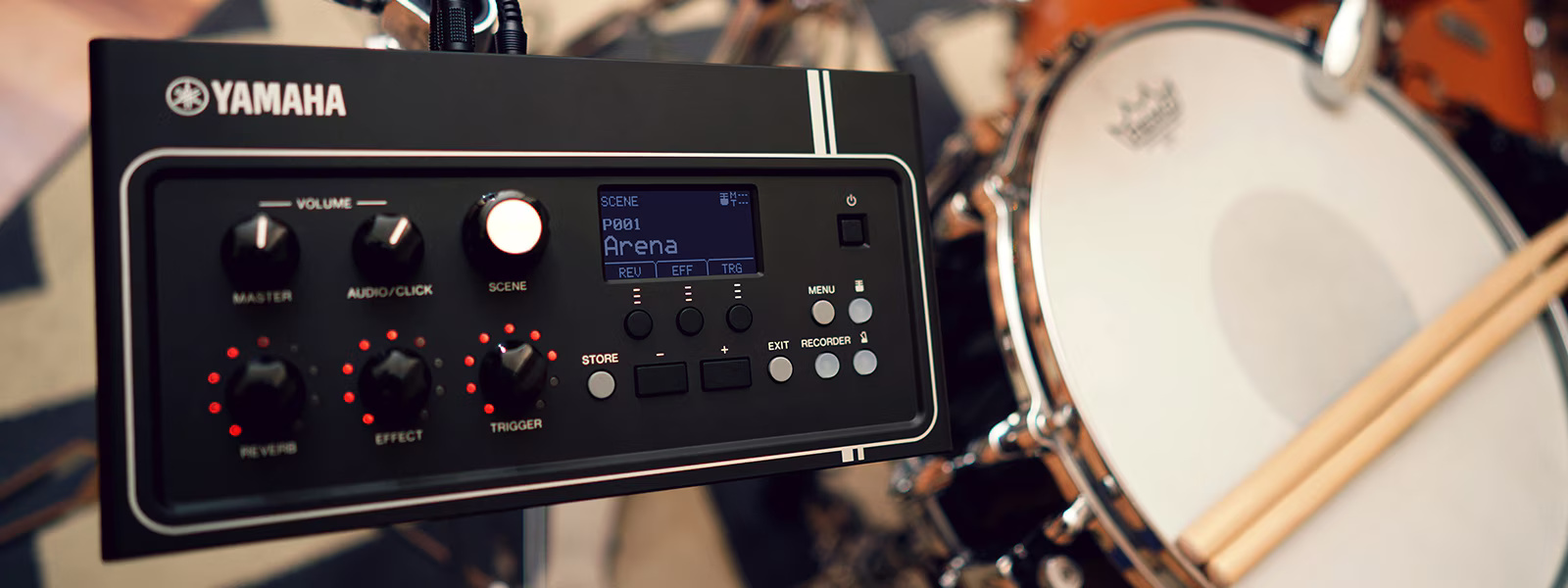
Although the EAD10 and EAD50 are built around the same basic concept, capturing an acoustic drum kit from a single sensor position, the way they fit into real-world setups is very different. The choice between them comes down less to sound quality and more to workflow, control, and how much complexity you actually need.
Ease of setup and day-to-day use
The EAD10 is clearly designed with speed and simplicity in mind. It’s quick to mount, easy to navigate, and doesn’t require much technical knowledge to get a usable sound. For many drummers, this is its biggest strength. You turn it on, select a scene, and start playing.
The EAD50, by comparison, assumes you’re happy spending a bit more time setting things up. It offers far more control, but that control comes with a bit more complexity. It’s better suited to players who already have an idea of how they want their drums routed and processed, rather than those looking for an instant solution.
Outputs, routing, and expandability
One of the most important differences is how each unit handles outputs. The EAD10 is relatively straightforward, making it easy to send a finished drum mix to headphones, a speaker, or a simple PA system. That keeps things fast and predictable, but it also limits how much separation and routing you can do.
The EAD50 is built for more demanding environments. It offers multiple outputs that allow you to send different drum and effect signals separately, making it far more flexible for front-of-house mixing, monitoring, and recording. It also integrates more easily with additional microphones, pads, and triggers, which is a big factor for hybrid or professional setups.
Sound shaping and control
Both units allow you to shape your drum sound using effects and sampled elements, but the approach is different. The EAD10 focuses on immediacy, with simple controls that let you move between sounds quickly without getting lost in menus.
The EAD50 goes much deeper. It allows more detailed sound shaping, real-time control via assignable knobs, and more advanced editing options. This makes it possible to fine-tune your sound for specific venues or applications, but it also means there’s a bit more to learn before you feel fully comfortable with it.
Practice, content creation, and performance focus
For practice and content creation, the EAD10 is often the more natural fit. Being able to plug in headphones, play along to music, and quickly record audio or video keeps the process friction-free. It’s a setup that encourages regular use rather than feeling like a production task.
The EAD50 shines more in performance and production-focused roles. It’s better suited to live shows where consistency across different venues matters, or recording situations where separate channels and deeper control make a real difference in the final mix.
Which One Should You Buy?
The EAD10 makes the most sense if you want something that’s fast, intuitive, and genuinely easy to live with day to day. If your priorities are practice, content creation, lessons, or simple live use, the EAD10 delivers a huge amount without adding technical friction. Being able to plug headphones straight into the unit, play along to music, and record audio or video with minimal setup makes it especially appealing for home use and smaller setups.
It’s also a strong choice if you don’t want to think about routing, multiple outputs, or complex sound design. The EAD10 is designed to get you playing quickly and consistently, and for many drummers that simplicity is exactly what makes it effective. If you want an all-in-one solution that enhances your acoustic kit without changing how you think about drumming, the EAD10 is usually the better fit.
The EAD50 is better suited to drummers who need more control over how their sound is shaped and delivered. If you’re playing larger stages, working with front-of-house engineers, recording regularly, or running hybrid setups with additional triggers, pads, or microphones, the EAD50’s expanded routing and output options become highly valuable.
It’s also the stronger choice if consistency across venues is critical. Being able to tailor outputs for PA systems, monitors, or recording environments means you can carry a more defined version of your sound with you. The trade-off is that it takes more time to set up and understand, but for players who need that level of flexibility, the EAD50 earns its place.
The GRD Take
Both units do the same core job extremely well: capturing an acoustic drum kit and giving you more control over how it sounds. The real difference is how far you want to go.
If you value speed, simplicity, and creative freedom without technical overhead, the EAD10 is hard to beat. If your setup demands deeper control, more outputs, and professional-level integration, the EAD50 is the more appropriate tool.
Both systems work with a wide range of acoustic drum kits, including Yamaha acoustic kits, and can also integrate naturally into hybrid or electronic drum kit setups.
If you’re unsure, this is one of those cases where speaking to someone in-store makes a real difference, and our Graham Russell Drums Team are more than happy to guide you in the right direction. Choosing between the EAD10 and EAD50 usually comes down to how and where you play, and how much control you need from your setup.
Frequently Asked Questions
Can you gig with the Yamaha EAD10 or EAD50?
Yes. Both units can be used live, but they suit different types of gigs. The EAD10 works best for smaller venues, rehearsals, and simple PA setups where speed and consistency matter. The EAD50 is better suited to larger stages or professional environments where multiple outputs and more detailed control over the drum mix are required.
Do I need additional microphones with an EAD system?
In most cases, no. Both the EAD10 and EAD50 are designed to capture the entire kit using the bass drum-mounted sensor unit alone. Many players find this more than sufficient for practice, recording, and live use. The EAD50 does allow additional microphones to be added if you want more separation or depth, but they’re optional rather than essential. Additional microphones can be used with the EAD10, however cannot be plugged directly into the module, a secondary external mixer is usually required.
Are the Yamaha EAD10 and EAD50 good for recording drum videos and content creation?
Yes. The EAD10 and EAD50 are particularly popular for recording drum videos, lessons, and practice sessions. It allows you to monitor through headphones, play along to music, and record audio or video quickly using Yamaha’s Rec’n’Share app or a computer, making it a very accessible option for content creation.
What’s the main reason to choose the EAD50 over the EAD10?
The main reason to choose the EAD50 is control. It offers more outputs, deeper sound shaping, and better integration with professional PA and recording systems. If you regularly play larger venues, work with front-of-house engineers, or run hybrid acoustic/electronic setups, the EAD50’s extra flexibility becomes a clear advantage.












Comments
Be the first to comment...