


Drum Dampening, The Complete GRD Breakdown!
- Posted on
- By GRD
- 0

A full breakdown of all of the drum dampening options available at Graham Russell Drums, and which one is right for you!
Drum Dampening Explained: Gels, Rings & External Control
Drum dampening is a topic that every drummer eventually runs into. Sometimes a drum rings a little too long in a live room, sometimes a snare buzzes too much under microphones, and sometimes a kit just needs a touch more control to sit properly in a mix. None of this means there’s anything “wrong” with the drum — it’s simply part of shaping the sound.
Modern dampening options make it easier than ever to control overtones, and unwanted resonance without permanently changing your setup. From small gel pads to external snare weights and ring-based control, each approach offers a different balance between tone, feel, and flexibility.
In this guide, we’ll go through the most common drum dampening options we stock at Graham Russell Drums, explaining what each type does, when it makes sense to use it, and how players typically combine them in real-world situations. The goal isn’t to mute your drums, but to help you keep their character while making them easier to manage — whether you’re practising at home, recording, or playing live.
Gel-Based Dampening (Subtle, Adjustable Control)
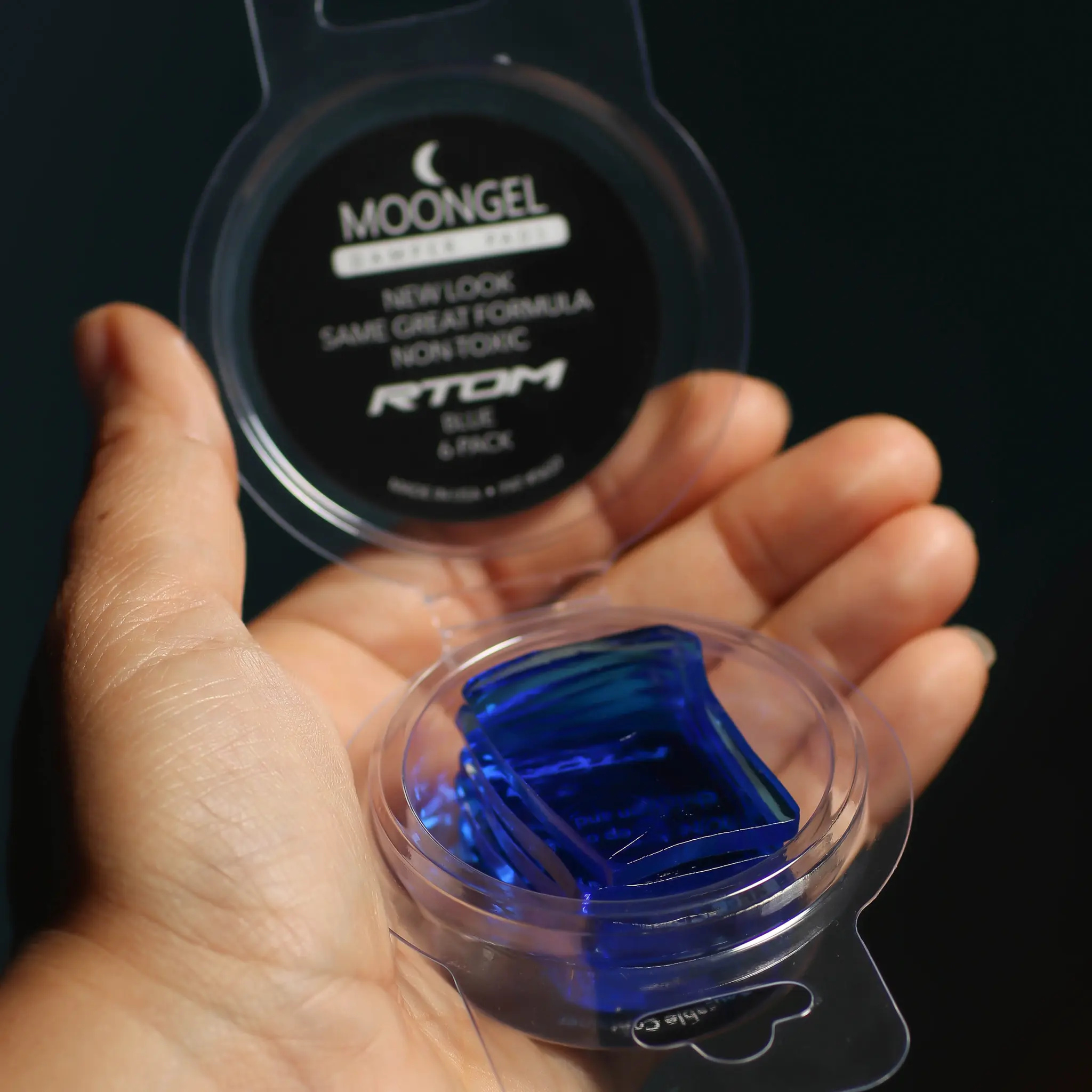
Gel-based dampening is often the first thing drummers reach for, and for good reason. It’s quick, reversible, and lets you make small adjustments without changing heads, tuning, or feel too dramatically. These products sit directly on the batter head and work by adding a small amount of mass or pressure to calm high-frequency overtones and shorten sustain just enough to keep things tidy.
What makes gels so popular is how adjustable they are. Move them closer to the centre of the head and the sound tightens up; slide them towards the edge and you’ll retain more openness while still controlling excess ring. Most players end up experimenting mid-rehearsal or mid-soundcheck until things feel right, which is exactly what these products are designed for.
Moongel is the reference point for this style of dampening. It’s soft, reusable, and easy to fine-tune, making it ideal if you want subtle control that you can quickly adapt to different rooms. Meinl Drum Honey works in a very similar way but feels slightly firmer on the head, which some players prefer when they want a touch more consistency once placed. Slapklatz Gels take a slightly different approach with thinner profiles and different shapes, giving you more precision if you like fine adjustments rather than broad changes. Remo Crown Control Dampening Gels sit comfortably in this same category, offering a familiar gel feel with a slightly more defined footprint on the head.
Evans EQ Pods also belong in this group, but with a small twist. They adhere to the head like gels, but use foam rather than soft gel, which gives a slightly more controlled and consistent reduction in sustain. They’re still adjustable and removable, but they tend to feel a bit more “set” once you’ve found the right position, which appeals to players who want repeatable results night after night.
Gel-based dampening is best thought of as fine control rather than heavy shaping. It won’t completely dry out a drum, but it will help tame liveliness, especially on toms and snares that sound great on their own but become a little wild in certain rooms or under microphones.
External Snare Dampening (Fast, Consistent Control)
External dampening sits on top of the drum head rather than sticking to it, making it ideal for players who want instant, repeatable changes without trial and error. This style of dampening is especially popular on snare drums, where small differences in control can make a big impact on feel and articulation.
Snareweights are a great example of this approach. The M1B offers noticeable control while still allowing the drum to breathe, making it a popular choice for players who want to tame overtones and tighten sustain without losing body. The M80 takes things a step further, applying more mass to the head for a drier, more focused sound that works well in louder environments or heavily mic’d situations. Both models can be placed or removed in seconds, which makes them ideal for function gigs, studio sessions, or any setup where consistency matters.
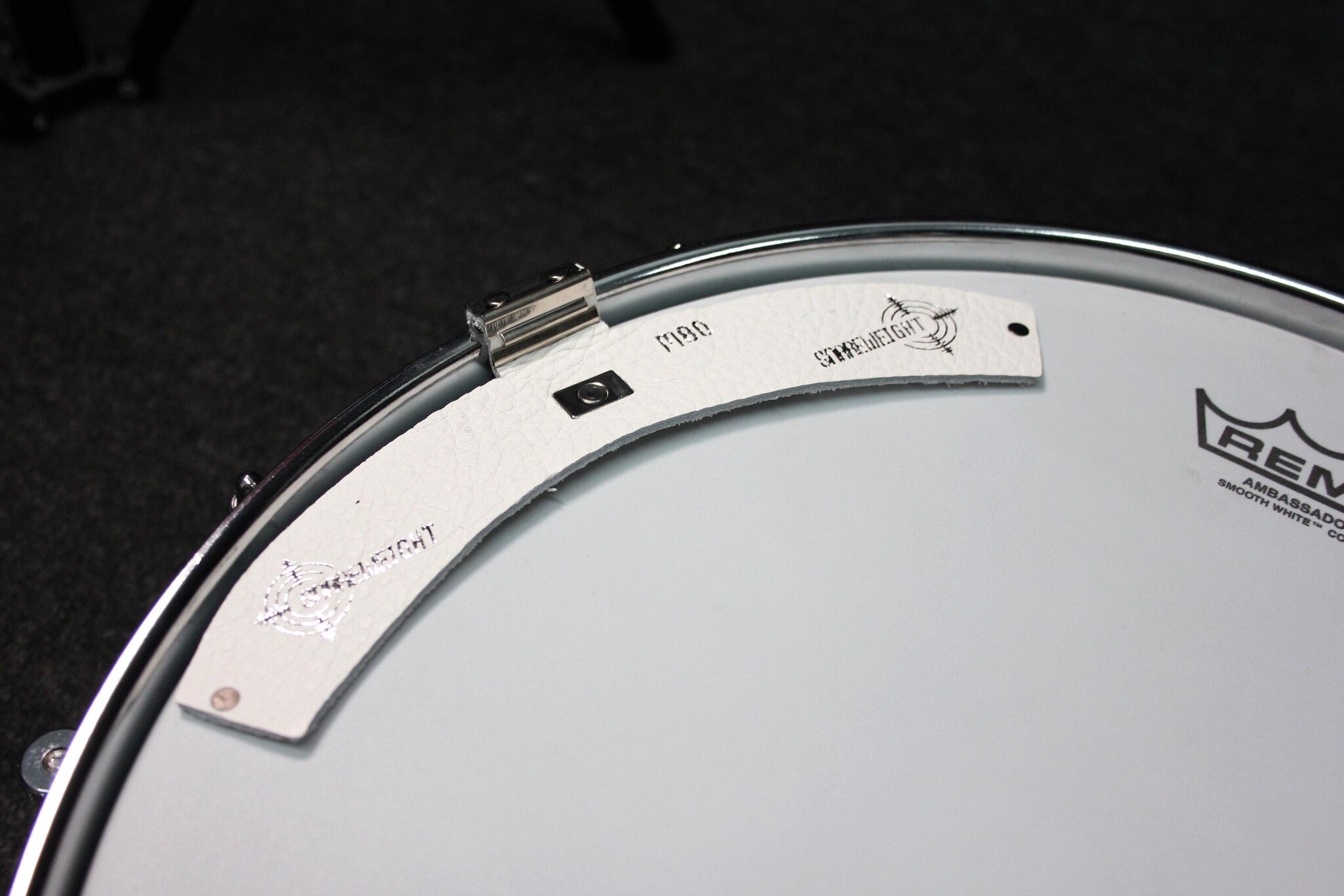
The Big Fat Snare Drum takes a more dramatic approach. By covering a large portion of the head, it significantly reduces sustain and overtones, creating a deep, dry snare sound with very little effort. This style of dampening is often used for specific sounds rather than subtle control, and it’s particularly effective for vintage-style tones, low tunings, or genres where a thick, short snare note sits better in the mix.
External dampening works best when you want predictable results, especially in live or recording environments where you don’t have time to experiment. It’s less about fine adjustment and more about committing to a sound that you know will work every time.
Ring-Based Dampening (More Noticeable Control)
Ring-based dampening is a more deliberate step than gels or external weights, and it’s usually chosen when a drum needs clear, consistent control rather than subtle fine-tuning. These dampeners sit directly on top of the head, following the shape of the hoop, and work by reducing sustain evenly across the entire surface of the drum.
Evans E-Rings are the classic example of this approach. They’re most commonly used on toms that feel overly lively, especially in live rooms, rehearsal spaces, or under close microphones. By shortening sustain and calming higher overtones, E-Rings help toms speak more clearly and sit better in a mix without requiring drastic tuning changes. They’re particularly popular for players who want a controlled, punchy tom sound with minimal fuss.
Because E-Rings affect the whole head rather than one specific area, the change is more noticeable than with gels. That makes them a good choice when you already know you want a tighter sound and don’t need the flexibility of constant repositioning. Many drummers treat them as a practical, “set and forget” solution for certain drums, especially when consistency is more important than maximum openness.
Ring-based dampening isn’t about killing tone — it’s about shaping it quickly and predictably. Used thoughtfully, it can turn an unruly tom into something focused and musical, particularly in situations where clarity matters more than sustain.
Buzz Control
Not all unwanted noise from a drum kit comes from excessive sustain or overtones. One of the most common issues drummers run into is snare buzz — when the snare wires respond every time another drum or bass note is played. While this is a natural part of how snare drums work, it can become distracting in certain rooms or musical settings.
The Vater Buzz Kill is designed specifically to address this problem without altering the drum’s tone. It attaches directly to the snare wires and limits how much they vibrate in response to external frequencies, reducing buzz while keeping the snare’s natural response intact. Unlike other dampening methods, it doesn’t sit on the drum head and doesn’t shorten sustain or change the character of the snare when it’s struck.
This type of solution is particularly useful in live situations, in smaller rooms, or when playing alongside loud instruments where low frequencies easily excite the snare wires. It’s also a popular choice for players who are happy with their snare sound but want to solve one very specific issue rather than making broader tonal changes.
Buzz control devices like this are a good reminder that not all dampening is about muting drums — sometimes it’s simply about making them behave better in real-world environments.
Which Dampening Option Should You Choose?
Choosing the right dampening option usually comes down to how much control you want and how quickly you need to get there. If your drums already sound good but occasionally feel a bit lively in certain rooms, gel-based dampening is often the easiest place to start. Gels let you make small, reversible adjustments and are ideal if you want to preserve the natural character of the drum while just tightening things up slightly.
If you’re playing a lot of live shows, function gigs, or recording sessions where consistency matters, external dampening like Snareweights or a Big Fat Snare Drum can be a better fit. These give predictable, repeatable results with almost no setup time, making them especially useful when you don’t want to rely on fine positioning or constant tweaking. They’re also easy to remove when you want to open the drum back up.
For toms that consistently feel too resonant, E-Rings are a practical solution. They’re less about subtlety and more about clear control, helping toms sit neatly in a mix when sustain becomes distracting. And if the issue isn’t tone at all, but sympathetic snare buzz, a targeted solution like the Vater Buzz Kill can solve the problem without changing how your snare actually sounds.
Most drummers end up using a combination of these approaches over time. Dampening isn’t a one-size-fits-all decision — it’s about having the right tools available and knowing when to reach for each one.
GRD Real-World Advice
One of the most common things we see in store is players worrying that dampening will “ruin” their sound. In reality, dampening is just another part of shaping a kit to suit the space, the music, and the way it’s being played. A drum that sounds huge on its own can behave very differently once microphones, stage volume, or reflective rooms are involved.
There’s no rule saying you have to stick to one method. Plenty of players use a small gel on one tom, an E-Ring on another, and an external dampener on the snare depending on the gig. The key is listening to what the drum is doing and choosing the lightest touch that gets the job done.
If you’re unsure where to start, it’s often worth trying a simple gel-based option first and working from there. I personally use 1 or two moongels on my snare, jut to get rid of unwanted overtones and I find this works extremely well. And of course if you’d rather talk it through, the GRD team is always more than happy to help in store — dampening is one of those areas where a little hands-on advice can save a lot of trial and error.
Frequently Asked Questions
Does drum dampening kill the natural tone of a drum?
Used properly, dampening doesn’t remove a drum’s character — it simply controls excess overtones and sustain. Most modern dampening options are designed to be subtle and adjustable, allowing the drum’s core sound to remain while making it easier to manage in different rooms or playing situations.
Can I combine different dampening methods on the same drum?
Yes. Many drummers use more than one type of dampening depending on the situation. For example, a small gel for fine control alongside an external snare dampener for consistency is very common. The key is using the lightest combination that achieves the sound you want.
Is dampening only needed for recording and live playing?
Not at all. Dampening can be just as useful for practice, especially in smaller rooms where reflections exaggerate sustain. It can help drums feel more controlled and musical even at lower volumes.
What’s the best dampening option to start with if I’m unsure?
Gel-based dampening is usually the easiest place to begin. It’s affordable, reversible, and allows you to experiment without committing to a permanent change. From there, it becomes easier to decide if you need something more structured or dramatic.












Comments
Be the first to comment...