
10 Things We Learned with Simon – Yamaha DTX Discovery Day
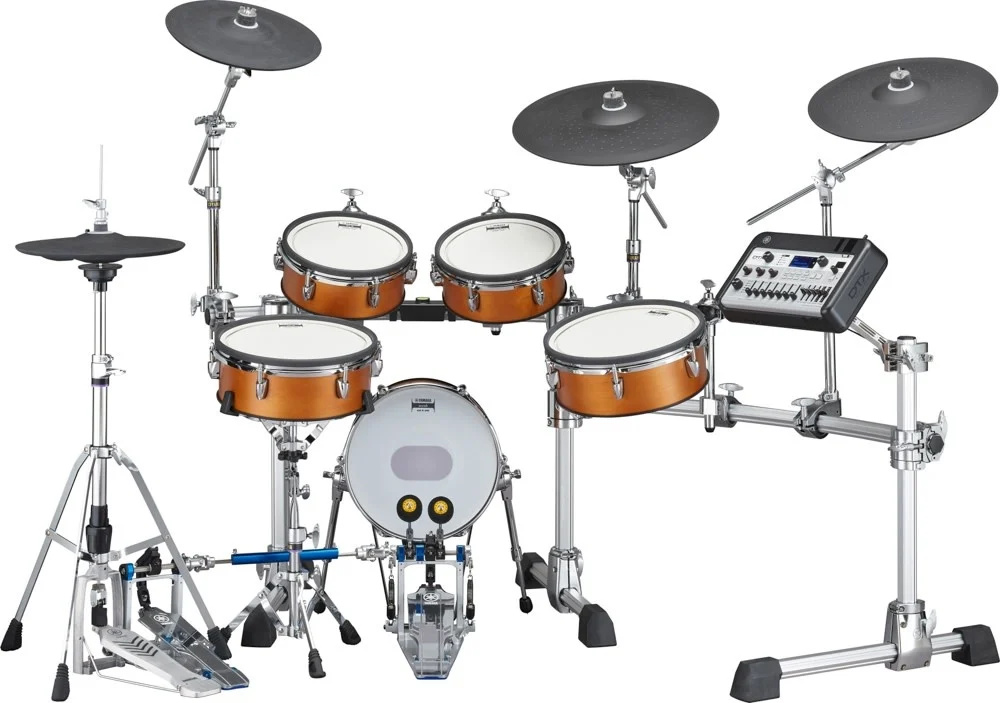
Highlights from our Yamaha DTX Discovery Day with Simon Edgoose: apps, kit modifiers, pad types, the EAD10 and more. Visit Graham Russell Drums in Fareham.
10 things we learned with Simon Edgoose at our Yamaha DTX Discovery Day
On 9 August 2025 we hosted Yamaha clinician Simon Edgoose for a hands-on Yamaha DTX Discovery Day at Graham Russell Drums. Here are the ten biggest takeaways for players, teachers and creators and a couple of quick pointers on what to try in-store at our massive showroom.
1) Rec’n’Share makes lesson content and play-along videos painless
The free Rec'nShare app allows you to load a song from your device, auto-detect the tempo, add a click, loop A/B sections, and, even better, use Audio Track Separation to lower or mute stems like drums, vocals or bass. Then record video and stereo module audio in one go and share it straight out to socials. Brilliant for teachers (remote and in-person) and for students tracking progress.
2) Three Kit Modifier knobs = instant studio sound
On DTX-PRO/PROX modules, the Ambience, Compression and Effect knobs are the fast lane to realistic and mix-ready sounds. Ambience blends in real recorded room/overhead ambience, while Effect includes useful tricks like adding or removing tom head resonance, that “natural ring” that makes kits feel like they’re in a room, not your ears.
3) DTX Touch app = deeper control, quicker tweaks
Prefer editing on a screen? DTX Touch exposes muffling, pad layering, trigger levels, EQ, pan and more with an intuitive interface. This app is far easier than menu-diving on the module when you’re mid-rehearsal or performance.
4) DTX402 Touch app: Play, Training & Challenge
If you (or your students) are on a DTX402 kit, the free app packs 10 Training Modes, a fun Challenge Mode (complete all 10 songs to get a shareable Drummer’s Certificate) and exercises that teach drum notation and timing. Great for structured practice.
5) Pad head types—what to choose and why
-
Mesh: very bouncy and quiet; feel varies with tension.
-
TCS (Textured Cellular Silicone): Yamaha’s silicone surface has tiny air bubbles that mimic the resistance of air in acoustic drums for a natural rebound and low noise—closest to acoustic feel without going acoustic. (TCS heads are replaceable!)
-
Rubber: ultra-reliable triggering and fast response—Simon noted many pros still favour rubber pads on stage for consistency in triggering especially in hybrid setups.
6) Bring your own sounds
DTX-PRO/PROX lets you import WAV samples via USB and assign them to zones which can be handy for show stings, claps or bespoke kit pieces , so your live kit matches your tracks.
7) Connectivity that scales from bedroom to stage
You get USB audio/MIDI to talk to computers/devices, plus individual outputs on DTX-PROX (up to eight) for FOH stems. There’s also a high-quality headphone amp for better in-ears.
8) The EAD10 is a live and home hero
Clip the sensor to your bass drum, and EAD10’s stereo mics + module capture your whole acoustic kit with scenes/effects. Use it to practise with music (add click/tempo changes via Rec’n’Share), record to USB for long takes, or even feed a simple PA from the module’s outputs for quick gigs. For hybrid setups you can add triggers/pads too.
Product spotlight:
-
Yamaha EAD10 Electronic Acoustic Module – in stock at GRD.
9) Teacher workflows just got easier
Between Rec’n’Share (send students guided play-alongs with click/loops) and the DTX402 Touch Training suite (scores, notation and progress markers), it’s simple to keep remote learners on track and share evidence of improvement.
10) Yamaha DTX vs Roland: sound engines & why it matters
Yamaha DTX uses multi-layer samples of real kits like the PHX, Absolute Hybrid Maple and Recording Custom captured in renowned studios (including Peter Gabriel's Real World Studios) with room and overhead ambience. That’s why the Ambience feels so real.
Roland V-Drums lean on Prismatic Sound Modelling, blending samples with behaviour modelling to create an acoustic-like response. Different approach; both valid—just pick the feel and workflow you prefer.
But for realism, nothing beats a real drum kit sample.
Bonus: what would those three Yamaha acoustic kits cost?
As a ballpark based on current GRD pricing, owning PHX + Absolute Hybrid Maple + Recording Custom shell packs would land around £14,000 depending on sizes/finishes (ask us for a quote tailored to you). We regularly stock Absolute Hybrid Maple and Recording Custom options. Come try them all in our showroom or get all of them in sample form for the price of a DTX 6, 8 or 10!
Next steps: Want to try the Yamaha Electronic Drum Kit Range, the EAD10, or compare TCS vs mesh vs rubber in person? Pop into Graham Russell Drums or call us for professional advice and UK availability. We’ll set you up on the right kit for home, studio or stage.












Meeting Simon was great. Utterly invaluable to have all this on my doorstep. Simon knew exactly where my config improvements could be made before I'd even had chance to finish asking my question.
I don't regret choosing Yamaha again. Nothing beating a real sample is ultimately what led me to realise the DTX8 was for me - after doing so much research. Oh my days, so much research. But my ears and my heart were what swung the decision between Yammy and Roland.
AND I got a cup of tea from Graham too. Winner.